30% more performance for old AMD GPUs
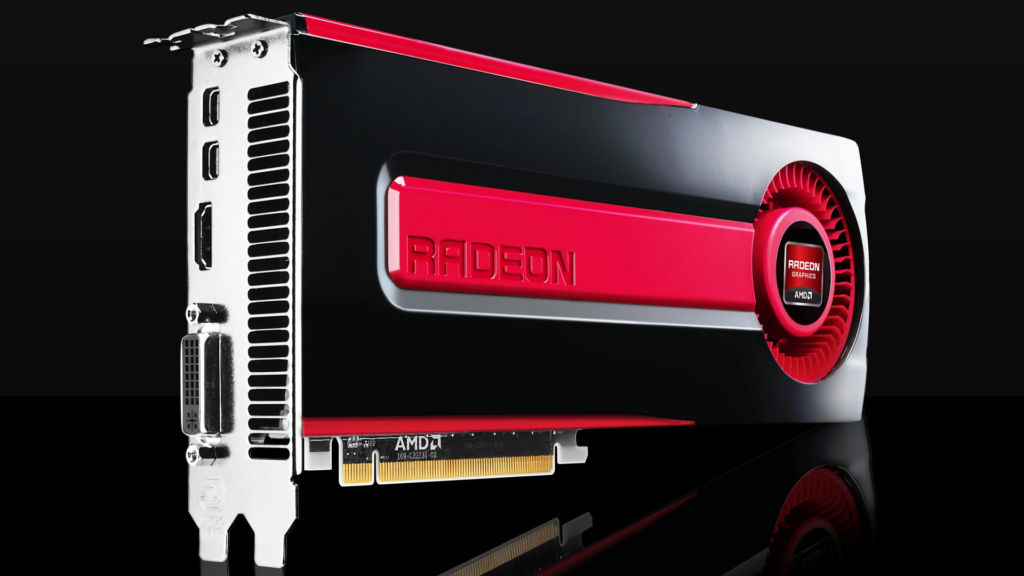
Anyone who uses certain older Radeon graphics cards from AMD can be happy. Because Linux 6.19 brings up to 30 percent more performance for hardware that is sometimes up to 13 years old by changing the standard driver. Thanks to Vulkan support, new doors also open.
Linux 6.19 gives the gift of retro hardware
In recent months, a number of older technologies have received expanded support on Linux. In September, for example, there was a surprising driver update for floppy disks and the recently released Linux kernel 6.19, the integration of a retro interface, 53 years after its introduction. And appropriate hardware is also supported for graphics cards, as drivers for 20-year-old ATI GPUs implemented in August show. On the GPU front there is now another positive surprise just in time for Christmas and the upcoming New Year.
Users who still operate graphics cards from the Radeon HD 7000 (Southern Islands, GCN 1.0) or Radeon HD 8000 series or the R7 and R9-200 series (Sea Islands, GCN 1.1) from AMD will receive a significant performance boost through a change in the kernel code. So the developers changed the default driver for these GPUs that are over 13 years old. Instead of the outdated Radeon DRM module, the modern AMDGPU kernel driver is now loaded by default.
This change is an important step in the maintenance of legacy hardware under Linux and affects chipsets codenamed Tahiti, Cape Verde, Pitcairn and Oland. While newer AMD graphics cards have been using the AMDGPU driver for years, the first generations of the Graphics Core Next Architecture (GCN) remained on the old module by default. Although a manual switch using kernel parameters was already possible in previous versions, it is only now that the developers have achieved the necessary stability and feature parity that justifies an automatic switch for all end users. This move better integrates the legacy cards into the modern Linux graphics ecosystem and unifies the software stack.
Benchmarks prove increased performance
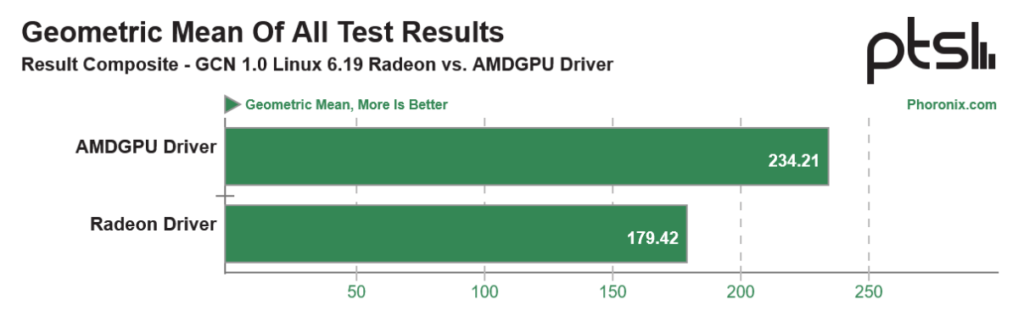
How Phoronix As determined in extensive tests, the change leads to measurable improvements. In a test system with a Radeon HD 7950 and a current Ryzen 9 9950X3D, Ubuntu 25.10 showed an average performance increase of a whopping 30 percent across various OpenGL applications. What is particularly relevant is that the AMDGPU driver enables access to the modern RADV Vulkan driver from Mesa. This was technically impossible to implement with the old Radeon driver and represents a modernization boost for the hardware.
The driving factor behind this late optimization is not primarily the chip manufacturer AMD, but Valve. Developer Timur Kristóf has been instrumental in increasing support for the GCN 1.0 and 1.1 chips in the AMDGPU driver to a level that makes the old Radeon driver obsolete. This shows once again how much Valve’s commitment to Linux also benefits hardware that was released well before the Steam Deck. The standardization of the driver base also reduces the maintenance effort for the developer community, as fewer code paths for ancient APIs have to be maintained.
Vulkan support opens doors
Vulkan’s native support via RADV opens up new possibilities for retro gamers and users of older workstations. Games and applications that necessarily require Vulkan or are translated from Direct3D to Vulkan via Proton now run more efficiently or even start at all. However, it would be unrealistic to expect that a Radeon HD 7950 from 2012 would suddenly display modern AAA titles like Cyberpunk 2077 smoothly. The limited video memory, often only three gigabytes, and the missing hardware features of modern architectures remain a technical bottleneck. Nevertheless, the step is notable for the longevity of IT components and fits into the current debate about sustainability.
The fact that hardware that came onto the market over a decade ago still receives relevant software updates and performance improvements is a rare phenomenon in the fast-moving tech industry. For hobbyists and users of second PCs, Linux 6.19 means that their hardware will be protected from electronic waste for a while longer and will deliver the best possible performance under modern Linux distributions without manual intervention.