5 Tips for Safe Forklift Usage in Your Warehouse
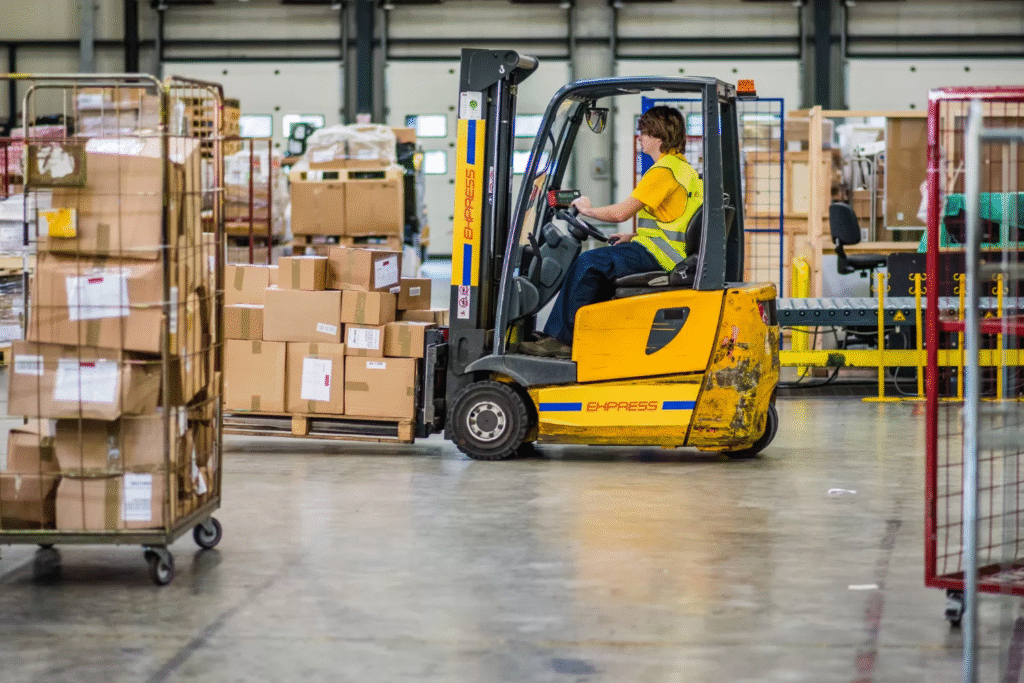
Forklift-related accidents are among the most serious — and most preventable — incidents in warehouse environments. One wrong move can result in damaged goods, injured workers, or even costly lawsuits. But with the right training and protocols in place, you can keep your warehouse safer and more efficient.
The goal isn’t just to avoid accidents. It’s to create a culture where safety is second nature, where every operator understands the responsibility that comes with controlling thousands of pounds of moving machinery, and where leadership actively enforces and models best practices.
Here are five easy-to-implement tips to help you improve forklift safety in your warehouse and protect your bottom line.
- Certify and Train Every Operator
The single most effective step you can take toward forklift safety is making sure that every operator is properly trained and OSHA certified. Don’t just see this as a compliance requirement. Think of it as a way to give your team the skills they need to operate safely and confidently.
The best part is that getting certified is easier than you probably think. Online OSHA-approved forklift training courses can be completed in as little as an hour, and they cover everything from load handling and maneuvering to identifying hazards and understanding safety protocols.
Think of certification as the foundation. Without it, you’re relying on guesswork and muscle memory – two things that have no place in forklift safety.
- Establish Clear Traffic Patterns and Signage
In a busy warehouse, forklifts are often moving alongside foot traffic, pallet jacks, and other equipment. Without clearly marked lanes and traffic rules, it’s only a matter of time before there’s a collision.
- Lay out your warehouse so there’s a clear separation between pedestrian walkways and forklift routes.
- Use high-visibility tape or paint to mark lanes, and install mirrors at blind intersections.
- Add signs for speed limits, yield points, and no-go zones.
You want your operators to know exactly where they should be at all times, and you want pedestrians to know exactly where forklifts may be operating. Clear visual cues cut down on confusion and make it easier for everyone to stay aware of their surroundings.
- Prioritize Load Handling Protocols
Many forklift accidents happen not because of reckless driving, but because of improper load handling. Overloaded forks, unstable pallets, and poor stacking techniques can all cause dangerous situations. Here’s what your team needs to know:
- Every operator should know the weight limits for the forklift they’re using – and they should never exceed them.
- Loads should be balanced evenly, with heavier items on the bottom, and tilted back slightly during transport to improve stability.
- Operators should also avoid carrying loads that block their view, and when that’s unavoidable, they should drive in reverse to maintain visibility.
Your team should treat load handling as a precise skill, not a hurried task. Rushing to get pallets from point A to point B without following proper technique is a recipe for damage and injury.
- Make Daily Equipment Inspections Non-Negotiable
Forklifts are heavy-duty machines, but they still require regular inspections to ensure they’re safe to operate. Small mechanical issues – like worn tires, faulty brakes, or a malfunctioning horn – can quickly escalate into serious safety hazards.
Before each shift, operators should perform a quick, standardized inspection. This includes checking fluid levels, looking for leaks, testing the brakes and steering, and ensuring the forks, mast, and lift chains are in good condition. Lights, alarms, and horns must be fully functional, and any issues should be reported immediately.
The key here is consistency. A daily inspection should be as routine as clocking in. Skipping it might save a few minutes now, but it can cost you hours – or worse – if a preventable breakdown leads to an accident.
- Create a Culture of Safety
Rules, training, and inspections are all important. However, none of them will work without a culture that values safety over speed. You can have the best safety manual in the world, but if your team feels pressured to cut corners to meet deadlines, accidents will happen.
A safety-first culture starts at the top. Leadership needs to consistently reinforce safe practices, recognize employees who follow protocols, and address unsafe behavior immediately. Make it clear that rushing or ignoring safety rules to meet a quota is unacceptable.
You can also encourage peer-to-peer accountability, where team members look out for one another. The more your employees feel responsible for each other’s safety, the more likely they are to speak up when they see something wrong.
Impacting Your Bottom Line
Forklift accidents aren’t just dangerous – they’re expensive. Beyond medical bills and workers’ compensation claims, you’re looking at potential OSHA fines, damaged equipment, and even lost contracts (if your safety record takes a hit).
On the flip side, when your warehouse runs safely, it runs more efficiently. There’s less downtime from injuries or equipment damage, morale stays higher, and your team can focus on productivity instead of worrying about hazards.
Keep all of this in mind as you invest in safety. Over time, this will impact your bottom line as much as any revenue-producing activity does.

Alexia is the author at Research Snipers covering all technology news including Google, Apple, Android, Xiaomi, Huawei, Samsung News, and More.