7 Things You Should Know About UV-Vis Spectroscopy
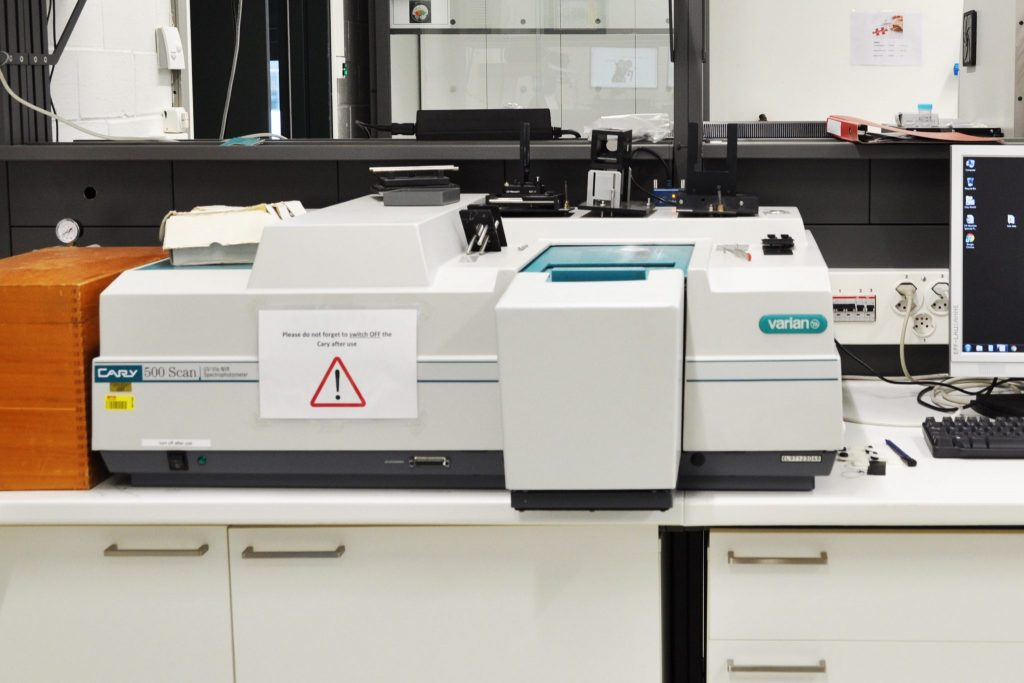
UV-Vis spectroscopy, short for Ultraviolet-Visible spectroscopy, is an analytical technique used to measure the absorbance or transmission of light by a sample in the ultraviolet and visible regions of the electromagnetic spectrum. UV-Vis Spectroscopy is a fundamental tool in chemistry, biology, and environmental science, offering valuable insights into the properties of liquids, solids, and even gases.
1. How UV-Vis Spectroscopy Works
The core idea behind UV-Vis spectroscopy is simple: molecules absorb specific wavelengths of light. When light passes through a sample, some wavelengths are absorbed while others pass through. The spectrometer detects how much light is absorbed at each wavelength, creating an absorbance spectrum. This spectrum acts like a molecular fingerprint, revealing information about the chemical structure and concentration of the sample.
2. Key Components of a UV-Vis Spectrometer
A UV-Vis spectrometer typically includes a light source, a monochromator or filter to select specific wavelengths, a sample holder (cuvette), and a detector. The light source emits a broad spectrum of UV and visible light. The monochromator isolates the desired wavelength, which then passes through the sample. The detector measures how much light is absorbed or transmitted.
3. Common Applications Across Industries
UV-Vis spectroscopy is used in a wide range of fields:
- Pharmaceuticals: for drug purity and concentration analysis
- Environmental science: to monitor pollutants in water or air
- Food and beverages: to assess quality and color consistency
- Clinical laboratories: for testing blood and biological samples
- Academia and research: as a standard technique in chemical analysis
Its broad applicability stems from the technique’s reliability, ease of use, and non-destructive nature.
4. Sample Types and Preparation
One of the advantages of UV-Vis spectroscopy is its flexibility in sample handling. It can analyze solutions, transparent solids, and even thin films. Samples are usually placed in quartz or plastic cuvettes that hold small volumes. Preparing the sample may involve simple dilution, filtration, or adjustment to an appropriate pH level, depending on the intended measurement.
5. Absorbance vs. Transmittance
Two terms often encountered in UV-Vis spectroscopy are absorbance and transmittance:
- Absorbance (A) is a measure of how much light is absorbed by the sample.
- Transmittance (T) is the ratio of light passing through the sample to the initial light intensity.
Absorbance and transmittance are mathematically related and can be used interchangeably depending on the analysis goals. Most analytical methods prefer absorbance, especially when applying Beer-Lambert’s Law for concentration calculations.
6. Understanding Beer-Lambert’s Law
Beer-Lambert’s Law is a key principle in UV-Vis spectroscopy. It states that absorbance is directly proportional to the concentration of the absorbing species in the sample and the path length of the light through the sample. This relationship allows users to determine unknown concentrations by measuring absorbance and comparing it to a calibration curve.
The equation is:
A = εlc
Where:
- A is absorbance
- ε is the molar absorptivity (a constant)
- l is the path length.
- c is the concentration
7. Limitations and Considerations
While UV-Vis spectroscopy is powerful, it does have some limitations:
- Interference from impurities or other absorbing species can distort results
- Low sensitivity for samples that don’t strongly absorb in the UV-Vis range
- Baseline drift and instrument calibration must be managed for accurate readings.
- Only works well with transparent or slightly colored samples—opaque samples may scatter light.
Proper calibration, blank measurements, and sample preparation help mitigate these challenges and improve data quality.
Conclusion
UV-Vis spectroscopy remains a cornerstone of modern analytical science. It offers fast, non-invasive insights into sample composition and concentration, making it indispensable in research, quality control, and environmental monitoring. Whether you’re in a laboratory or an industrial setting, understanding the fundamentals of UV-Vis spectroscopy can enhance the accuracy and efficiency of your analytical processes.

Alexia is the author at Research Snipers covering all technology news including Google, Apple, Android, Xiaomi, Huawei, Samsung News, and More.