Discover the Revolutionary Fourdrinier Paper Machine in Papermaking
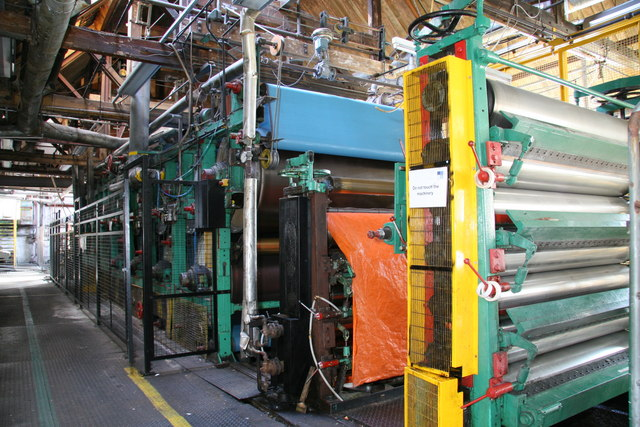
What is a Fourdrinier Paper Machine?
How Does the Fourdrinier Machine Work?
The Fourdrinier paper machine functions in a paper manufacturing process that converts a slurry of fiber materials into a completed paper sheet in a single continuous operation. The first step in the process is the distribution of the stock slurry onto the stationary wire screen, sometimes called a mesh, with the aid of a sluice box containing a gate.
This wire serves as the initial forming section, which holds water and drains through it whilst laying a fibrous mat. This mat is later transported through a number of other sections, like the pressing section, where mechanical dryers recover excess moisture, followed by the drying section, where steam-heated cylinders evaporate the remaining water. The paper is then smoothed, finished to specification, roll-wound, or cut into sheets.
For more in-depth information, you should view Fourdrinier Paper Machine – UDTECH
Functional Elements of a Fourdrinier Machine
Headbox: This part of the machine ensures even distribution of the slurry to the rotating wire in order to avoid defects in the paper being formed.
Wire Section: This section has water removed from it where the first mat formation begins.
Press Section: Compression rollers increase the density of the web and water is purged from the paper.
Dryer Section: Moisture is removed from the paper rolled on the cylinders by heating them.
Calender Section: This section imparts a better and uniform surface finish flatness to the paper.
Reel Section: The completed document is either cut to size or wound in large rolls.
Which Aspects Differentiate the Fourdrinier Machine?
The primary feature that distinguishes the Fourdrinier machine from other paper-making machines is its capability of producing paper in continuous and unbroken rolls of uniform quality throughout. Its design was a turning point in the industry because it eliminated repetitive and slow manual processes of paper sheet production, replacing them with automated and much faster machines. Unlike cylinder machines, which use revolving molds to form paper, the Fourdrinier machine employs a long and extensively moving wire, which enhances control over fiber distribution and sheet thickness. Such precision and ease of scaling make it a top choice in the commercially dominant solution of mass papermaking.
What are the advantages of using a Fourdrinier Paper Machine?
What is the Impact on Pulp and Paper Production?
The Fourdrinier machine has transformed the production of pulp and paper products. The industry has been able to respond to ever-increasing demand on a global scale with improved efficiency and consistency. It has also enabled the industry to automate the sheet forming process which ensures reliability and quality of the finished paper product. Furthermore, the Fourdrinier machine’s ability to produce paper rolls instead of individual sheets enhances production capacity and greatly reduces downtime and waste.
How Does the Fourdrinier Machine Improve Efficiency?
Through increased automation and scale of production, the Fourdrinier machine has enhanced operational efficiency. The continuous wire delivery system allows for even web fiber distribution, which leads to consistency in product quality, tighter control for sheet thickness, and less variability. Included drying systems, such as press sections and vacuum boxes, enhance the rate of moisture removal, which leads to quicker drying times and greater energy efficiency. This reduces overall operational expenditures while maintaining an ideal controlled output that is important for large-scale volume production.
What Are the Benefits for Producing Tissue Paper?
With respect to tissue paper production, the quality and efficiency of the Fourdrinier machine offer remarkable benefits. The Foudrinier machine’s delicate balance of fiber blend ensures that the consumer’s needs are met with regard to the softness, lightweight nature, and absorbency of the tissue products. Moreover, the machine excels in producing thin and even sheets, which is crucial for tissue products because of the need for uniformity. In addition, the requirement in this industry for faster, economical supply is met through the large-scale quantity production speed of the Fourdrinier machines. It is efficient in terms of production costs while supporting the global needs of the tissue market.
How has the Fourdrinier Machine evolved over time?
The Fourdrinier brothers, Henry and Sealy, aided in advancing the industry of papermaking by financing and improving the workings of the Fourdrinier machine, which was an initial idea of Louis Robert’s. Robert had the notion of continuous paper production in 1799, but it was limited by several mechanical problems. Henry Fourdrinier partnered with an engineer, Bryan Donkin, who furthered the dependability and efficiency of the machine. Some of the innovations Donkin introduced included better methods for drying the paper and uniformity of the paper produced, as well, which was vital for the commercialization of the technology.
Later on, James Sealy and other engineers created new modifications aimed at increasing the machine’s productivity and improving sheet quality. These and other innovations, like enhanced mesh and vibration-damping systems, were created in the 19th and early 20th centuries. They not only solved the problem of high production speeds but also improved the caliber and uniformity of the paper manufactured.
Milestones in the History of Papermaking Innovations
Every area of the papermaking industry has gone through some transformative innovations, and the history of papermaking machines is no exception. One of the earliest innovations known as the screw press, improved the separation of water from the paper pulp immensely and set the stage for mechanized production methods. John Dickinson later developed the cylinder mold machine in the 1800s, which provided a new way of making heavyweight papers and boards. He also innovated drying technologies, faster production of the papers facilitated by steam-heated drying cylinders.
Moreover, the progress in other technologies like chemical pulping also advanced, accompanying the development in machine designs, especially the utilization of paper byproducts during the 19th century. Not only have modern papermaking machines become vital instruments of industrial manufacture, but automation and computerization have also aided in improving the accuracy and reliability of these machines in recent years.
What are the main applications of the Fourdrinier Paper Machine?
How is it utilized in paperboard production?
The Fourdrinier paper machine is the primary machinery used in producing paperboard, a thicker, more resilient material widely utilized for packaging purposes. It provides controllable quality in the strength and characteristics needed for paperboards by regulating the fiber’s spatial distribution—their thickness—and the moisture content. Its capacity to add several plies of fiber in one production pass makes it very efficient for producing paperboard, which requires high strength and rigidity along with impact resistance.
What role does it play in the manufacturing of tissue paper?
The Fourdrinier machine contributes to the production of tissue products by providing the required thin, soft, and absorbent characteristics. It regulates the fiber-to-water ratio, employing special drying methods to achieve the needed softweight paper grades. Alongside the basic printing process, additional treatments such as creping improve the flexibility and texture of the product to better suit the needs of tissue products for the hygiene and household segments of the market.
What are its benefits for the paper industry?
The Fourdrinier machine’s flexibility and effectiveness make it an indispensable asset in addressing the needs of the paper industry. It assists in the printing of high-quality paper, as well as specialty papers such as filter paper, with scalability and customization at different production levels. Its modern automation features, combined with contemporary quality control systems, make certain that the outcomes are economical and reliable, fulfilling requirements for mass production as well as specialized industrial markets. This adaptability justifies the continued use of the Fourdrinier machine in modern papermaking.
What materials are crucial for the Fourdrinier Paper Machine?
Raw Materials Used in Papermaking
The most important raw material of papermaking processes is cellulose fibers from wood, recycled paper, and other nonwood sources such as bamboo, straw, and hemp. The majority of production wood fibers are classified as softwood, like pine, or hardwood like birch. Those types of wood are plentiful, possess high-quality fiber attributes, and offer the best yield. Furthermore, recycled paper offers environmental and economic benefits by minimizing the availability of virgin fibers. Moreover, other Additives such as fillers (like calcium Carbonate or Clay), sizing agents, and dyes are added to enhance the paper attributes like brightness, smoothness, and water resilience.
Water Removal in the Papermaking Process:
Water removal efficiency is crucial while transforming the pulp slurry to a paper sheet in the papermaking process. This process initiates at the wire part of the Fourdrinier machine. During this phase, the apparatus’s water manifold distributes the slurry onto a constantly moving wire mesh belt. Subsequently, the gravity and suction box system drains most of the water from the sheet, which is known as the semi-dry sheet. Merely afterwards, the press section uses mechanical water removal, applying pressure through rollers to the sheet. Lastly, the sheet is conveyed to the drying section, where hot cylinders are used to eliminate excess moisture in order to obtain the targeted dryness level.
Common Wet End Configurations
The wet end arrangement of a paper machine is pivotal in determining the characteristics and quality of the final product. The most common designs are Fourdrinier, twin-wire, and hybrid models. The Quadron configuration remains traditional by utilizing a singular wire mesh for sheet forming, which makes it simple across a range of products. Twin-wire configurations, however, employ two converging wire meshes that dewater at a faster rate, leading to greater sheet uniformity for high-speed multi-ply paper. Hybrid designs are an amalgamation of both systems, allowing for optimized efficiency and added flexibility for diverse production demands.
What challenges are faced in operating a Fourdrinier Machine?
What are the common issues in high-speed paper making?
The high-speed technique of paper manufacturing poses several issues that affect the efficiency and quality of the product at the same time. Frequently occurring problems are: formation of sheet breaks, uneven formation, poor dewatering, among others. Moreover, the higher speed results in greater wear of the machine, system imbalance, and inconsistency of fiber spread within the sheet. These problems are often the result of overly tight machine settings and inadequate tuning during routine performance checks.
What is the effect of machine steps on paper production?
The speed at which a machine runs will always have a relationship with the rate of paper produced and also the quality of paper manufactured. With greater speed, there is higher production; thus, high-speed machines are necessary for times of great need. Greater paper production is not always favorable, as increased speed can lead to defects like wrinkles, edge cracks, and nonuniformity as the fibers become aligned in the sheet unevenly. Increased production does not come without its cost; pushing machines further past their limits introduces numerous challenges such as the need for superior tension control, enhanced suction power, and stronger wire and felt construction capable of withstanding scaled operations.
What maintenance is required for optimal performance?
Optimum performance of the paper machines requires full adherence to a strict maintenance program. Active maintenance practices are best exemplified by the periodic inspection of wearing parts (wires, felts, and press rolls) as broken parts must be removed and substituted within an appropriate time frame. Cleaning and lubrication of interfaces like bearings and gears also eliminates unnecessary machine stoppages. Moreover, some mechanical issues can be identified much earlier using condition monitoring, diagnostics, and maintenance, such as vibration analysis and thermal imaging. These proactive maintenance policies permitthe reduction of unplanned maintenance outages and improve system efficiency.

Alexia is the author at Research Snipers covering all technology news including Google, Apple, Android, Xiaomi, Huawei, Samsung News, and More.