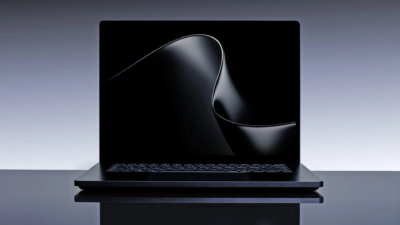
Samsung shows the future of laptop displays

Samsung shows displays for the first time on the Computex 2025, where you can achieve an even thinner construction and increased economy with an oxide TFT production. As with smartphones, future OLED laptops should be able to work with dynamic frame rates between one and 120 Hertz.
Samsung continues to reduce refresh rate
Samsung’s display division is represented for the first time this year at the Hardware Mass Computex in Taiwan’s capital Taipei. The Korean electronics giant uses the event to present its latest achievements for displays in future notebooks in the heart of the global PC industry. The focus is on a new technology that is called UT One.
Because Samsung Display produces the OLED construction called “Ultra-Thin” (UT) without the usual upper glass substrate and instead relies on layers from organic and inorganic materials, the thickness of the new panel can be reduced by 30 percent. The same also applies to the weight, which drops by about 50 grams at a size of around 14 inches, which corresponds to the weight of a battery cell.
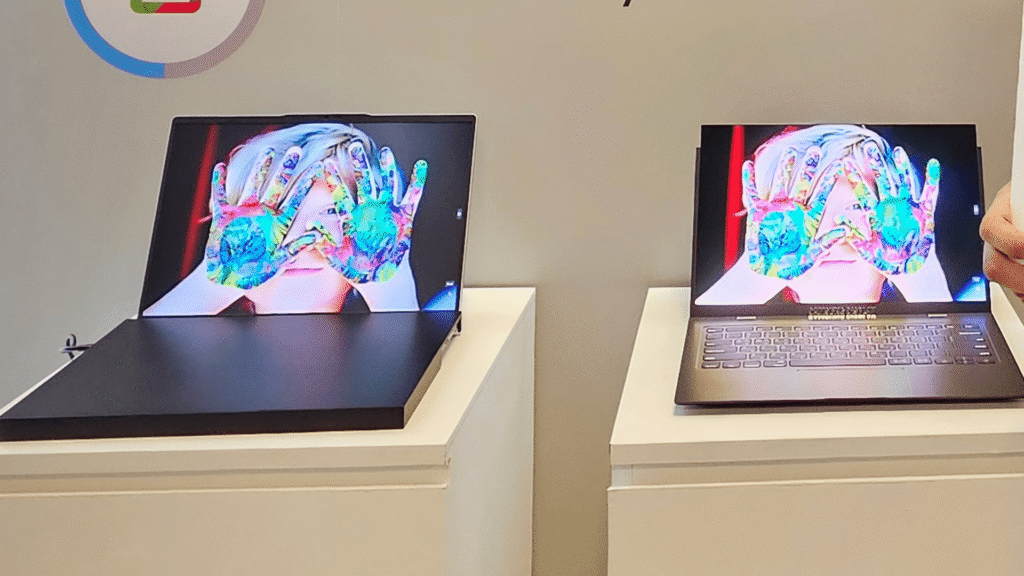
Ultimately, the battery capacity of the laptops equipped with the new displays should be increased – or the devices are correspondingly lighter. However, another decisive advantage is even more important: Because Samsung enables an even lower variable refresh rate in the oxide TFT production, the displays produced in this way can work with a dynamic refresh rate between one and 120 Hertz. So far, 10 Hertz has been the minimum.
For future notebooks there is an advantage that you have to update your display less often in the case of visual screen contents that are usually static, which leads to a lower power consumption. The rumor mill can already be heard who will be the first customer for Samsung’s new OLED panel: Apple. Samsung Display is currently building a new production facility on his campus in Asan in South Korea. From 2026, the mass production of OLED panels is to start with the Oxid TFT process, whereby the UT One Panels should then run off the assembly line.
Initially, according to speculation, Apple is supplied because the US computer group wants to equip a new MacBook Pro in 2026 with the new, thinner and more efficient displays. A little later, a second production line should go into operation, with which Samsung also wants to supply other manufacturers and himself.

Amit Gohar is Technical writer at ResearchSnipers.com, he is well versed Technology News writer, he has completed is MS computer Science in 2020. He can be reached at amit.g@researchsnipers.com