Honda surprises with the successful landing of its own rocket
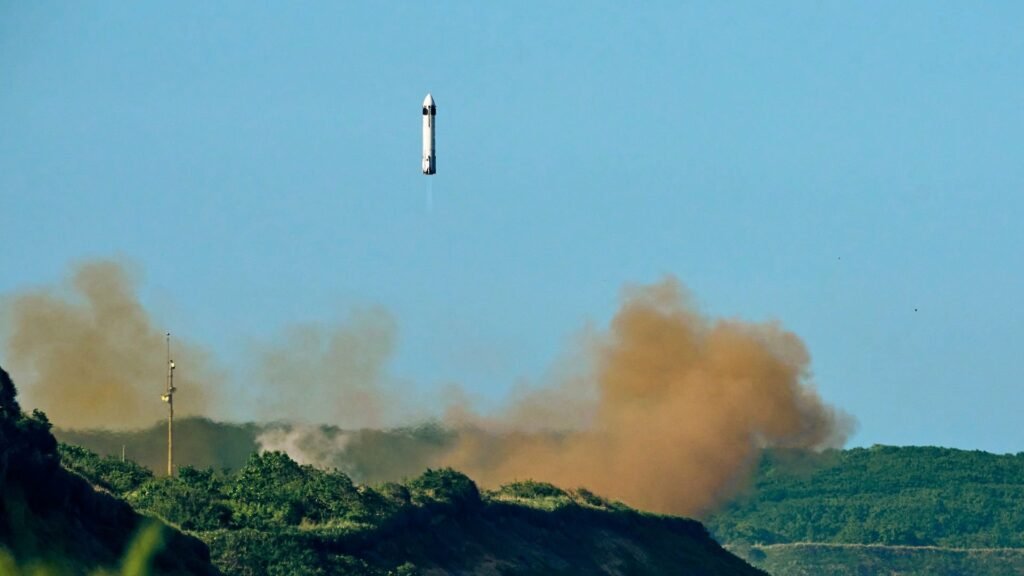
Like out of nowhere, Honda surprised the space industry with a successful test of a reusable rocket. The Japanese car manufacturer landed its test rocket precisely and plans to carry out suborbital flights by 2029.
Honda wants to go into space
On June 17, 2025, Honda achieved an important and reasonably surprising milestone in space technology. The Japanese car manufacturer successfully carried out a starting and landing test with an experimental reusable rocket. This reached a height of 271.4 meters and landed within just 37 centimeters from the planned landing point – a precision that should impress even experienced space companies.
The test missile currently offers compact dimensions: with a length of 6.3 meters and a diameter of 85 centimeters, it weighs a dry weight of 900 kilograms. With fuel, the total weight amounts to 1312 kilograms. For the test, Honda set up a blocking zone with a radius of one kilometer and used various security systems to prevent deviations from the predefined air corridor.
Ambitious plans until 2029
How Reuters Citing a Honda announcement reports that the company has not yet made a decision on the commercialization of rocket technology, but has been pursuing the ambitious development goal of enabling suborbital flights by 2029. The background to these plans is primarily the growing demand for satellite starts. Honda successfully tests landing a reusable rocket
The Japanese government supports the private space industry with a billion-dollar venture fund. The country has set itself the goal of double the size of its space industry until the early 2030s to eight trillion yen (around 48 billion euros). This state support explains why more and more Japanese companies – and now also Honda – invest in the space sector.
Other Japanese automobile manufacturers such as Toyota also invest in space travel – the group supports, for example, the rocket company Interstellar Technologies based in Taiki in the mass production of carrier missiles. Toyota, together with the Japanese space agency Jaxa, is also developing a manned Mondrover that is to be used from 2029.
However, the competition in the area of reusable rockets is great. SpaceX dominates the market with its Falcon 9 rockets, while companies such as Blue Origin, Rocket Lab and Virgin Galactic are also fighting for market shares. However, Honda’s compact rocket could be suitable for special applications such as smaller satellite starts or research missions, where precision is more important than payload capacity.