How Gamification Can Actually Help People Lead, Listen, And Connect Better
There is a reason why leadership, empathy, and communication top almost all workplace skill lists and why they are also the hardest to teach. These human skills are built with practice, reflection, and real-world experience.
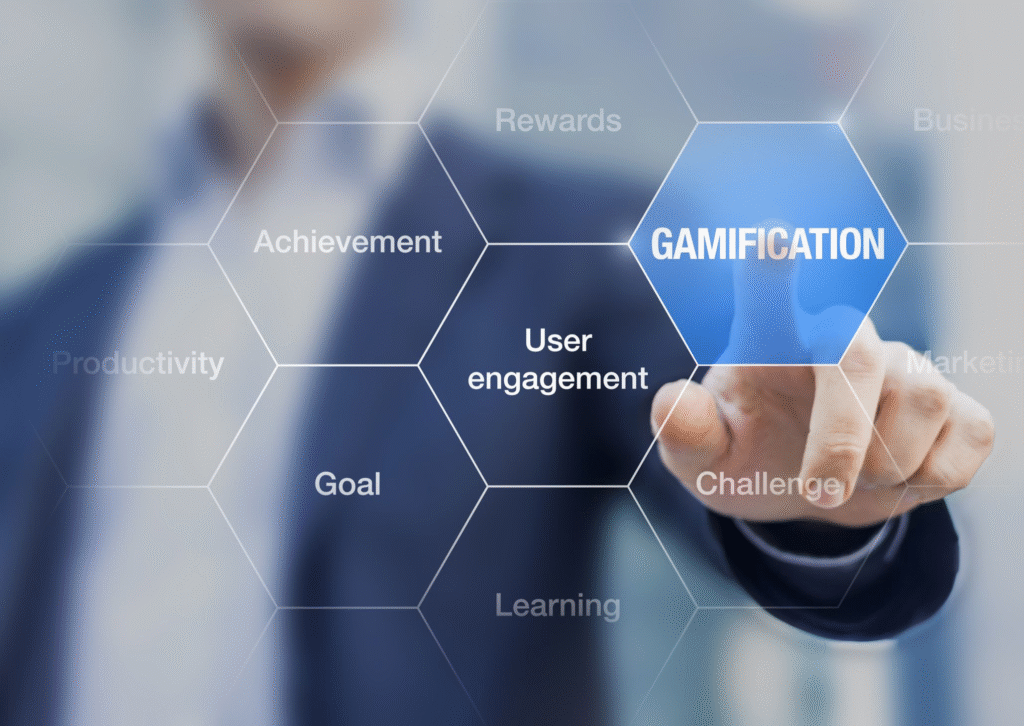
The challenge? Most soft skills training is passive. People click through slides or watch videos, but they are not actually asked to do anything. So the knowledge doesn’t stick, and the behavior doesn’t change. That’s where gamification in e-Learning comes in. It brings a set of tools to help people practice human skills in safe, structured ways. In this blog, we will explore how gamification can actually improve soft skills, specifically for leadership, empathy, and communication.
- Branching Scenarios For Real-World Conversations
Let’s say you’re training someone to give difficult feedback to a colleague. You could tell them how to do it, or you can let them try in a low-stakes environment.
Branching scenarios present a situation with multiple response paths. Each choice leads to different outcomes, some better and some worse. The learner sees the impact of their communication in real time.
- Role-Playing With Digital Personas
Role play is one of the oldest techniques in soft skills training. Gamification just makes it scalable and trackable. With AI-based chat scenarios, learners can practice conversations with virtual characters and receive feedback on tone, empathy, and timing.
This encourages learners to step into someone else’s shoes. It helps them build perspective and emotional regulation.
- Real-Time Feedback For Better Self-Awareness
A quiz can’t measure soft skills. They are about behavior. That is why immediate feedback in gamified training is so powerful. They help learners adjust in the moment and not after. This way, learners will have feedback after each interaction. They use visuals like empathy meters or trust scores. And get tips or nudges instead of generic wrong answers.
- Timed Challenges To Build Focus And Decision-Making
Leadership often requires quick thinking under pressure. Gamified scenarios with time limits simulate that environment and help learners practice thinking clearly without overanalyzing. These challenges mimic real workplace scenarios and help learners practice prioritization and clarity.
- Story-Based Missions To Make It Meaningful
We remember stories more than instructions. Wrapping soft skills training in a narrative structure gives it emotional weight. Something like mission-based quests, like leading a remote team through a tough quarter. Each decision becomes part of the arc.
E.g., “You’re the new team lead. You have 30 days to unite a divided team.” Learners will get emotionally invested.
- Social Mechanics To Drive Collaboration
Most soft skills happen with people, not in isolation. Gamified training that includes peer interactions, group challenges, or leaderboards tied to team activities reflects this reality. This encourages discussion and peer feedback, fosters accountability, and builds collective learning.
In empathy training, learners could compare how different people handled the same situation and discuss which approach showed the most understanding. This will build a nuanced understanding of human emotions.
- Reflection Points To Deepen Learning
Gamification isn’t just about action; it’s about processing that action. A good soft skill module includes moments to reflect. You can start emotional check-ins to help learners connect what happened in the scenario to their real-life behavior.
- Giving Peer Feedback
Most soft skills involve interpersonal communication, but many training programs leave learners isolated. One way to close that gap is by building peer feedback loops directly into gamified training experiences.
Incorporate structured peer review into soft skill simulations, for example. After completing a conflict resolution scenario, learners can watch each other’s recorded responses, provide ratings, and offer written or verbal feedback. This mirrors the real world, where team members constantly evaluate each other. Learners gain exposure to different communication styles. When peers give feedback, it sharpens everyone’s observational and analytical skills.
- Gaining Feedback
Giving is reviewed by peers, which builds self-awareness. Knowing that others will watch or assess your performance encourages you to slow down, prepare better, and reflect. Over time, learners will recognize subtle cues like tone shifts and body language that affect how messages are received. That’s the kind of feedback and learning that will stick. It’s not just theory anymore; it’s practical and real.
- Unlockables That Reward Growth
Instead of throwing badges for participation, there are unlockables. For soft skills, this might mean unlocking more complex conversation scenarios, team leadership simulations, or peer coaching. This will create a sense of mastery, and learners will feel like they have earned the next level.
Why Does Gamified Soft Skills Training Work When Nothing Else Does?
Traditional soft skills training often fails because it tells people what to do but never lets them try. You can explain empathy in a slide, but unless someone practices it, they won’t improve. That’s where gamification outperforms traditional methods.
What makes gamification powerful here isn’t just the engagement; it’s the experience. Learners get to test, fail, reflect, and retry. They interact with characters. They get feedback. They feel the impact and consequences of their choices. That’s how you build emotional intelligence, clarity in communication, and confident leadership.
Gamification works not because it’s fun but because it’s realistic. You can’t rehearse a tough conversation with your boss ten times, but you can inside a scenario. And that makes all the difference.
Conclusion
Soft skills can’t be downloaded. You can’t learn empathy by watching a video or reading a motivational book about it. These are skills you build through doing and reflecting over and over again. That is exactly what gamified learning makes possible. It turns training from something passive into something people actually engage with. It creates space to try, to mess up, and to think it through.
Whether it’s giving feedback, navigating conflict, or leading with empathy, gamification gives people the means they need to grow. If you’re designing training for communication, leadership, or empathy, gamification isn’t just a nice-to-have. It’s a must. Start small, make it real, make it human. And let people practice being better, making one decision, making one scenario, and reflecting on one at a time.

Alexia is the author at Research Snipers covering all technology news including Google, Apple, Android, Xiaomi, Huawei, Samsung News, and More.