Why Scalability Matters in eSignature Adoption for Growing Enterprises
Introduction
Growth rarely follows a neat, linear path. One quarter you’re signing a few dozen agreements; the next, you’re onboarding new teams, entering fresh markets, and managing contracts in the hundreds or thousands. Amid that momentum, the technology supporting your agreements can quietly become either a powerful accelerator or a hidden brake on progress.
An eSignature platform might start as a convenient tool for a single department, but as adoption spreads across sales, procurement, HR, and legal, demands on the system multiply. Scalability becomes essential—not just the ability to handle more documents, but to manage larger files, enable more integrations, and maintain compliance without unpredictable costs or delays.
Industry Challenges
Many organizations choose an eSign tool based on immediate needs, only to discover its limits once business activity ramps up. Expanding into new regions, serving more customers, or adding new lines of business often results in a surge of agreements and workflows that stretch initial technology choices to the breaking point.
Typical scalability challenges include:
- Document Storage Caps – Platforms that limit archived contracts force teams to juggle manual exports and off-platform storage.
- File Size Restrictions – Sectors like construction, architecture, and creative services regularly send large plans or multimedia assets that exceed standard limits.
- API and Integration Barriers – Automation efforts stall when a tool imposes usage caps or lacks deep connections to CRMs, ERPs, or HR systems.
- Escalating Costs – Tiered pricing models sometimes grow faster than the organization itself, making expansion expensive.
Switching platforms once scaling issues arise can mean more than budget strain—it can disrupt workflows, delay deals, and require significant staff retraining.
Existing Solutions Overview
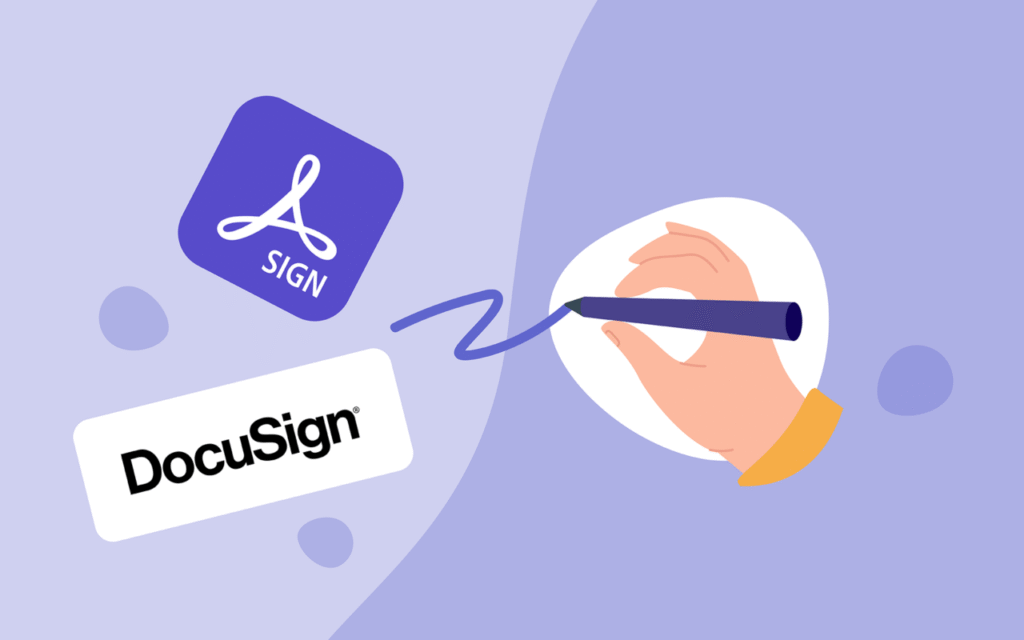
Well-known providers such as DocuSign and Adobe Sign paved the way for mainstream eSignature adoption. They remain strong options for many organizations, but their models aren’t always optimized for rapid scaling.
Common limitations include:
- Pricing Pressure – Costs often increase sharply with higher usage or added features.
- File Size Constraints – Including large appendices, detailed diagrams, or multimedia elements can be difficult under standard limits.
- Integration Complexity – Connecting enterprise-grade tools can require additional custom development or third-party middleware.
A closer comparison of docusign and adobe sign highlights how these differences can affect businesses as they grow.
Alternative to Legacy Solutions
A scalable eSignature platform isn’t just a bigger version of its smaller counterpart—it’s designed from the ground up to handle growth without adding friction. Key traits to look for include:
- Generous File Size Limits – The ability to upload agreements and supporting documents up to 250MB ensures that even complex contracts with high-resolution visuals or large appendices can be handled in one transaction.
- Integration Depth – Over 100+ ready-made connections to CRMs, HR systems, and productivity tools keep workflows unified, reducing manual work.
- Transparent, Growth-Friendly Pricing – Plans that align with usage patterns without imposing steep jumps in cost as volumes increase.
- Enterprise-Grade Security – Built-in compliance with regulations such as GDPR, eIDAS, and HIPAA, removing the need for bolt-on solutions.
These characteristics ensure that whether you’re adding new teams, expanding globally, or digitizing additional processes, the eSignature tool adapts to your needs—rather than forcing costly workarounds. Modern electronic signature providers that prioritize scalability make it possible to grow without disruption.
Real-World Adoption Insights
Consider a mid-sized technology firm that doubled in size within two years. Initially, its eSign solution worked well for a single sales department. But as usage spread to legal, procurement, and HR, storage caps and integration gaps began to slow operations.
After migrating to a platform built for scalability, the company saw:
- 30% faster contract turnaround thanks to deep CRM integration.
- Zero delays on large-file transactions, enabling the sales team to attach rich media and detailed proposals without compressing or splitting files.
- Predictable costs even as the number of agreements tripled.
For technology leaders, these results underscore the importance of evaluating not just what an eSign tool can do today, but how it will perform under tomorrow’s demands. Scalability isn’t a future concern—it’s a competitive advantage from day one.
Conclusion
When a business is growing, every delay in a core process compounds over time. An eSignature platform that scales smoothly protects productivity, maintains compliance, and keeps costs predictable.
Organizations that audit their current digital agreement workflows often find that limitations aren’t just inconveniences—they’re roadblocks to revenue and efficiency. Addressing scalability now ensures that as volumes rise, your agreements remain as seamless as your growth plans.
Book a Demo to see how a scalable eSign platform can keep pace with your enterprise’s ambitions.

Alexia is the author at Research Snipers covering all technology news including Google, Apple, Android, Xiaomi, Huawei, Samsung News, and More.