Innovations in Employee Time Tracking: Enhancing Efficiency and Compliance
Key Takeaways
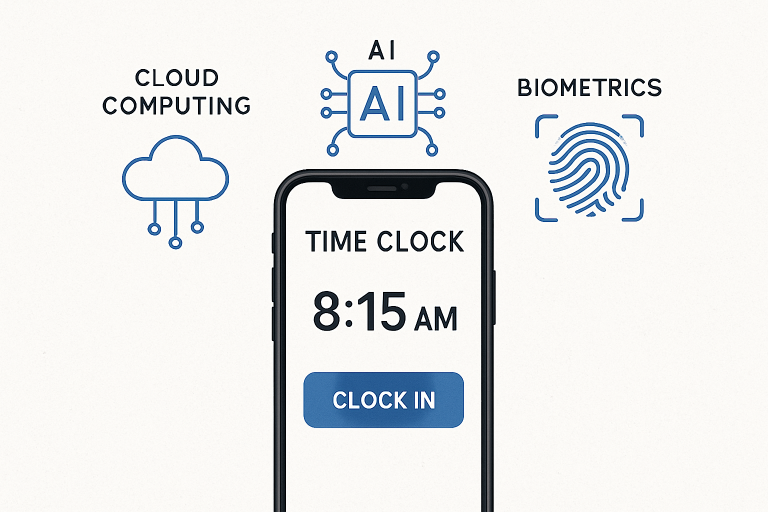
- Cloud-based, AI-powered, and mobile time tracking solutions now dominate the industry, offering unprecedented accessibility and precision for both large enterprises and small businesses.
- Biometric systems and deep integrations with team collaboration platforms help prevent fraud and streamline everyday workflows, creating a unified approach to workforce management that benefits both employees and employers.
- Robust compliance features protect businesses from legal setbacks and promote fair labor practices by simplifying adherence to complex labor laws.
Effective time tracking is fundamental to the modern workplace, as it shapes productivity and ensures adherence to labor regulations. The importance of accurately tracking work hours extends beyond payroll processing, as it impacts project management, resource allocation, operational performance, and even employee satisfaction.
In recent years, rapid technological advancements have transformed the way organizations monitor, analyze, and validate the hours their teams spend on the job. Businesses today can track hours easily for hourly teams using sophisticated, automated solutions that offer improved accuracy, transparency, and reliability. As such, tracking systems are no longer just about counting hours—they have become strategic tools that empower both employers and employees to collaborate more efficiently and transparently.
This new era of time management leverages automation, mobility, and security features to resolve longstanding challenges, from preventing payroll fraud to ensuring employees are treated fairly and in accordance with the law. Not only do these systems enhance productivity, but they also ensure that organizations meet legal requirements regardless of where work is performed.
With companies embracing digital-first strategies and remote work, time tracking needs to be accessible everywhere and robust enough to address compliance risks, employee well-being, and business growth simultaneously. The evolution of these solutions has enabled organizations of all sizes to implement rigorous yet flexible time tracking methods without compromising user experience.
Cloud-Based Solutions for Real-Time Access
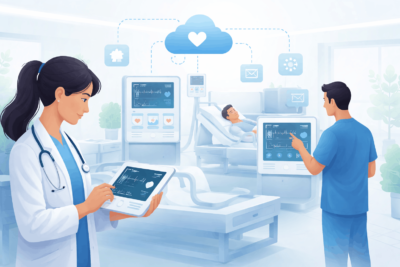
The shift toward cloud-based time tracking software represents one of the most significant changes in workforce management over the past decade. By delivering real-time access via the cloud, organizations equip their employees—whether working in the office, remotely, or on hybrid schedules—to log time from any connected location. Employees can easily access their information, review schedules, and receive approvals remotely, which is essential in today’s distributed work environments. This flexibility not only minimizes infrastructure expenses but also helps organizations react quickly to changing workforce demands, especially during peak periods or in response to market fluctuations.
According to TechRepublic, cloud-based HR and time tracking solutions are rapidly being adopted to keep pace with hybrid and global teams, supporting data security and rapid scaling. Moreover, cloud platforms often integrate seamlessly with payroll, benefits administration, and other business applications, simplifying the flow of workforce data throughout the entire organization.
Artificial Intelligence Enhancing Automation
AI is at the forefront of automating repetitive time tracking processes, reducing errors, and saving valuable administrative time. These intelligent systems can automatically categorize time spent on projects, flag irregular entries, predict project timelines based on prior data, and generate productivity insights that were previously difficult to uncover. By analyzing trends and forecasting resource needs, AI-enabled systems help managers plan more effectively and identify areas for improvement.
Research from Forbes suggests that AI-powered automation can boost operational efficiency by as much as 30%, as businesses deploy these tools to optimize work hours and better allocate resources. For employees, the reduction in manual entry lowers the risk of mistakes and makes reporting their work more intuitive. AI also enables real-time task tracking, providing the agility needed for organizations to respond dynamically to shifting priorities and employee workloads.
Biometric Authentication for Accuracy
Authentication using biometric data—such as fingerprint scans or facial recognition—is now a standard component in advanced time tracking systems. These features eliminate “buddy punching” and false time reporting by linking work hours directly to individual employees. Biometrics protect against the loopholes that paper punch cards or PIN systems often leave open, creating a far more reliable method for tracking attendance.
With the biometric workforce management market projected to exceed $3.5 billion by 2026, more businesses are implementing this technology to secure attendance records, reduce administrative investigations, and fulfill legal obligations regarding accurate timekeeping. This technology also reassures employees that their identities and hours are being handled securely, thereby reinforcing trust in workplace systems while ensuring adherence to ethical practices.
Mobile Applications Transforming Time Tracking
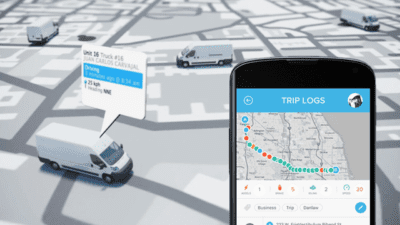
As the number of mobile and remote workers expands, user-friendly mobile time tracking apps have become essential components for modern businesses. These tools enable employees to clock in and out, manage tasks, and submit timesheets from their smartphones or tablets, regardless of their location. The convenience and immediacy offered by mobile solutions strengthen workforce flexibility and accuracy, ensuring that everyone can accurately report hours, even when on the go.
According to TechSci Research, the mobile workforce management market is expected to grow at a CAGR of 19.54% through 2029, driven by the remote work revolution and the need for 24/7 accessibility. Enhancements, such as location-based tracking (utilizing GPS verification), further ensure the integrity of time reports, providing added validation, especially for field-based or multi-site employees.
Integration with Collaboration Tools
Integration capabilities are crucial for connecting time tracking data with popular collaboration and productivity tools such as Slack, Microsoft Teams, and project management platforms. By automatically recording hours linked to specific tasks and communications, these integrations eliminate tedious data entry and provide a comprehensive overview of employee contributions.
This holistic approach to monitoring ensures leaders have a clear picture of project status and staff workloads, facilitating smarter decisions and more agile teams. Workflow integrations also enable notifications and reminders within the same environment that employees use for communication, streamlining processes and driving higher adoption rates by reducing friction between different software systems.
Compliance with Evolving Labor Laws
With labor laws changing frequently, organizations must remain vigilant to avoid costly compliance mistakes. Updated time tracking solutions are equipped to automatically monitor overtime, meal, and rest breaks, as well as other legal requirements, adjusting parameters in real-time according to changes in regulations at the local, state, or national level.
According to a Society for Human Resource Management (SHRM) report, non-compliance fines have jumped 20% in the past two years alone, prompting a surge in demand for advanced compliance tools that help businesses safeguard against penalties and avoid reputational damage. Additionally, these systems retain detailed audit trails—crucial during regulatory reviews—to substantiate compliance with wage and hour laws, decreasing the legal risks associated with workforce management.
Focus on Employee Well-Being
Modern time tracking is not only about oversight; it’s also about fostering a healthier workplace. Many platforms now offer analytics that highlight employee overwork, encourage necessary breaks, and provide data-driven insights to enhance employee well-being. By promoting balance and preventing burnout, businesses can improve morale, increase employee retention, and ultimately cultivate a more sustainable and productive work environment.
When companies recognize patterns of overtime or excessive workloads, they are better equipped to intervene and protect employees’ mental and physical health. This proactive attention to well-being often differentiates organizations as desirable places to work in highly competitive talent markets.
Conclusion
The landscape of employee time tracking has undergone a dramatic evolution, ushering in an era characterized by automation, accessibility, and increased accountability. Armed with innovative solutions—ranging from cloud services and AI to biometric authentication and mobile applications—organizations can drive efficiency, nurture compliance, and build a positive workplace culture.
Remaining agile and informed about these innovations is essential for every business seeking operational excellence in the digital age. As organizations continue to embrace new technologies, a comprehensive approach to time tracking will serve as the foundation for future-ready businesses that value both their employees’ well-being and their own sustained success.

Alexia is the author at Research Snipers covering all technology news including Google, Apple, Android, Xiaomi, Huawei, Samsung News, and More.