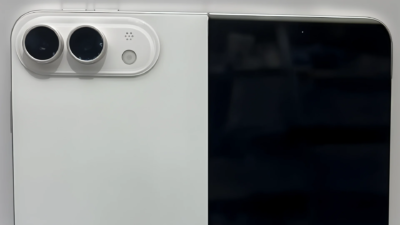
A Game-Changer: Apple’s iPhone Fold Advances With Wrinkle-Free Screen
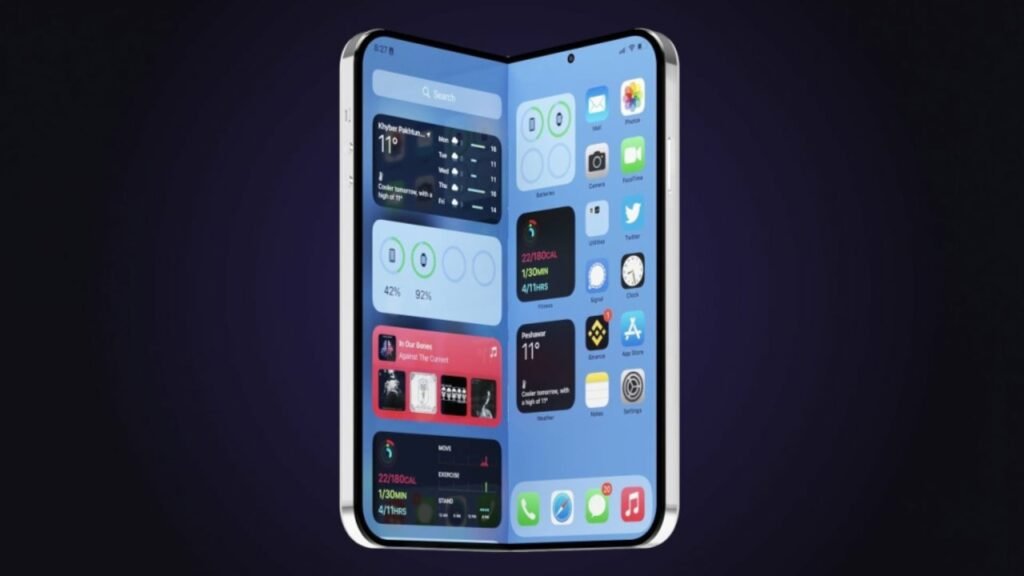
Apple seems to have solved what is probably the biggest problem with foldables. According to reports, the engineers from Cupertino have managed to completely eliminate the display crease on the upcoming iPhone Fold. Now the validation phase begins.
Breakthrough in folding displays
Apple had already received a patent for an iPhone with a foldable display in 2016. Since then, Cupertino has been working on a corresponding smartphone. Last summer there was first talk of an iPhone Fold that would hit stores in 2026. Apple’s device is said to be clearly better than the competition in two aspects: On the one hand, a hinge made of liquid metal should ensure particular durability.
On the other hand, the iPhone Fold should not have a screen bend when opened. This goal now appears to have been achieved. The company’s engineers are said to have succeeded in constructing a display that remains completely wrinkle-free. According to UDN (via Wccftech), the iPhone Fold has now left the purely experimental status and is moving towards the Engineering Validation Test (EVT) and Design Validation Test (DVT) phases.
Although Samsung Display acts as the primary manufacturer for the foldable OLED panels, the technological lead for the layer structure should clearly lie in Cupertino. Apple developed the structure of the panel, the choice of materials and the lamination method itself in order to achieve the goal of a crease-free screen. This would be a key unique selling point in the foldable market, where longevity and the visual impact caused by the fold are still the biggest points of criticism from potential buyers.
Hinges made of special alloys
In order to ensure a wrinkle-free screen over the long term, a complex interaction between the display and the mechanics is required. The crease problem is said to have been solved by tightly integrating the panel with a newly developed bearing. The companies Shin Zu Shing and Amphenol are named as suppliers for these critical hinge components. The latter is already known as a reliable partner in the Apple ecosystem. A decisive factor for the durability and precision of the mechanism is the use of the liquid metal already mentioned.
Apple secured exclusive usage rights to this technology from Liquidmetal Technologies back in 2010, but has hardly used it in its products to date. High-strength hinge components made from this material minimize deformation and offer significantly higher elasticity and corrosion resistance than conventional stainless steel or titanium. This is particularly relevant because material fatigue at the fold point in previous foldables from other manufacturers often led to cracks in the panel after intensive use.
Market launch and production plans
The preparations for mass production are now taking concrete shape. Long-time Apple partner Foxconn has already set up a dedicated production line for the iPhone Fold. This suggests that the hardware specifications are largely finalized. According to rumors, this includes an inner, book-like folding display with 7.8 inches and an outer display with 5.5 inches for use when closed.
At this size, however, the external display would be more compact than many current standard smartphones. If development continues according to plan, mass production could start in July 2026. This means that the iPhone Fold would probably be available in September 2026 alongside the iPhone 18 series. Industry observers believe that Apple could ultimately justify its late entry into the foldable market with a more technically sophisticated product.