The Evolution of Healthcare Software Development and the Growing Role of Healthcare Solution Development Services
Introduction
The global healthcare landscape is changing rapidly, driven by the increasing demand for digital transformation, interoperability, automation, and patient-centered care. Hospitals, clinics, payers, pharmaceutical companies, and digital health startups all recognize the need to modernize their technology infrastructure in order to stay competitive and improve patient outcomes.
Healthcare software development has therefore become a strategic priority, enabling organizations to streamline processes, gain actionable insights, support clinical decision-making, and create connected ecosystems of care. Today, professional healthcare solution development services play a crucial role in helping medical organizations build powerful, secure, and scalable digital tools that support both clinical and administrative functions.
Why Healthcare Needs Tailored Software Solutions
Unlike standard commercial software, healthcare technologies must navigate a unique set of challenges—regulatory compliance, patient privacy, data integration, clinical workflows, and highly sensitive medical information. Off-the-shelf systems often fail to address the complexities of EHR integration, interoperability standards such as FHIR or HL7, and varying regional compliance regulations. Custom software development solves these issues by delivering solutions tailored to each organization’s clinical, operational, and technical needs. Whether it’s building a hospital management system, telemedicine application, laboratory platform, or population health analytics engine, custom development ensures that tools align with real-world healthcare scenarios, not generic use cases.
Key Areas of Healthcare Software Development
Modern healthcare software spans a wide range of use cases, each serving a different function within the digital health ecosystem.
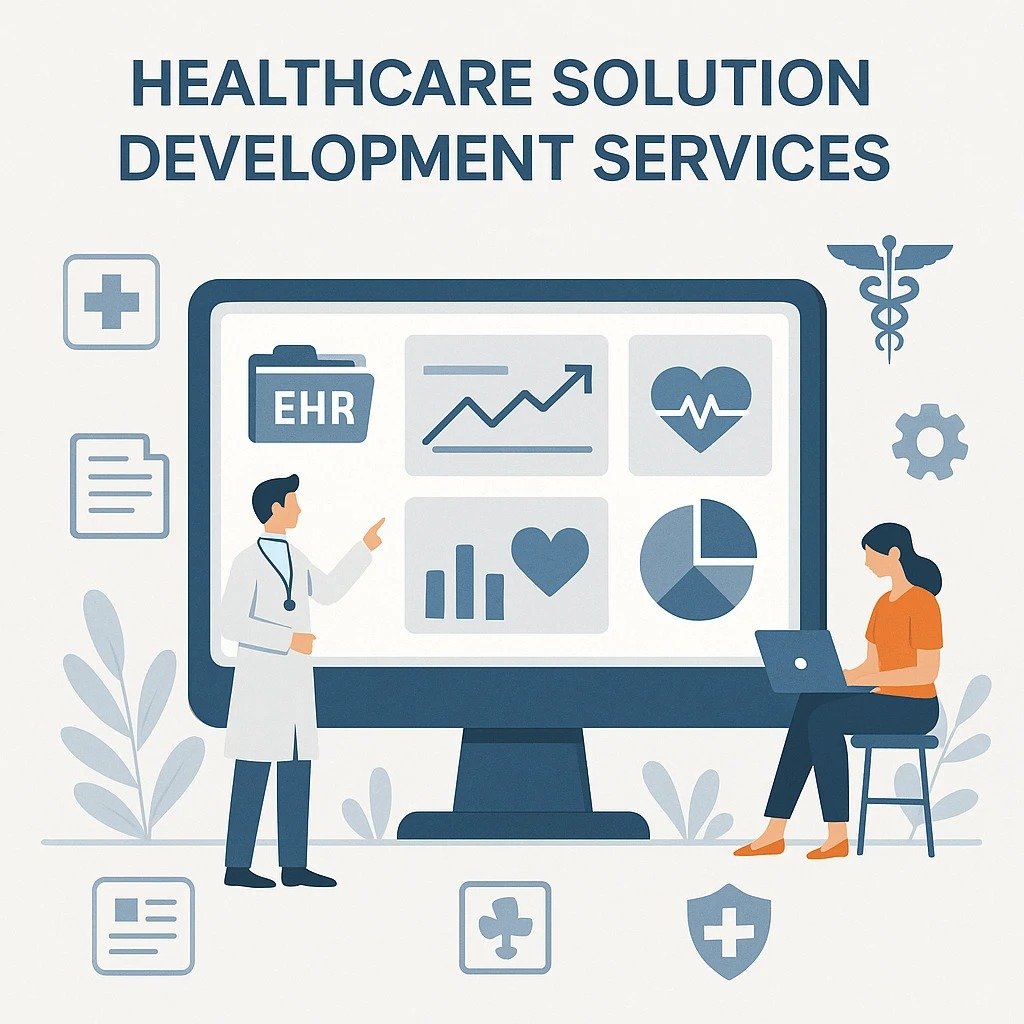
Electronic Health Records (EHR) and EMR systems remain central to today’s healthcare infrastructure. Custom EHR modules help organizations reduce documentation time, improve data accuracy, and enhance clinician workflows.
Telehealth and remote care platforms have become essential, enabling virtual consultations, remote patient monitoring, and long-term chronic disease management. These tools increase accessibility and reduce unnecessary hospital visits.
Healthcare analytics and AI-driven systems support clinical decision-making, predict patient risks, and optimize hospital operations. Algorithms trained on clinical data can identify early warning signs, automate triage, and personalize treatment plans.
Laboratory and medical imaging systems enhance diagnostic accuracy and reduce turnaround time. Integrated LIS and RIS/PACS solutions help unify test results, imaging data, and diagnostic reports.
Insurance and claims management systems support payers by automating eligibility checks, claims processing, fraud detection, and reimbursement workflows.
mHealth applications empower patients to track their health, communicate with providers, and access educational content directly from their smartphones. These solutions improve adherence, engagement, and self-management.
Interoperability as a Critical Component
Healthcare’s digital progress depends heavily on interoperability—the ability of systems to exchange, interpret, and use clinical data. Without it, providers face bottlenecks, duplicated tests, fragmented patient histories, and inconsistent care. Modern software development increasingly relies on interoperable standards such as FHIR, HL7 v2, DICOM, and IHE profiles. Interoperability ensures that clinical data flows seamlessly across platforms, enabling real-time insights and coordinated care. Today’s leading developers design systems that integrate easily with existing hospital technology, ensuring long-term scalability and alignment with global standards.
Security and Compliance Considerations
Healthcare software must prioritize security at every layer, from infrastructure to user interface. Patient data is one of the most sensitive types of information, making healthcare systems frequent targets for cyberattacks. Proper software development includes data encryption, secure authentication flows, role-based access controls, audit logs, and continuous vulnerability monitoring. Compliance with frameworks such as HIPAA, GDPR, and local regulatory rules ensures patient privacy and legal protection. Healthcare organizations rely on development partners who understand these regulations and implement security from the ground up.
About Edenlab
Edenlab is one of the leading companies specializing in high-performance healthcare engineering and interoperability solutions. The company is known for developing robust digital infrastructure for national healthcare systems, hospital networks, and innovative digital health platforms. Edenlab’s experience spans FHIR-native product development, healthcare data standardization, complex system integrations, and enterprise-grade backend architectures. Their team focuses on delivering solutions that support seamless data exchange, large-scale population health management, and secure clinical operations. Edenlab stands out for combining deep engineering expertise with an understanding of healthcare regulatory environments, enabling organizations to build scalable digital ecosystems with confidence. For institutions seeking reliable healthcare solution development services, Edenlab provides a strong foundation for both innovation and compliance.
The Role of AI and Automation in Modern Solutions
Artificial intelligence has become a key element of healthcare innovation. Machine learning algorithms analyze massive datasets to predict outcomes, automate clinical documentation, and support care coordination. Natural language processing tools extract structured insights from unstructured physician notes. AI chatbots and symptom checkers enhance patient engagement. Automation also improves administrative workflows—reducing manual paperwork, supporting faster claims decisions, and minimizing human error. As AI technologies mature, they are becoming essential components of modern healthcare platforms.
Improving the Patient Experience Through Software
Digital tools don’t just benefit hospitals—they also enhance the patient journey. Appointment scheduling apps, virtual visits, medication reminders, digital onboarding, and wellness trackers create a more convenient and connected healthcare experience. Patients gain more control over their personal health data and can access care faster, regardless of physical location. This shift toward consumer-centric healthcare is one of the major drivers of new software development demands.
Challenges in Building Healthcare Software
Despite its potential, healthcare software development comes with challenges. Legacy systems often resist integration, requiring complex middleware or modernization strategies. Data quality issues can undermine analytics results. Regulatory barriers may slow the development process. Additionally, clinical workflows vary significantly between organizations, making universal design difficult. Overcoming these challenges requires experienced engineering teams, precise planning, and a deep understanding of healthcare operations.
Future Trends in Healthcare Digitalization
The future of healthcare software includes real-time clinical decision support, precision medicine platforms, genomic analytics, advanced wearables, and national digital health infrastructures. Cloud-based systems will continue to expand, enabling scalable platforms and reducing the burden of on-premise solutions. Interoperability will remain central, while AI-driven personalization will redefine patient engagement. The combination of data, automation, and intelligent software will continue pushing healthcare toward a more predictive, efficient, and patient-centered future.
Conclusion
Healthcare’s digital transformation is redefining how medical organizations operate, communicate, and deliver care. Custom software plays a pivotal role in this shift, enabling organizations to build tailored tools that improve quality, safety, and efficiency. With support from modern healthcare solution development services, healthcare providers can create interconnected systems that streamline workflows, ensure compliance, enhance patient experiences, and unlock the power of data. Companies like Edenlab demonstrate how advanced engineering, healthcare expertise, and strong interoperability frameworks can help shape the next generation of digital health innovation.

Alexia is the author at Research Snipers covering all technology news including Google, Apple, Android, Xiaomi, Huawei, Samsung News, and More.