Why Dr. David Greene, Leading Regenerative Medicine Pioneer, Chose to Have His Hair Transplant in Turkey at UniquEra Clinic
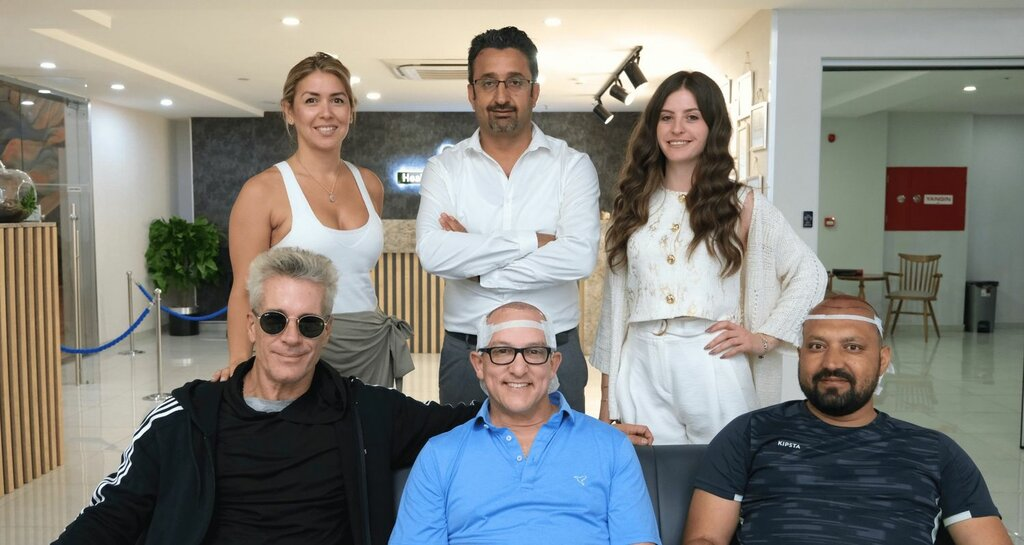
Over the past decade, Turkey has become one of the most sought-after destinations for hair transplants. Patients from the United States, Europe, and the Middle East regularly travel to Istanbul for advanced procedures that combine modern medical standards with accessible pricing. What surprises many observers is the growing number of medical professionals-including surgeons, researchers, and regenerative medicine specialists-who are making the same choice.
One of them is Dr. David Greene, a residency and fellowship-trained physician known for performing more than 26,000 regenerative procedures across seven countries. He understands clinical protocols, graft viability, sterility standards, and long-term biological outcomes far more deeply than the average patient. When he decided to address his own hair loss, he didn’t choose a clinic because it was close or familiar. He evaluated data, surgical technique, medical infrastructure, and case consistency.
That process led him to travel from the United States to Istanbul, where he underwent a hair transplant surgery in Turkey at UniquEra Clinic, a facility known for combining evidence-based methods with structured care under the UniquEra International Group. His decision to choose UniquEra Clinic in Turkey over convenient domestic options reveals a broader trend: medical professionals increasingly recognize that the world’s leading hair restoration expertise has concentrated in Istanbul, where high volumes, competitive excellence, and advanced techniques have created an ecosystem unmatched anywhere else globally.
Why Has Hair Transplantation Become a Precision Medical Procedure?
Modern hair transplantation bears little resemblance to the crude “plug” methods of decades past. Today’s techniques use micro-punches, sapphire blades, and implanter-pen systems to recreate natural follicular patterns with anatomical accuracy.
FUE as the Foundation of Modern Restoration
Follicular Unit Extraction (FUE) remains the gold standard. Physicians harvest individual follicular units-each containing 1–4 hairs-using micro-punches measuring 0.7–1.0 mm. These grafts are then implanted following natural growth direction, angle, and distribution.
Sapphire FUE and DHI Take Precision Further
Refinements such as Sapphire FUE (using crystalline blades) and Direct Hair Implantation (DHI) allow for:
- Smoother micro-incisions
- Reduced tissue trauma
- Denser graft packing
- Shorter graft ischemia time
- Faster re-epithelialization
These advancements are now standard in high-volume clinics in Istanbul-one reason Turkey has become the global center of modern hair restoration.
Why a Leading Medical Professional from the US Considered Hair Transplants in Turkey?
Turkey has become a global reference point for hair restoration. With more than one million procedures performed annually, the country has built an ecosystem around FUE, Sapphire FUE, and DHI transplant Turkey techniques. Turkey performs more hair transplants each year than any other country. For medical professionals like Dr. Greene, several factors stand out:
High Procedural Volume
Clinicians in Istanbul work with hair restoration cases daily. Repetition refines technique, improves graft survival, and sharpens density planning.
Modern Tools as Standard
Techniques like Sapphire FUE and DHI transplant Turkey – considered premium upgrades in many Western clinics-are widely available in Istanbul’s established facilities.
Medical Tourism Infrastructure
Coordinated patient pathways, multilingual staff, streamlined airport transfers, and structured follow-up systems make it easier for international visitors.
Transparent Pricing Models
Most clinics provide all-inclusive packages without hidden costs, which is rare in Western markets where graft-based pricing fluctuates.
For patients seeking a luxury hair transplant Turkey, the appeal is not only cost efficiency but the concentration of refined skill.
Dr. Greene’s perspective was simple:
“Skill develops through repetition. Clinics in Turkey perform more procedures in a month than many Western clinics perform in a year.”
High volume, when paired with strict technique and sterile environments, produces predictably higher graft survival and more natural implantation angulation.
This principle led him to consider hair transplants in Turkey over domestic options.
Why a Doctor’s Choice Carries Weight?
Doctors evaluate clinics differently than typical patients.
They look for:
- Donor-area conservation
- Anatomical angulation accuracy
- Evidence of sterile technique and controlled microclimates
- Standardized graft-handling protocols
- Long-term density outcomes rather than short-term cosmetic results
In regenerative medicine – Dr. Greene’s own field-precision, sterility, and biological viability determine success. These same principles guided his approach to hair restoration.
Dr. Greene’s Search: Evidence Over Advertising
When Dr. Greene began exploring hair restoration options, he approached it like a clinical review:
- Studied research on graft survival and vascular integration
- Analyzed long-term (3–5 year) outcomes from various clinics
- Compared patient forums-not promotional testimonials
- Consulted colleagues in dermatology and plastic surgery
- Evaluated team stability rather than individual marketing personalities
Many U.S. clinics offered convenience, but outcomes varied. Others marketed aggressively yet provided limited transparency around graft limits, donor management, or complication handling.
Professionally, he knew that high-volume expertise often correlates with consistent results. This shifted his attention toward Turkey’s established centers.
Why UniquEra Aligned With His Criteria?
In a city filled with hundreds of clinics, UniquEra stood out to Dr. Greene for reasons rooted in medical logic-not promotion.
1. A Team-Based Medical Model
Instead of relying on a celebrity name, UniquEra works through a coordinated medical team. For Greene, who runs multi-site regenerative centers, this signaled process discipline and consistent protocol execution.
2. Transparent Donor Analysis
UniquEra’s trichoscopy-based assessment provided realistic graft limits rather than inflated promises.
For a physician, this honesty reflected appropriate donor ethics.
3. Use of Modern Techniques Without Upselling
During his evaluation, Dr. Greene looked closely at how clinics applied advanced tools such as sapphire micro-blades and DHI implanter pens, since both techniques play an important role in modern follicular restoration. At UniquEra, these methods were explained as part of standard clinical practice-not optional upgrades..
4. Structured Long-Term Follow-Up
The clinic’s protocol includes regular monitoring, digital imaging, and consistent guidance through the 12-month regrowth cycle-an approach most aligned with Greene’s clinical expectations.
5. A Balanced Approach to Aesthetics and Medical Precision
Hairline design was based on age-appropriate density, natural emergence angles, and follicular orientation-principles Greene values in regenerative medicine as well.
The clinic did not rely on theatrics or marketing language-just method, data, and clarity.
His Experience in Istanbul
His travel, consultation, and procedure followed a streamlined path common to established hair transplant clinics in Istanbul:
- Arrival in Istanbul with coordinated transfers
- Diagnostic evaluation and density planning
- Extraction using Sapphire FUE
- Controlled graft placement to respect natural angulation
- Early postoperative care including PRP support
- Follow-up wash and return to the U.S. within days
Recovery progressed exactly as predicted: temporary swelling, scab shedding around day 10, early shedding phase around week 5, and visible regrowth by month three.
Colleagues noticed that he “looked refreshed,” yet few could pinpoint why-a hallmark of a well-executed transplant.
What His Case Suggests About a Larger Trend?
More physicians and medical executives are now seeking hair transplant clinic in Istanbul for the same reasons Greene did:
- Maturity of the medical tourism ecosystem
- Standardization of modern FUE/DHI techniques
- Donor-preserving planning models
- Greater consistency due to higher procedural frequency
For those considering a vip hair transplant Turkey, his story illustrates that expertise and value often converge abroad-not because the U.S. lacks skill, but because the density of experience in Turkey accelerates refinement.
Key Takeaways for Professionals Considering Hair Restoration
Dr. Greene’s experience provides a framework for evaluating clinics, especially for readers who want an evidence-based approach:
Look at long-term outcomes, not marketing
Check results from 24–60 months post-procedure-this reveals true graft survival, density stability, and donor area integrity.
Choose certified experts working in licensed medical facilities
Procedures should be performed by trained medical professionals operating in clinics accredited by national health authorities. This ensures proper sterilization, clinical oversight, and compliance with international safety standards.
Evaluate team stability
Medical teams that have worked together for years produce consistent surgical choreography. High turnover often predicts variable outcomes.
Favor realism over guarantees
Clinics promising “unlimited grafts” or “perfect density” often ignore biological limits. Ethical providers communicate constraints clearly.
Prioritize high-volume environments
High procedural volume is strongly correlated with refined technique and reduced risk.
Understand the timeline
Hair restoration is a 12–18-month journey. Clear postoperative guidance and structured follow-up matter more than the procedure day alone.
Conclusion
Dr. Greene’s choice to travel thousands of miles for a procedure available closer to home highlights a simple truth: excellence concentrates where volume, precision, and experience intersect. Turkey has become that environment for hair transplantation, and within Turkey, UniquEra Clinic represents a level of structure and medical clarity that resonates with professionals who evaluate care through evidence, not advertising.
For medical practitioners, entrepreneurs, or anyone who values outcomes over convenience, his experience demonstrates that the most effective solution is not always the nearest one-it is the one where expertise truly lives.

Alexia is the author at Research Snipers covering all technology news including Google, Apple, Android, Xiaomi, Huawei, Samsung News, and More.