Kia criticizes modern touch cockpits in cars
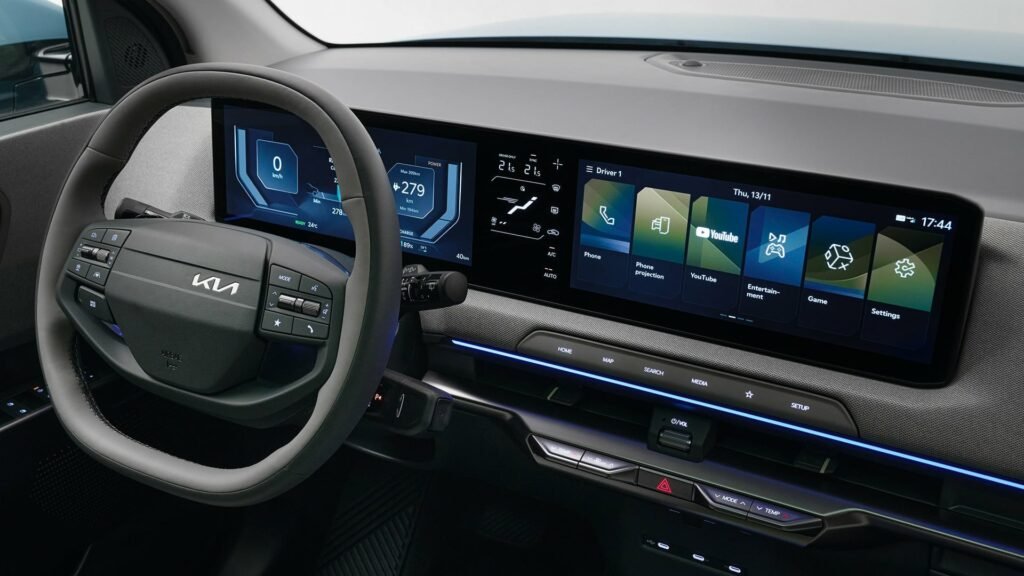
Distraction, safety risks and nested menus: Kia clearly rejects pure touch controls in the car. The manufacturer instead relies on tactile switches for important functions in order to use the drivers’ intuitive “muscle memory”.
Critical functions must be able to be operated blindly
In an era in which vehicle cockpits increasingly look like tablets on wheels, the South Korean automobile manufacturer Kia is sending a clear signal to IT-savvy customers and end users: the complete digitalization of controls is not the end all be all. While competitors often eliminate physical switches in favor of touch surfaces and voice controls for cost reasons, Kia reiterates the need for tactile controls for essential functions. The strategic decision aims to ensure safety and usability in road traffic.
Critical functions must be operable blindly and without delay. Jochen Paesen, head of interior design at Kia, argues that certain tasks in the vehicle do not allow for margin of error. If a driver has to look away from the road to navigate through digital submenus, not only comfort suffers, but above all road safety. A physical button provides immediate orientation.
Usability beats design gimmicks
As Jochen Paesen explained in an interview with the British trade magazine Autocar, a user interface that requires three clicks or menu levels to reach a basic function is simply “bad for everyone.” Kia is deliberately positioning itself against the trend of some Chinese manufacturers who are currently flooding the market with screen-dominated interiors and digital gimmicks to suggest technological progress. Kia recognizes that these new market participants increase the pressure to innovate and bring in interesting new ideas (“novelty”). Nevertheless, internal market studies conducted by the Koreans show that the basic needs of users worldwide are almost identical: They want a tool that works without having to learn it first. The car should support the driver and not challenge him with complex operating logic. A cluttered interface may impress in the showroom, but often proves to be a hindrance in everyday life.
The industry is changing
Kia is no longer alone in this attitude. The industry appears to have reached a tipping point where the limitations of touch-only operation are being revealed. Various manufacturers are now correcting their strategies. For example, Volkswagen, which announced its return to physical buttons on the steering wheel after massive criticism of unlit touch sliders and capacitive steering wheel buttons.
Haptic feedback and the so-called “muscle memory” enable operation that flat glass surfaces simply cannot offer. Anyone who can type blindly on a keyboard knows the value of physical reference points. Kia plans to further expand the digital share in future vehicle generations, but in a careful balance. Updates and infotainment remain digital and benefit from OTA (over-the-air) updates, while volume, climate control and driving-critical functions retain their physical place.

Digital marketing enthusiast and industry professional in Digital technologies, Technology News, Mobile phones, software, gadgets with vast experience in the tech industry, I have a keen interest in technology, News breaking. Can be reached at yasir.zeb@researchsnipers.com