Industrial Hot Water Pressure Washers for Facility and Equipment Maintenance
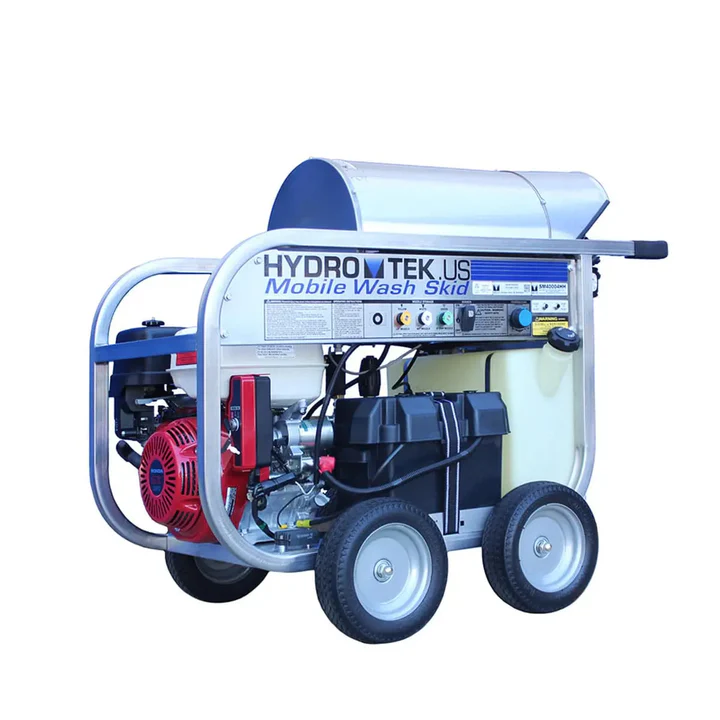
Maintaining cleanliness in industrial facilities, fleets, and outdoor workspaces is critical for safety, equipment longevity, operational efficiency, and regulatory compliance. Stubborn contaminants like grease, oil, tar, and hardened dirt often resist cold water cleaning methods. A HYDRO TEK Nilfisk 4000 PSI 3.5 GPM Hot Water Pressure Washer provides a professional-grade solution. By combining high water pressure with heated water, this equipment significantly enhances cleaning power, making it an essential tool for tackling the most demanding cleaning tasks in industrial and commercial environments.
Technical Operation and Core Applications
This type of pressure washer is a complex, integrated system. A gasoline engine, such as a commercial Honda model, drives a high-pressure pump that pressurizes water. This cold, pressurized water then passes through a heating coil within a burner system (often powered by diesel fuel or kerosene), where it is heated before exiting the spray wand. The combination of thermal energy and kinetic energy (pressure) provides superior cleaning action. Key industrial applications include degreasing machinery, workshop floors, and engine bays; cleaning fleet vehicles, heavy equipment, and transportation containers; removing oil stains from asphalt and concrete surfaces; sanitizing food processing or agricultural equipment where heat aids in disinfection; and preparing surfaces for painting or coating by removing all contaminants.
The Impact on Cleaning Efficiency and Operational Standards
Implementing a hot water pressure washer directly transforms cleaning from a labor-intensive chore into an efficient, effective process. The heat lowers the viscosity of oils and greases, allowing the pressure to strip them away with less effort and often without the need for harsh chemicals. This leads to faster cleaning cycles, reduced labor time, and lower chemical costs. From a safety and quality standpoint, a thoroughly cleaned work environment reduces slip and trip hazards. Clean equipment is easier to inspect for maintenance issues, and regular washing prevents corrosive buildup, extending asset life. For industries with strict hygiene or appearance standards, this equipment is indispensable for meeting those requirements consistently.
Technical Specifications and Performance Considerations
Selecting an appropriate hot water pressure washer requires evaluating several interconnected specifications. Pressure, measured in pounds per square inch (PSI), indicates the impact force of the water stream. Flow rate, measured in gallons per minute (GPM), determines how much water is delivered. The combination of PSI and GPM gives the cleaning power (measured in Cleaning Units, where CU = PSI x GPM). A machine rated at 4000 PSI and 3.5 GPM delivers substantial cleaning power. The heating capacity, defined by the burner’s output in British Thermal Units per hour (BTU/hr), determines how much the water temperature can be raised above the inlet temperature. Other critical factors include engine reliability, pump durability, fuel type for the burner, and overall portability and build quality for industrial use.
Key Factors Influencing Performance and System Reliability
Effective and safe operation of a hot water pressure washer depends on managing several factors:
- Water Supply and Quality: A consistent supply of water at adequate pressure and volume is required. Using a water softener or filter can prevent mineral scale buildup in the pump and heating coil.
- Chemical Injection: Many models allow for the injection of detergents or degreasers. Using the correct chemicals at the proper dilution is crucial for results and equipment safety.
- Nozzle Selection: Using the correct spray tip (e.g., 0-degree, 15-degree, 25-degree, soap) for the task affects cleaning speed and surface safety. A narrow stream has more impact; a wider fan covers more area.
- Fuel Management: The burner requires its own fuel supply (diesel, kerosene). Using clean, appropriate fuel is essential for reliable ignition and combustion.
- Regular Maintenance: This is more critical than for cold washers. Tasks include checking and changing pump oil, descaling the heating coil, cleaning fuel and water filters, inspecting hoses and fittings, and maintaining the engine.
- Operator Training: Personnel must be trained on the startup/shutdown sequence (especially for the burner), chemical handling, and safe high-pressure operation.
Safety Protocols and Operational Best Practices
Hot water pressure washers present multiple hazards: extreme pressure, high-temperature water, chemical exposure, and fumes from the burner and engine.
- Wear full personal protective equipment: safety glasses or a face shield, hearing protection, chemical-resistant gloves, and waterproof boots and clothing.
- Never point the spray wand at people, animals, or electrical components. The stream can inject material under the skin or cause severe injury.
- Follow the manufacturer’s specific startup procedure to prevent thermal shock to the pump (e.g., starting with water flow before engaging the burner).
- Operate in a well-ventilated area, especially when using chemicals or in enclosed spaces, to avoid fume inhalation.
- Inspect all hoses for cuts, bulges, or wear before each use. Never use a damaged high-pressure hose.
- Always engage the trigger lock or safety latch on the spray gun when not actively spraying.
- Be aware of the surface being cleaned. High pressure can damage wood, soft concrete, or painted surfaces.
- Allow the machine to cool down according to the shutdown procedure before storing or performing maintenance.
Equipment Types and System Features
Industrial hot water pressure washers are categorized by their power source (gasoline, diesel, electric), heating method (oil-fired burner, electric element), and mobility (cart, skid, trailer). Key features of professional models include ceramic-plunger pumps for durability, adjustable pressure and temperature controls, chemical injection systems, robust frames, and large fuel and chemical tanks for extended operation.
Advantages and Practical Limitations
The primary advantage is unparalleled cleaning effectiveness on greasy, oily, and hardened organic soils. It reduces chemical usage, saves time and labor, and can achieve sanitization temperatures. Limitations include higher initial cost, increased complexity and maintenance requirements, higher fuel consumption (for both engine and burner), and the need for more comprehensive operator training. It is not a tool for occasional light-duty use; it is an investment for operations with serious, recurring industrial cleaning needs.
Real-World Implementation Example
A municipal public works department uses a hot water pressure washer to clean its fleet of garbage trucks, snowplows, and street sweepers. The hot water effortlessly melts away road salt, grease, and compacted organic waste that cold washing could not remove. This thorough cleaning prevents corrosion, allows mechanics to spot fluid leaks and wear damage more easily during inspections, and presents a professional image for the city’s equipment. The machine’s portability allows it to be used in the maintenance bay or deployed to a remote lot as needed.
Conclusion and Operational Outlook
An industrial hot water pressure washer is a powerful and strategic asset for any operation where cleanliness is tied to safety, compliance, and asset preservation. Its value lies in its ability to solve cleaning challenges that other methods cannot. For facility and maintenance managers, successful deployment requires viewing it as a system, not just a tool, with commitments to proper training, preventive maintenance, and safe operating procedures. As industries face increasing pressure to operate cleanly, efficiently, and sustainably, the role of high-performance cleaning equipment like hot water pressure washers in achieving these goals will continue to be significant.

Alexia is the author at Research Snipers covering all technology news including Google, Apple, Android, Xiaomi, Huawei, Samsung News, and More.