The Evolution Smart Home of from Passive to Active Cleaning
For the past decade, the concept of the “Smart Home” has largely been defined by passive convenience. We installed connected light bulbs that changed color with a voice command, thermostats that learned our heating preferences, and doorbells that streamed video to our phones. These innovations were impressive, but they were largely reactive—they waited for a user to toggle a switch or check a feed.
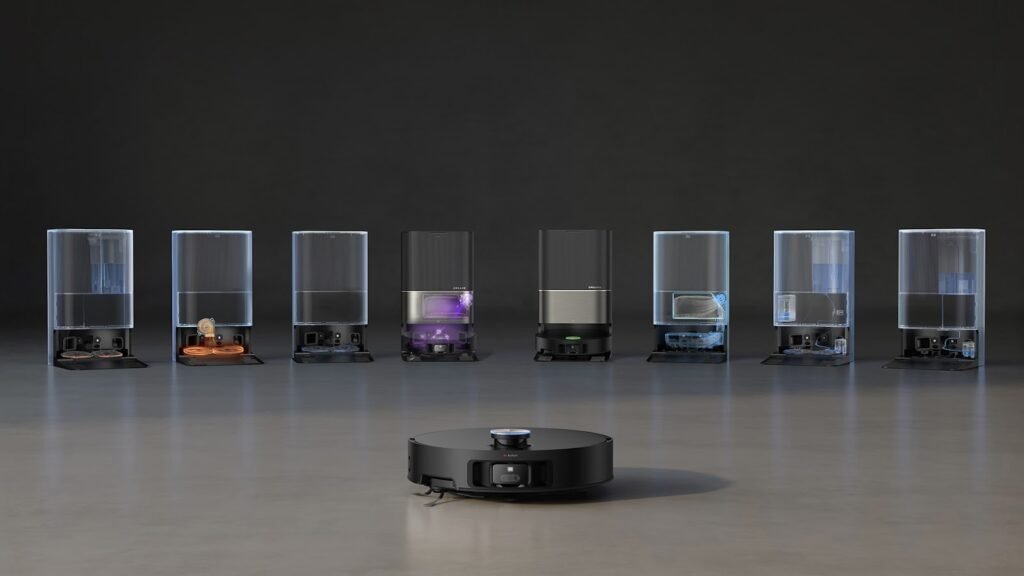
We are now entering the era of Smart Home 2.0. This phase is defined not just by connectivity, but by autonomous agency. The new generation of smart devices doesn’t just sit on a shelf waiting for a command; it actively moves through the physical space, performing labor that humans previously had to do themselves.
Nowhere is this shift more evident than in the evolution of floor care. The transition from manual tools to intelligent robotics represents the biggest leap in domestic management since the invention of the washing machine.
The Death of the “Dumb” Robot
Early iterations of robotic vacuums were arguably more “toy” than “tool.” They ping-ponged randomly off walls, got stuck on rug tassels, and required almost as much babysitting as the cleaning itself.
Today’s technology is unrecognizable by comparison. Modern floor care utilizes the same navigational principles found in self-driving cars.
The contemporary vacuum and mop robot utilizes LiDAR (Light Detection and Ranging) and vSLAM (Visual Simultaneous Localization and Mapping) to build a millimeter-accurate map of your home. It doesn’t just “bump and turn”; it plans. It identifies the most efficient route to clean a room, moving in systematic, overlapping lines to ensure 100% coverage.
Furthermore, the integration of Artificial Intelligence (AI) has solved the “sock problem.” Advanced cameras and object recognition software allow these robots to identify temporary obstacles—like a charging cable, a pet toy, or a pair of shoes—and navigate around them in real-time. This level of intelligence effectively allows for true “set and forget” automation. You no longer need to “pre-clean” your house before the robot runs. You simply set a schedule in the app, and the device manages the environment on its own.
The Intelligence of Handhelds: Sensors Over Switches
While robots handle the autonomous maintenance, the handheld tools used for deep cleaning have undergone their own quiet revolution. The mop and bucket—a technology that has remained virtually unchanged for centuries—is finally being retired.
In its place is the smart wet dry vac. What makes these devices “smart” isn’t just that they use electricity; it is that they use sensors to adapt to the mess.
High-end models feature infrared dirt detection sensors. As you pass the vacuum over the floor, the device analyzes the density of the debris and the opacity of the liquid in real-time. It then automatically adjusts the suction power and water flow to match the mess. If you are cleaning a light dust layer, it conserves battery and water. If you hit a sticky spill of maple syrup or a pile of wet mud, the motor ramps up instantly to maximum power.
This removes the guesswork from cleaning. The user doesn’t need to fiddle with dials or settings; the machine optimizes its own performance 500 times per second. Additionally, the “self-cleaning” cycle on the docking station means the device washes its own rollers, preventing the mold and odor issues plaguing traditional cleaning tools.
The Integrated Ecosystem
The hallmark of Smart Home 2.0 is that these devices don’t exist in a vacuum (pun intended). They are part of a connected ecosystem.
- Voice Control: Integration with Alexa, Google Home, or Siri allows for natural language commands. “Clean the kitchen” is no longer a request you make to a teenager, but a command executed immediately by your robot.
- Zone Cleaning: Through smartphone apps, users can draw “No-Go Zones” or designate specific high-traffic areas for extra attention. You can program the robot to mop the hallway twice due to rain, or avoid the baby’s room during nap time.
- Maintenance Alerts: Instead of waiting for the vacuum to break, smart diagnostics alert your phone when a filter needs rinsing, a brush is tangled, or a water tank needs refilling.
The Return on Tech
Investing in active smart home technology is different from buying a new TV or a smart speaker. Those are entertainment devices; these are productivity devices.
The value proposition of Smart Home 2.0 is the reclamation of time. By offloading the cognitive load of “remembering to clean” and the physical labor of “scrubbing the floor” to algorithms and motors, you aren’t just buying a gadget. You are buying back the hours of your life previously lost to the mundane.In the modern smart home, the floor is no longer something you clean; it is something that is cleaned. And that subtle shift changes everything about how we live.

Alexia is the author at Research Snipers covering all technology news including Google, Apple, Android, Xiaomi, Huawei, Samsung News, and More.