Apple introduces MacBook Air and MacBook Pro with M5 chips
Apple’s MacBook series is on the verge of one of the biggest technological leaps in recent years. With the new M5 processors, the company is making the MacBook Air and MacBook Pro not only more powerful, but above all more efficient for AI workflows.
M5 upgrade for Apple’s notebook series
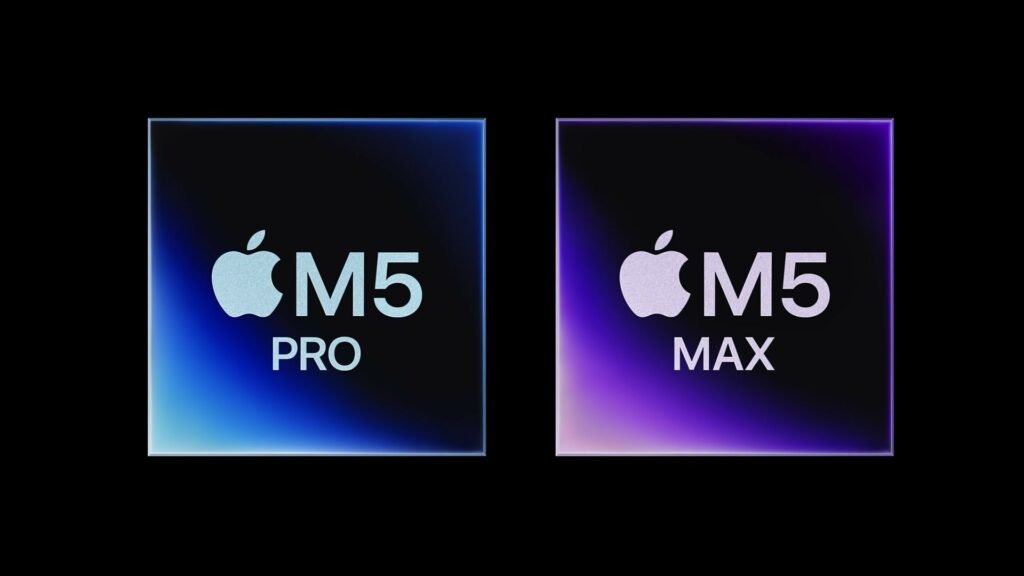
Apple announced this today. MacBook Pro M5 Pro and M5 Max and the MacBook Air M5 are now restarting. The devices can be pre-ordered from March 4th and will be delivered from March 11th. The switch to the new chip generation marks a clear cut: The M5 series is based on further developed production and revised core design. Apple has rebalanced performance and efficiency cores, while a dedicated Neural Accelerator in each GPU unit accelerates AI tasks directly on the device – a plus for developers of local language models or image tools.
Watch on YouTube
New standards
Also new is the N1 chip, which exclusively takes care of wireless connections and supports standards such as WLAN 7 and Bluetooth 6. The new MacBook Air benefits especially in terms of memory: the basic version now starts with 512 GB SSD, twice as much as its predecessor. The fanless design remains, as does the impressive battery life of up to 18 hours. Apple offers the Air in 13 and 15 inches starting at 1,199 euros – so it continues to target frequent travelers and students who want to combine performance and mobility.
MacBook Pro: Maximum power for professionals
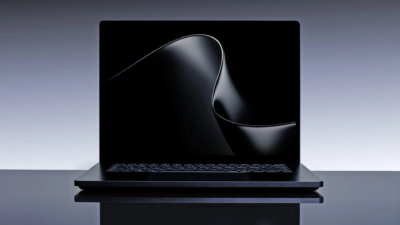
Anyone who works with large amounts of data, video or 3D projects will find the right machine in the new MacBook Pro. The 14 and 16 inch models rely on the M5 Pro or M5 Max, which have up to 18 CPU cores and 40 GPU cores. The storage has also been increased: The Pro starts with 1 TB SSD, the Max version even with 2 TB.
The appearance hasn’t changed much, but the connections have been changed: three Thunderbolt 5 ports enable data rates of up to 120 Gbit/s and therefore particularly fast connection of external drives or displays. The Liquid Retina XDR display remains a highlight – now optionally with nano-texture glass to prevent reflections. Apple mentions runtimes of up to 24 hours, which makes the MacBook Pro equally attractive for developers, engineers and creative people. The price of the new models starts at 2,499 euros, while the high-end versions with M5 Max quickly reach the 4,000 euro mark.
Technological evolution with clear direction
The new M5 processors with AI accelerators, Thunderbolt 5, doubled base memory and N1 connectivity chip show that Apple is specifically focusing on localizing AI performance and energy efficiency. According to market researchers from IDC, the company is following an industry trend: in the future, mobile devices will increasingly take on computing tasks that were previously reserved for cloud servers.
The most important innovations at a glance
- M5 Pro and Max: With dedicated AI accelerators
- Thunderbolt 5: Ports for faster data transfer on the Pro
- Doubled base storage: For Air (512 gigabytes) and Pro (one terabyte)
- N1 chip: Enables WLAN 7 and Bluetooth 6 support
Are you planning an upgrade to the new M5 generation or is the performance of the predecessor still enough for you? Let us know in the comments, we’re excited to hear your opinion!
Apple MacBook – Chips & Performance in Comparison
| feature | M5 (air) | M5 Pro (Per) | M5 Max (Per) |
| architecture | – | Fusion architecture, dual-die SoC | |
| CPU cores | 10 cores | up to 18 cores (6 super cores + 12 efficiency cores) | |
| GPU cores | up to 10 cores | – | |
| AI performance | up to 4x faster than M4 Air, up to 9.5x faster than M1 Air | up to 4x faster than predecessors | |
Apple MacBook – technical data in comparison
| feature | MacBook Air M5 | MacBook Pro M5 Pro | MacBook Pro M5 Max |
| sizes | 13″ and 15″ | 14″ and 16″ | |
| display | 13.6″ or 15.3″ Liquid Retina, 500 nits, 1 billion colors | 14″ / 16″ Liquid Retina XDR, ProMotion up to 120 Hz, nano texture optional | |
| brightness | 500 nits | 1,000 nits (SDR), 1,600 nits (HDR peak) | |
| SSD standard | 512 GB (twice as much as predecessor) | 1TB | 2TB |
| SSD maximum | 4TB | – | |
| SSD speed | twice as fast as its predecessor | up to 14.5 GB/s (twice as fast as predecessor) | |
| Battery life | up to 18 hours | up to 24 hours | |
| Connections | 2x Thunderbolt 4 (USB-C), MagSafe | 3x Thunderbolt 5, HDMI (up to 8K), SDXC card slot, MagSafe 3 | |
| External displays | up to 2 | up to 2 | up to 4 |
| WiFi/Bluetooth | Wi-Fi 7, Bluetooth 6 (N1 chip) | ||
| Audio | Speaker system with 3D audio and Dolby Atmos | ||
| Colors | Sky blue, midnight, polar star, silver | Space black, silver | |
| Availability | from March 11, 2026 | ||
Apple MacBook – Prices (EU, incl. VAT)
| Model | Standard price | Education Prize |
| MacBook Air 13″ M5 | 1,199 euros | 1,089 euros |
| MacBook Air 15″ M5 | 1,499 euros | 1,379 euros |
| MacBook Pro 14″ M5 | 1,899 euros | 1,789 euros |
| MacBook Pro 14″ M5 Pro | 2,499 euros | 2,329 euros |
| MacBook Pro 14″ M5 Max | 4,199 euros | 3,849 euros |
| MacBook Pro 16″ M5 Pro | 2,999 euros | 2,779 euros |
| MacBook Pro 16″ M5 Max | 4,499 euros | 4,169 euros |