Leak reveals the first alleged specifications
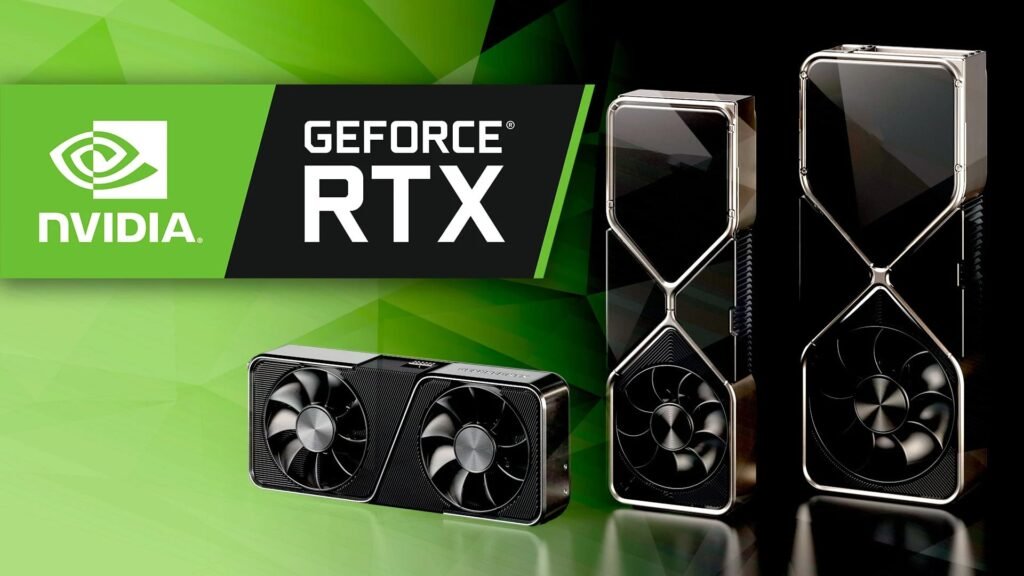
A fresh leak provides the first alleged specifications for the next generation of graphics cards in the RTX 60 series from Nvidia. The new models are said to have enormous memory bandwidth and significantly improved ray tracing performance.
Nvidia’s next generation GPU
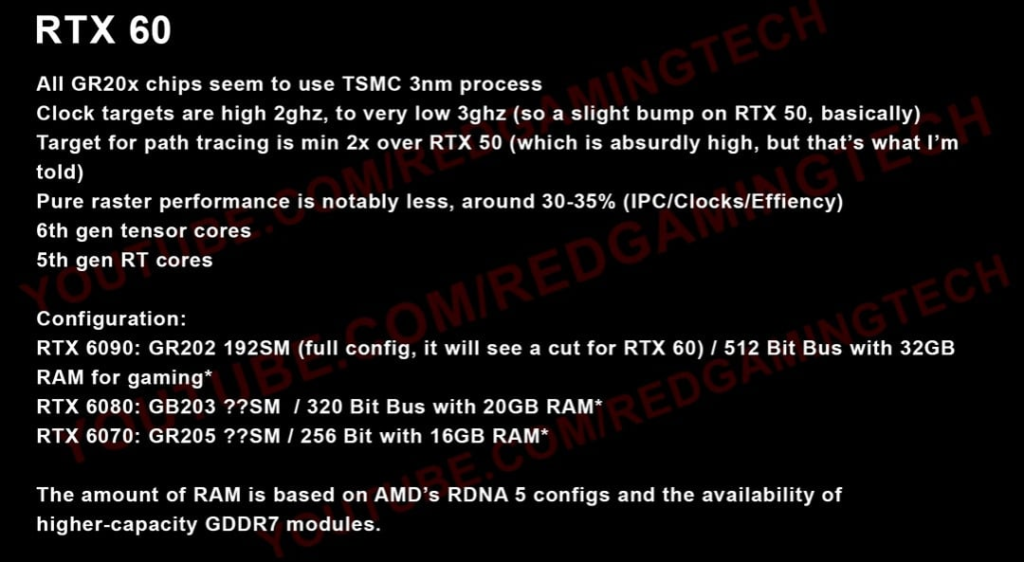
The release of Nvidia’s next generation of graphics cards is reportedly still a long way off. This year, for the first time in 30 years, no new desktop GPUs will be available to end customers. Nevertheless, a current leak now provides the first alleged details about the models of the RTX 60 series. As previously known, the RTX 60 series will most likely be built on the Rubin architecture already used in current GPUs for data centers and AI. However, the focus of the newly leaked specifications is a greatly increased memory bandwidth of up to 512 bits with a clock speed in the low 3 GHz range and 32 gigabytes of RAM (RTX 6090). Historically, Nvidia uses generational changes to eliminate data transfer bottlenecks. Higher memory bandwidth is particularly important for gaming at extremely high resolutions.
Watch on YouTube
Improved ray tracing
According to one YouTube video by RedGamingTech Nvidia’s hardware engineers are also working intensively on redesigning the so-called RT cores of the graphics cards. This is supposed to lead to a doubling of the previous calculation speed in light simulation. Current games increasingly rely on detailed ray tracing, which often pushes older GPUs to their limits.
Still a long way to go
Nvidia has consistently expanded its market leadership in dedicated graphics cards in recent years. However, competition from companies like AMD and Intel stimulates business and prevents standstill, even if the gaming division has lost enormous importance for Nvidia. So far there is no official information from Nvidia about the RTX 60 series. Experience has shown that more and more leaks are likely to appear as the release date for the graphics cards gets closer. However, as mentioned at the beginning, this could take until 2027. Gamers will have to be patient until it is easier to assess what the upcoming RTX generation is actually capable of.

Amit Gohar is Technical writer at ResearchSnipers.com, he is well versed Technology News writer, he has completed is MS computer Science in 2020. He can be reached at amit.g@researchsnipers.com