Essential Ford Powerstroke Upgrades for Better Performance and Reliability
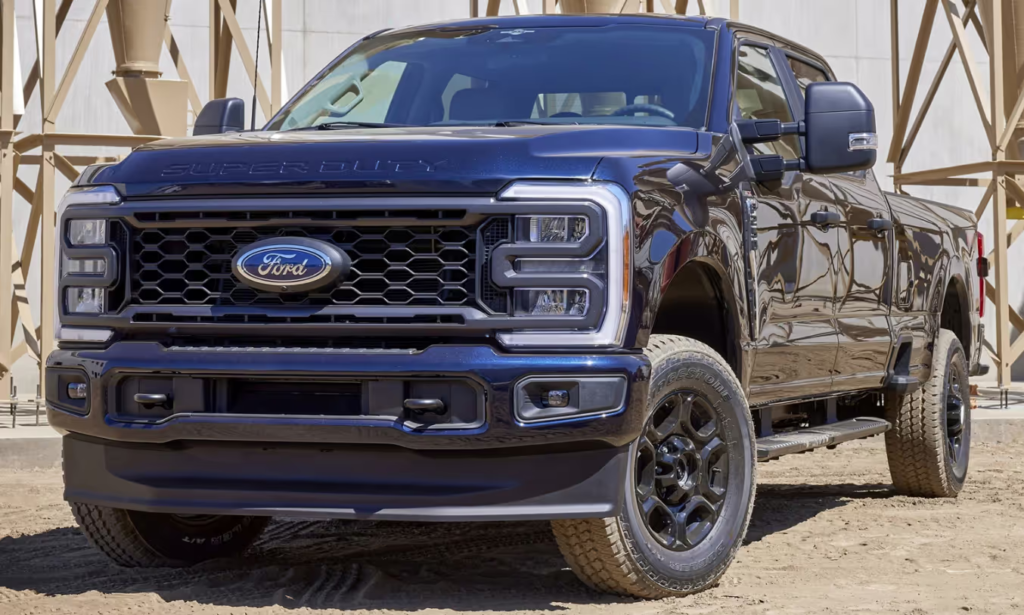
Each generation of Powerstroke has its own set of advantages and why it’s specific to time periods. The 7.3L is reliable but not up to speed with present-day engines, the 6.0L is quite powerful but known for breakdowns, the 6.4L is like a gas guzzler that also damages emissions components, and the 6.7L is the most luxurious one of the bunch but still has deficiencies that surface when used in reality.
One thing that characterizes all of them is the fact that stock settings leave both hardiness and high performance unachieved. In pursuit of meeting emission standards and fuel economy targets while also keeping warranty costs down, Ford decided to tune these trucks. In other words, the metal components are capable of more than the factory calibration demands, but only if the well-known vulnerabilities are taken care of first.
Head Studs and Bulletproofing the 6.0L
The 6.0L Powerstroke diesel engine has been vilified in the past. In part, this criticism is justified, but in part, it is not. The engine itself is very capable and quite durable, but it was Ford’s design decision to include certain defects in this engine that resulted in the well-known reliability problems of this generation. The silver lining is that each one of those defects has a solution and a well-maintained 6.0L may easily run up to 400,000 miles without any major issue.
The first and foremost upgrade from the factory that everyone should do is installing head studs. The stock torque-to-yield head bolts cannot hold the heads tightly enough under high EGTs or increased boost, and once the heads are lifted, the engine is finished due to coolant and oil cross-contamination. ARP studs, if heads are removed for any reason, will resolve this once and for all.
Besides head-studs, the EGR cooler and oil cooler remain the two major weaknesses of the 6.0L Ford Powerstroke. The stacked-plate oil cooler gets clogged internally with debris from the coolant system, which causes the rise of the oil temperature and the EGR cooler to overheat and then crack. A cracked EGR cooler leads to coolant spill into the intake, resulting in engine hydrolocking on a start-up. Upgrading both with high-quality aftermarket units, or completely removing them if the truck is strictly for off-road use, will effectively take care of one of the leading causes for engine breakdown.
Tuning That Actually Respects the Engine
An ideal tune is exactly when the Powerstroke really shines however that is also the moment when many owners make mistakes by purchasing cheap calibrations that do not consider the truck’s specific requirements. A good tuning modifies injection timing, pulse width, and rail pressure in such ways that the engine becomes more efficient, rather than just more powerful.
On a 6.7L, a tow tune usually increases horsepower by 60 to 100 and adds significant torque in the RPM range where trailers are the most demanding on the engine. The vehicle can maintain gear on inclines that would normally require a downshift, exhaust gas temperatures are lower because the engine is no longer working against itself, and at cruise, fuel economy can even see an improvement as the engine is doing less work for the same output.
The most important thing is to ensure the tune matches the truck’s real setup. A tune for a stock emissions truck acts differently from that of a deleted truck, and using the wrong one might either result in codes being thrown or even serious damage. Trustworthy tuners produce calibrations that are year transmission usage, and emissions-status specific. Also, they offer post-sale support in case the tune does not work correctly.
Emissions Equipment and the Off-Road Question
The 6.4L and 6.7L Powerstroke engines are both fitted with emissions components that lead to serious problems. The 6.4L Diesel Particulate Filter (DPF) is always regenerating, which results in fuel running down the cylinder walls and diluting the engine oil, so that oil changes need to be done more frequently than what is usually recommended by the factory. The 6.7L Diesel Exhaust Fluid (DEF) system is a more efficient one, but it still has failure modes that can get very expensive when they go wrong.
6.4L EGR cooler breaks down often and when it breaks down, coolant leaks into places where it should not be. 6.7L EGR system is a better one but it still gets carbon build-up and a dirty EGR valve will cause the engine to throw codes and lose power until it is either cleaned or replaced.
For off-road and competition trucks, delete kits for DPF and EGR systems are a well-established path. Removing these components eliminates regen cycles entirely, stops EGR failures before they happen, drops exhaust temperatures, and often improves fuel economy by 2 to 4 miles per gallon. It’s important to be clear though: this kind of modification is restricted to off-road and competition use in most jurisdictions, and it’s on the owner to know the laws that apply where they drive and register the truck.
Transmission and Drivetrain Reinforcement
The 5R110W, which is paired with the 6.0L and 6.4L, and the 6R140, which is paired with the 6.7L, are both good transmissions in their stock form. However, upgrading them would be a great idea if you are planning on increasing the power. The first weak point is usually the torque converter, then the valve body, and finally, the clutches under sustained high-power use.
A billet torque converter with multiple friction discs can completely eliminate the shudder that develops on tuned trucks and conveys the power without any slip. To make the transmission significantly more durable under towing and high-power conditions, it is best to pair it with a performance valve body that increases line pressure during shifts.
Fuel System Improvements for Long-Term Health
Fuel delivery is very important for Powerstroke diesel engines. Many owners don’t realize this. Both the 6.0L and 6.4L have high-pressure oil systems which, to work properly, require clean oil with the correct viscosity, whereas the 6.7L is equipped with a CP4.2 high-pressure fuel pump notorious for failing suddenly and sending metal debris through the whole fuel system.
Fitting a lift pump to the 6.7L reduces the load on the CP4 and consequently helps the pump last a lot longer. Installing a disaster prevention valve is a good way to further safeguard the pump against metal contamination, a situation that turns a simple pump failure into a complete fuel system repair. Both options are way less expensive than a CP4 failure which, on average, costs $8,000 to $12,000 for parts and labor.
Upgrading fuel filtration is a benefit to all Powerstroke versions. OEM filters provide adequate filtering but they are not the best, and installing a finer secondary filter will result in increased injector life and reduced wear of the high-pressure parts.

Alexia is the author at Research Snipers covering all technology news including Google, Apple, Android, Xiaomi, Huawei, Samsung News, and More.