10 million units by 2024: Japan wants to literally flood the country with robots
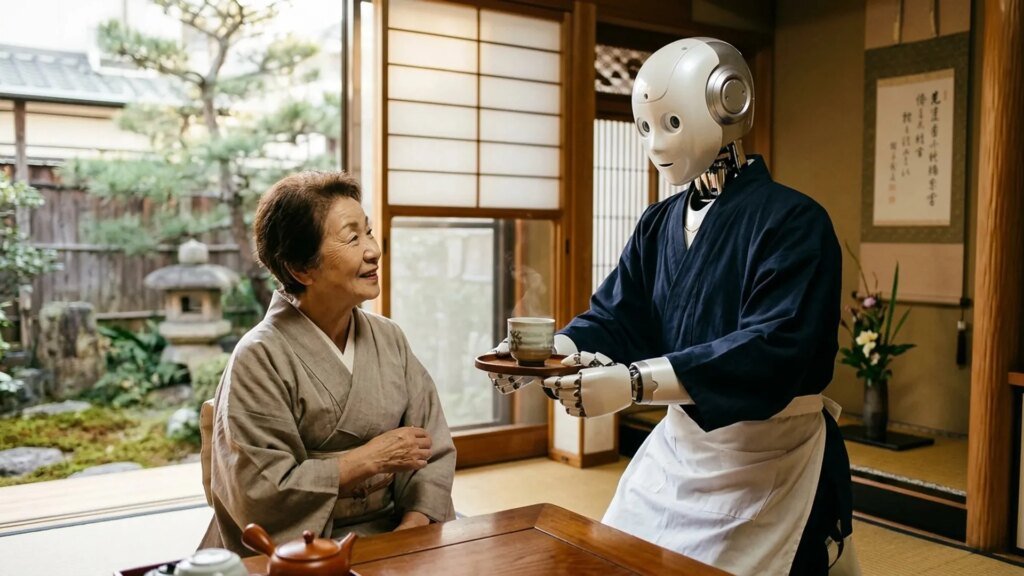
Japan wants to integrate ten million robots with artificial intelligence into the domestic labor market by 2040. With this government project, the country is responding to the massive shortage of personnel due to the aging of society.
Japan’s robot strategy until 2040
The Japanese government has unveiled a far-reaching strategy for nationwide automation. By 2040, ten million robots with artificial intelligence are expected to be used in 18 different sectors of the economy. The aim is to combat the acute labor shortage. The shortage is primarily caused by a rapidly aging society and restrictive immigration laws. The focus of the plans is the development of our own basic model for physical artificial intelligence. The Noetra consortium was founded for this purpose, in which technology companies such as SoftBank, NEC, Sony and Honda are involved. The Ministry of Economic Affairs is planning investments of 380 billion yen (around 2.05 billion euros) for the current fiscal year. Over the next five years, government funding could increase to up to one trillion yen (around 5.4 billion euros).
Like the daily newspaper The Japan Times reports, the project is aimed at use in areas where little automation has previously taken place. In addition to classic manufacturing, this now also includes food production, medical care, infrastructure maintenance and disaster control. The intelligent machines are intended to fill exactly the positions for which there are currently no human workers available on the market.
Challenges of physical AI
In contrast to pure software, physical AIs interact directly with the real world. This happens, for example, in the form of autonomous vehicles or through the use of care robots. The government hopes to gain a strategic advantage by using data already collected from disaster control, for example from the dismantling of the Fukushima nuclear power plant, as well as from inpatient care for the elderly. Of course, this is currently largely a dream of the future, because the performance of such systems in complex everyday situations has so far been limited.
With this comprehensive project, Japan is also aiming for significantly greater technological independence. The targeted development of our own data infrastructures and AI models is intended to avoid excessive dependence on existing systems from the United States or China. At the same time, regional competition is increasingly forming on the Asian market. South Korea also recently announced major investments in expanding its own robot industry.