USA threatens: Anyone who cooperates with China on AI must accept consequences
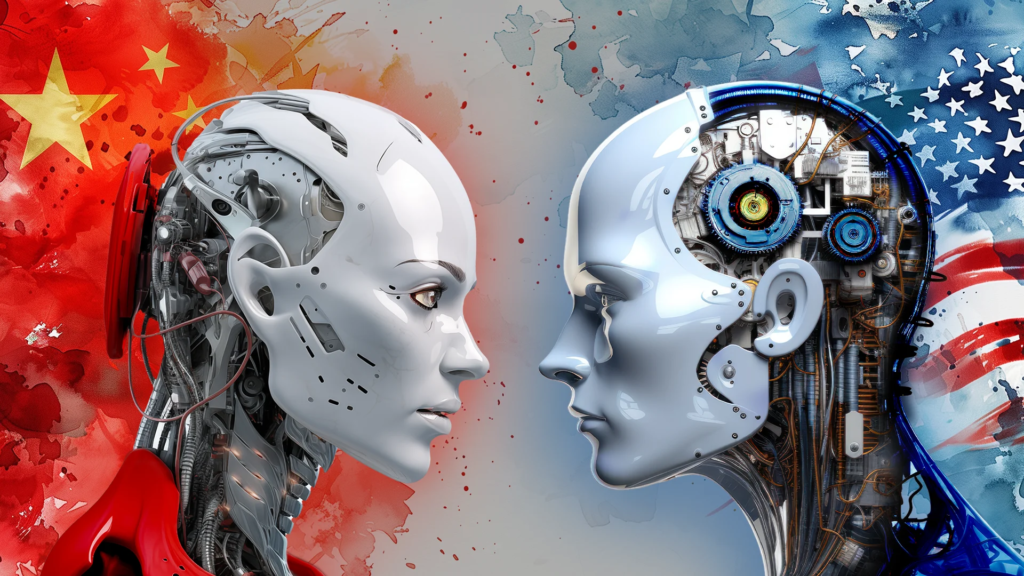
The US government is putting pressure on states. Anyone who cooperates with China on the topic of artificial intelligence will be thrown out of American initiatives. A new letter forces allies to make a clear decision in the global AI competition.
Ultimatum in the global AI race
The US government has apparently prepared a letter to 35 countries that literally puts the gun to the states’ chests: Anyone who cooperates with China on projects relating to artificial intelligence should be excluded from corresponding US initiatives. The document is aimed at the signatories of the “AI Opportunity Statement” and calls for a clear positioning in the technological power struggle. The unusually undiplomatic and sharp tone of the draft makes it clear that you cannot be part of both worlds.
The focus is on the US alliance Pax Silica, which was founded last year. Their goal is to secure supply chains for AI models, semiconductors and critical minerals. Membership requires a commitment and does not tolerate parallel participation in initiatives with competing expectations. Countries should decide.
Kazakhstan as a trigger
Like the news agency Reuters reported, the alarm bells were recently ringing in Washington. The specific trigger for the tough crackdown is Kazakhstan. The country initially joined Pax Silica in June, but shortly afterwards also joined a Chinese alliance. Kazakhstan has vast deposits of minerals that are essential for modern chip production.
Beijing only launched the “World Artificial Intelligence Cooperation Organization” in July. While the USA relies on investment access and common export controls, China is enticing with open-source AI models. China’s technology has caught up significantly in recent months. It is increasingly competing with the proprietary systems from American developers such as OpenAI or Anthropic.
Raw materials as a means of pressure
At least the USA’s concern is understandable. China has already used its quasi-monopoly on critical minerals as a retaliatory weapon in trade conflicts in the past. Gallium and germanium are just two examples of metals on which Beijing has imposed export controls. A supplier participating in projects from both countries represents exactly the scenario that the US government wants to prevent with its alliance. So far, around two dozen nations belong to Pax Silica. These include close US partners such as Japan, Australia and South Korea. The US State Department declined to comment on the unverified document. It therefore remains unclear when the undated letter will be sent.
What is certain is that the pressure on third countries to carefully weigh up their own technological dependencies and forge clear alliances is growing. Global technology policy is thus reaching a new level of escalation. Countries from the global south are likely to find themselves in a difficult position due to the tough US line. They often rely on Chinese investments in infrastructure, but at the same time want to benefit from American know-how in AI. This tightrope walk is becoming increasingly difficult.

Research Snipers is currently covering all technology news including Google, Apple, Android, Xiaomi, Huawei, Samsung News, and More. Research Snipers has decade of experience in breaking technology news, covering latest trends in tech news, and recent developments. Can be reached at author1@researchsnipers.com