Apple’s Consumer Robotics Research Highlights the Role of Expressive Movements
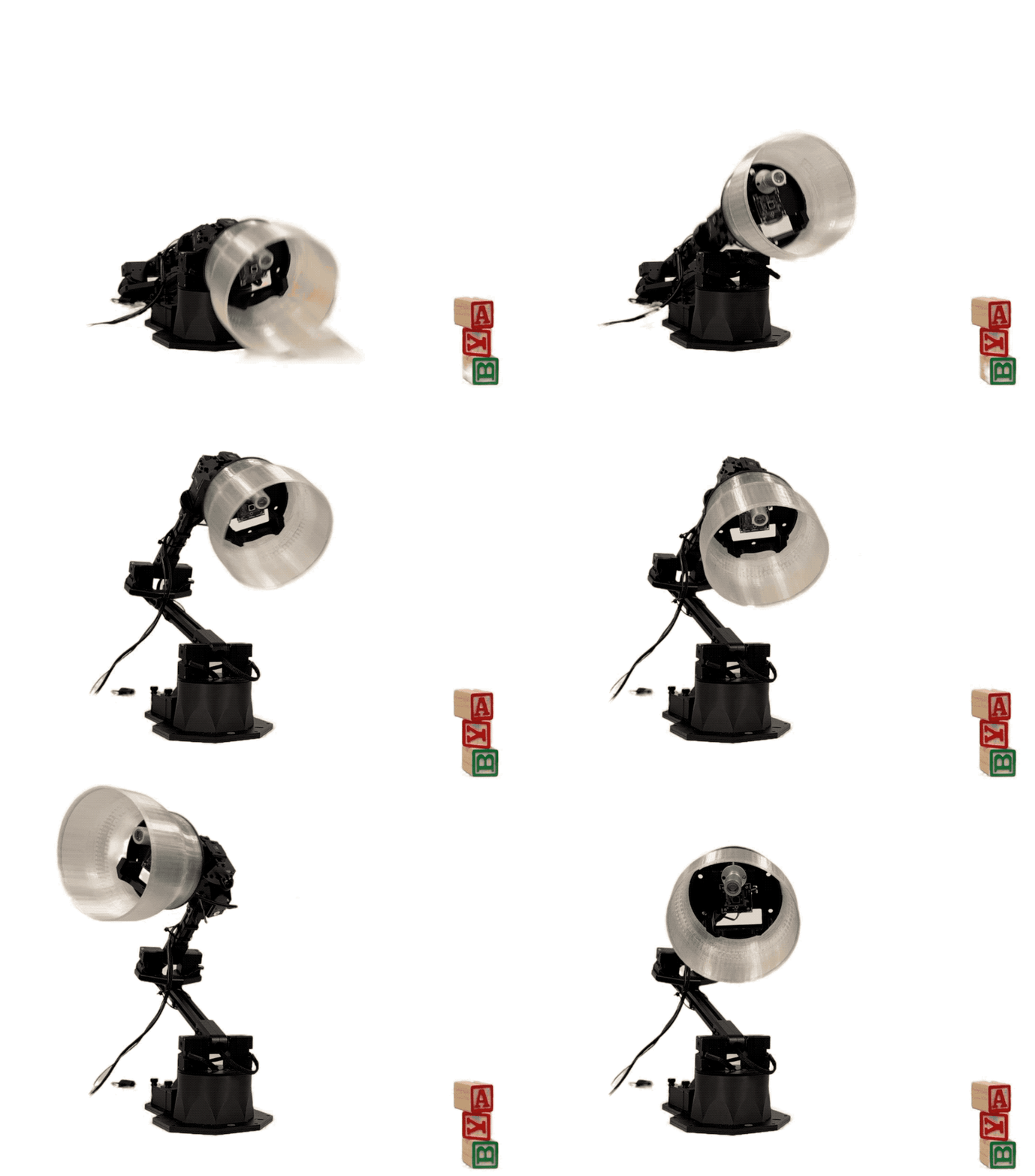
Last month, Apple shared a fascinating glimpse into its consumer robotics research through a detailed paper. The paper emphasizes the importance of expressive movements in improving human-robot interaction. “Like most animals,” it begins, “humans are highly sensitive to motion and subtle changes in movement.”
To illustrate this, Apple drew inspiration from Pixar, another company with deep ties to the late Steve Jobs. Pixar’s iconic Luxo Jr. lamp, first introduced in an eponymous 1985 short film, became the studio’s long-standing mascot. Similarly, Apple chose a lamp as the centerpiece for its research, showcasing a “non-anthropomorphic” design. Lamps, after all, lack obvious human traits but can be animated to behave in ways that feel familiar and relatable.
“For robots to interact more naturally with humans,” the paper explains, “robot movement design should integrate expressive qualities, such as intention, attention, and emotions, alongside traditional functional considerations like task fulfillment and time efficiency.”
To accompany the paper, Apple released a video demonstrating these expressive movements. Unsurprisingly, the movements echo Pixar’s designs, with the lampshade acting as a head and the arm mimicking a neck.
One of the most intriguing parts of the video involves a user interacting with the lamp robot. In this scenario, the robot functions like a more dynamic version of a HomePod or Amazon Echo. When the user asks a question, the robot responds with Siri’s voice. A split-screen demonstration reveals the impact of adding expression. In one example, the lamp simply delivers the answer, while in another, it swivels its head toward the window as if considering the outside view before speaking. This small detail taps into our natural tendency for pareidolia, where we perceive familiar traits in inanimate objects. It’s a subtle but powerful way to strengthen the human-robot connection.
Apple’s research comes amid reports of the company ramping up its robotics efforts, including plans for a more advanced smart home system. These expressive movement insights could shape a future home hub that feels more interactive and intuitive. Amazon has already taken steps in this direction with its Astro robot, but Apple’s focus on using non-anthropomorphic designs suggests its robot may take a different form.
Rumors suggest the upcoming product could resemble “a robot arm with an iPad attached.” It’s easy to see how the lamp design might play a role in this concept. However, Apple’s consumer robotics work is still in the research phase. A lot could change before an official launch, including a shift in design or even a decision to scrap the project entirely.
For now, Apple’s exploration into expressive robotics offers an exciting glimpse into how future robots may integrate seamlessly into our daily lives, creating deeper emotional connections while serving practical purposes.

Digital marketing enthusiast and industry professional in Digital technologies, Technology News, Mobile phones, software, gadgets with vast experience in the tech industry, I have a keen interest in technology, News breaking.