AR Glasses vs. Smartphones: Utopia or the Next Reality?

For the past two decades, the smartphone has been our main window into the digital world. But today, a new device is emerging that could change the game — AR glasses. Companies like Apple, Meta, and Samsung are heavily investing in this field. The real question is: can AR glasses truly replace smartphones, or is it still just a futuristic dream? By the way, we would like to take this opportunity to say that at 1win-korea.com you will find amazing entertainment that will delight you!
What Are AR Glasses and How Do They Differ From VR?
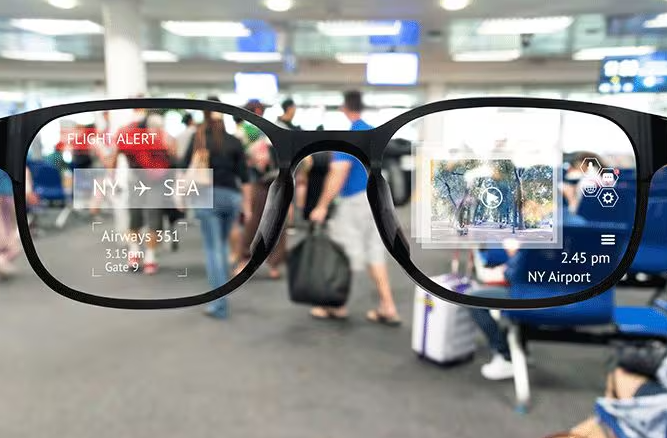
While VR headsets create a fully virtual environment, AR overlays digital information on the real world. With AR glasses, you can walk down the street while seeing navigation maps in front of your eyes, get instant message notifications, or even receive step-by-step repair instructions without looking away.
The main difference from smartphones: you no longer need to pull out a screen — information is projected directly into your field of view.
Why They’re Called “Smartphone Killers”
The idea of AR glasses replacing phones has been around for years. Here’s why:
- Hands-free freedom. No need to hold a device — everything is right in front of you.
- Natural interface. Gestures, voice, and eye-tracking feel more organic than tapping a screen.
- Integration with reality. Information overlays the world around you, making interactions faster and more intuitive.
If AR glasses go mainstream, they could replace navigation apps, messaging, calls, and even parts of smartphone cameras.
The Technological Barriers
However, there are still significant challenges:
- Ergonomics. Most current glasses are too bulky and heavy.
- Battery life. Small form factors mean limited usage — often just 2–3 hours of active work.
- Software. True success requires robust ecosystems on par with iOS and Android.
- Social factor. Many people feel uncomfortable wearing a gadget that appears to constantly “watch” and record everything around them.

Who’s Leading the Race?
- Apple Vision Pro — currently more of a “tech showcase,” but closely watched by the industry.
- Meta (formerly Facebook) is investing billions into the metaverse and AR devices.
- Google is reviving its vision after the early failure of Google Glass, but with better tech.
- Samsung and Chinese startups are actively testing more compact designs.
What to Expect in the Coming Years
Experts predict that within the next 5–7 years, AR glasses won’t replace smartphones, but will take the role of a secondary device — similar to smartwatches or wireless earbuds.
In the long run, over 10–15 years, we may see a shift in user habits: instead of “a phone in your pocket,” it could become “glasses on your face.”
The transition will likely be gradual — AR glasses will first act as companions to smartphones, and eventually evolve into full alternatives.
For now, AR glasses can’t fully replace smartphones. But the trend is clear: the technology is improving, tech giants are investing billions, and users are becoming more open to new experiences.The real question isn’t “if AR glasses will replace smartphones” — but rather, “when it will happen.”

Alexia is the author at Research Snipers covering all technology news including Google, Apple, Android, Xiaomi, Huawei, Samsung News, and More.