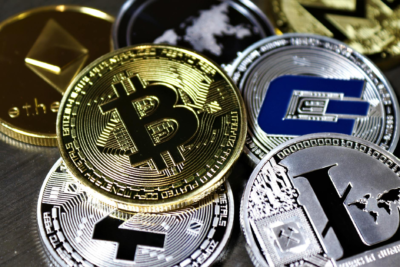
Bitcoin Price and Blockchain Health Under the Microscope

Bitcoin’s price keeps finance journalists busy, but its substance lies in adoption, regulation, and technological endurance. Digits on a screen represent only a very small percentage of a crypto-asset’s meaning, as commentators see it. Its greater meaning derives from global recognition, shifting infrastructure, and its disruptiveness in challenging traditional financial infrastructure, yielding new forms of transferring value and dealing in assets globally.
Bitcoin is not a ticker; it is a sign of where digital finance is going and indicates how far crypto has penetrated global markets. Crypto prices, such as the bitcoin price usd, are subject to daily change, although much larger entities are shaping its future in the form of a currency designer.
Bitcoin is not just mere speculation, but a harbinger of a shift in paradigm of how value is stored and transmitted across borders. The growth in its usage within developing economies points to a new phase in the financial evolution. Institutional demand, infrastructure building, and ongoing debates over regulation signify its staying power. With volatility remaining, Bitcoin is an experiment and a roadmap of global finance.
Market Sentiment Remains in Control
Price action is being increasingly determined by investor sentiment as much, if not more, than fundamentals. Beliefs drive inflows and fear travels quickly during sell-offs. As some say, being a successful investor or trader is mostly about understanding emotions of other market participants rather than the technicalities of the process.
Headlines, commentators, and market influencers can cause rapid momentum through social media. Optimism has the effect of creating liquidity spurts, whereas doubt can create sharp corrections. This dynamic illustrates how perception and psychology are inextricably linked to valuation. In doing so, it confirms that Bitcoin’s narrative is not only defined by numbers but also by communal belief.
Regulation Shapes the Playing Field
Regulation is a double-edged sword. Whereas enforcement action or raids in the near term might keep prices in line, transparent frameworks provide stability and encourage institutional participants in the longer term. Binance Research stated, “the White House’s policy roadmap outlines a path to regulatory clarity, unlocking the intersection of Wall Street and Web3 through secure, scalable, compliant infrastructure.”
With regulators globally becoming increasingly vigilant, Bitcoin as an asset category is becoming increasingly legitimate. Across the world, nations are developing frameworks to integrate cryptocurrencies into their formal financial infrastructure. Clear rules reduce institutional investor unpredictability, simplify adoption in cross-border payments, and promote conformity in anti-money laundering standards. As a result, regulatory oversight is no longer solely a constraint; it could become a pillar of sustainable growth, increasing confidence and participation across the global cryptocurrency ecosystem.
Institutional Adoption Increases Steadily
While retail activity remains strong, institutions are steadily returning to cryptocurrencies, with Bitcoin leading the way. Catherine Chen, Head of VIP & Institutional at Binance, says, “Despite the large supply of different cryptocurrencies, the expression ‘conservative investments’ in tokens with the highest capitalization is appropriate here.” Bitcoin, being the largest digital currency in terms of market capitalization, fits that definition, which has confirmed its position as a core holding in institutional portfolios.
Institutional acceptance also reflects increasing demand for diversification, allocation, and hedging against inflationary pressures in traditional markets. As the purchasing power of a fiat currency starts declining, many turn to Bitcoin as a safe haven for preserving their funds. Since the leading crypto’s circulating supply is fixed, it can provide a hedge against inflation, which is also why it is being called “digital gold” by many investors.
Beyond investment, institutions are increasingly incorporating crypto into their treasury management and cross-border settlements, reflecting their faith in Bitcoin’s reliability, liquidity, and relevance in a longer-term context. This slow and steady change indicates institutional schemes are also shifting towards digital currencies, with legal finance linked to new Blockchain-based systems. It makes Bitcoin one of the main pillars of the professional-based approach to investment.
Technology and Security as Anchors
Bitcoin’s reputation has been strong. Decentralized, resistant to censorship, and trustworthy via the proof-of-work consensus mechanism. Energy is cited as a criticism, but ongoing innovation in mining operations fueled by renewable sources points toward a future where Bitcoin coexists with environmental objectives.
Hardware efficiency gains, balancing excess energy from hydro and solar installations, and advancements in carbon offset methods are building this case. Meanwhile, blockchain’s transparency ensures every transaction is demonstrable and less reliant upon intermediaries. This concurrent focus upon innovation and accountability ensures Bitcoin is a strong template for secure, sustainable financials.
The Future Roadmap of Bitcoin
Bitcoin prices will continue to be volatile, but their value is significantly higher than that of speculation. Growth in nascent economies, regulatory validation, and institutional acceptability ensure its viability. The sole point of concern is not whether Bitcoin survives, but how it will disrupt funds, markets, and means of investment in the upcoming few years.
What’s most fascinating about Bitcoin’s trajectory is its integration with traditional finance and emerging digital solutions. Serving as a hedge against inflation, a means of remittances in under-penetrated regions, and a gateway for institutions to explore blockchain technology means its trajectory isn’t only in terms of prices. It’s in adoption, endurance, and reshaping financial trust in a digitalized world.

Alexia is the author at Research Snipers covering all technology news including Google, Apple, Android, Xiaomi, Huawei, Samsung News, and More.