Buhurt Swords: Design Parameters, Metallurgical Balancing, and Combat Efficacy
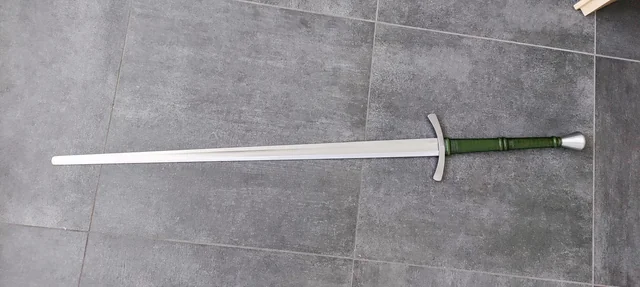
The sword is the most widely used weapon in medieval battlefields and the instrument of the professional soldier. The sword is the most sought-after and gathered weapon for use in contemporary battles due to its high attack speed, durability, and damage-dealing and blocking capabilities. The rules and requirements of historical medieval battle (HMB), medieval combat sport (MCS), buhurt, and other heavy, full-contact sports akin to Battle of the Nations were taken into consideration when creating these Buhurt swords. designed to endure incredibly demanding use.
Blade Geometry and Cross-Sectional Stress Profiles
For enhanced durability, balanced action, and safe behavior under trying conditions, Buhurt swords employ specially designed blade geometries and optimum cross-sectional stress profiles. Most blades, with lenticular or flattened hexagonal cross sections, absorb and redistribute impact stresses along the neutral stress axis. Fullers are positioned in the blade inversely proportional to their mass in order to maximize swing velocity and return energy while minimizing total weight and maintaining longitudinal stiffness.
The edge radius of 2 to 3 millimeters produces a blunt hitting surface that distributes kinetic force over a larger area, thereby minimizing local stress and meeting safety requirements. The progressive distal taper moves the center of percussion to increase hit efficiency and decrease shock transmission. Stress paths are established from the blade body through the tang and guard by FEA and fatigue testing to investigate potential weak areas and ensure uniform distribution of bending and torsional forces in these areas. The end result is a blade that meets the high mechanical requirements of modern Buhurt competitions while balancing metallurgical balance, structural integrity, and ergonomic control.
Take into account the following categories when choosing a sword:
- Length: That said, consider one’s liking and the sword’s purpose when determining the length. Long swords can reach far away but short swords are easier to move with the hand.
- Weight: Choose a sword that fits well in your hand and is balanced. The weight should permit precise control and easy mobility.
You only need to glance at the arming sword that is thrown by the disk. This blade was designed specifically for use in armored combat disciplines and is built to withstand even the most trying combat situations. This sword complies with all major league safety rules due to its dull and rounded blade.
One-handed Swords
This sword’s 87 cm overall length ensures a powerful blow and is made for armored battle. Compared to conventional dueling swords, the blade’s 71 cm breadth raises the risk of injury during fierce combat.
This sword’s 18 cm crossguard length provides superior hand protection, enabling you to fight with ease. The well-balanced design, which provides the best control and agility and has a balancing point 11 cm from the crossguard, enables quick and accurate strokes.
Two-handed Swords
You can prepare for battle with the Zweihander, a two-handed blade made to withstand the demands of armored warfare duels. This masterpiece of a sword was made to satisfy the technical demands of contemporary dueling combat, combining the allure of the past with the functionality you require to give your best effort.
This isn’t your average large blade. The Zweihander 2.0’s blade is 5 mm (0.2 in) thicker for increased stability. It keeps the weight constant for a balanced feel while avoiding that annoying “whirly” blade experience.
Material Treatments and Edge Retention Mechanics
To attain the ideal ratio of hardness, flexibility, and fatigue resistance, the swords are subjected to certain material treatments. High-carbon spring steel (like 50CrV4) is usually used as the starting point for the manufacturing process. It is heat-treated using regulated cycles of quenching and tempering to create a microstructure with fine grains. In order to maintain the blade’s mechanical integrity through thousands of collisions and avoid deformation, brittleness, or cracking, it must be able to sustain repeated axial stress loads.
Buhurt blades’ edge retention mechanism depends on the interaction of strain distribution and surface hardness. All swords have a blunted edge with a radius of 2-3 mm, yet stability and even tempering keep the edge from rolling or peening with continuous use.
Even under the most severe tournament circumstances, this multilayer strength gradient guarantees that force is transferred smoothly across the edge-body interface, preventing fatigue buildup and preserving a steady profile. Buhurt swords can provide good impact performance thanks to these tactics, which also help them keep their shape, balance, and safety during prolonged competition use.
Kinetic Interaction with Armor: Cutting, Thrusting & Binding
The wielder would have utilized the sword as a specialized weapon to puncture through armor gaps by gripping the blade and half-swording it directly in order to combat an opponent wearing armored plates. The sword could occasionally be used to grip an opponent and strangle him from behind in specific battle scenarios. Armoured opponents adopted this new fighting technique, which involved gripping the blade in both hands, once it gained popularity in sword manuals.
While maintaining stringent safety regulations, contemporary blunt Buhurt swords are made to mimic these medieval combat dynamics. Their kinetic interaction with armor concentrates on impact transfer, control, and binding mechanics rather than cutting or piercing. Fighters can safely grasp the blade for leverage in close combat, thrust control, and grappling actions thanks to the geometry’s support for half-swording tactics. This concept preserves the safety needed for competitions while allowing for realistic armored engagement.

Alexia is the author at Research Snipers covering all technology news including Google, Apple, Android, Xiaomi, Huawei, Samsung News, and More.