Fan is making its own Steam Controller 2
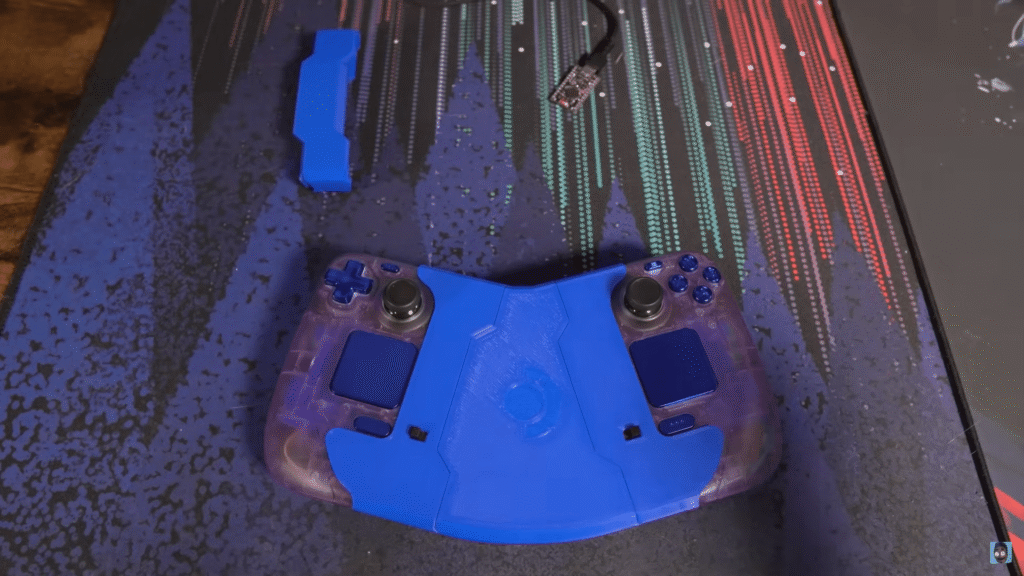
A YouTuber ended the long waiting time for an official successor to the Steam Controller and quickly put on hand: Tommyb developed a DIY “Steam Controller 2”, which integrates the controls of the Steam Deck into a divisible gamepad.
From Steam Deck to the Controller
The original Steam Controller from Valve has been history since 2019, but his legacy lives on in the form of the Steam deck – indirectly. While many fans are waiting for an official successor, the YouTuber Tommyb has taken the matter into his own hands and developed a DIY “Steam Controller 2” that transforms the controls of the Steam Deck into a compact gamepad. The concept is simple: the controls of the Steam deck are “operated”, 3D printed connecting pieces replace the screen.
The special thing about it: The controller can be shared in half of the Half, like the Nintendo Switch Joy-Cons, which brings with it new flexibility. How PC gamers reports, Tommyb used only commercially available or 3D printed parts for his controller. Including an extreme steam deck OLED replacement cover, which was tailored for the construction, self-designed 3D printed connecting pieces, replacement buttons as well as switches and sensors from Ifixit. Particularly noteworthy are the built-in Gulikit Hall-Effect-analogsticks, which cannot be found even in premium controllers such as the Xbox Elite Controller.
View on YouTube
Own trackpad development
The tailor -made trackpad that Tommyb itself developed itself is particularly remarkable for this project. He used a capacitive chip that is actually intended for research and development prototypes, and integrated it into a customer-specific board that corresponds exactly to the specifications of the Steam deck.
Tommyb has also programmed its own firmware for the controller and published it on Github, so that everyone interested can build their own “Steam Controller 2”. The result may look somewhat unconventional, but is fully functional – not unlike the original team controller from 2015, which polarized with its two trackpads and the unusual design.
Future plans
For future versions, Tommyb plans to replace the Adafruit developer board used with a tailor-made, cheaper solution. He also wants to optimize the ergonomics of the controller – various angles and combinations of 3D printed connecting pieces have already given him some ideas in this regard.