Google DeepMind Unveils Genie 3 — Real-Time AI That Builds Interactive 3D Worlds from Text
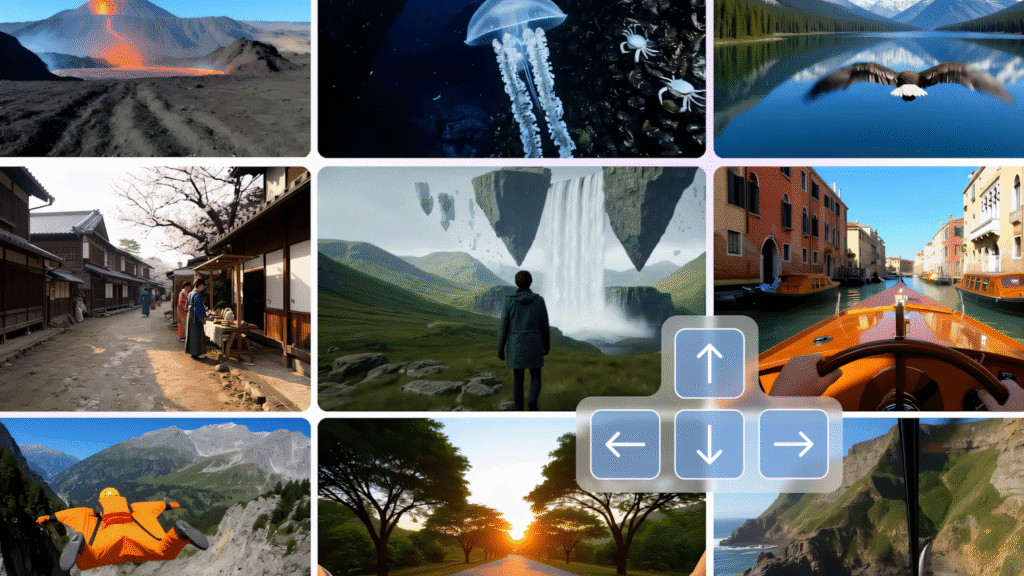
With genius 3, Google presents a new AI system that generates interactive 3D worlds in real time from text commands-almost like in a video game. Users can enter their own world with 24 FPS with 720p resolution and experiment with AI agents.
Genius 3 brings interactive AI worlds in real time
With Genie 3, Google Deepmind has presented its latest World model, which can generate interactive 3D environments in real time from simple text commands. The system creates dynamic worlds through which users can navigate with 24 frames per second with 720p resolution and remain consistent for several minutes. Research director Shlomi Fruchter describes Genie 3 as “the first interactive real-time world model for general purposes”. The AI systems try to understand and simulate the physical laws and contexts of the real world, which distinguishes them from conventional AI video-winderers. Google Deepmind genius 3: Create dynamic worlds in real time
Significant improvements to the predecessor
While genius 2 still worked with 360p resolution and theoretically ran up to 60 seconds, but often showed artifacts in practice, Genie can maintain consistent simulations for 3 minutes. The memory of the previous model was limited to about ten seconds. Similar to a chat bot that exceeds his context window, the system quickly forgot how parts of the world looked as soon as they were no longer visible. Genius 3 can keep visual information back in the memory up to a minute.
According to Deepmind, this ability spontaneously developed without the researchers being explicitly programmed. The system learns independently on how the world works – how objects move, fall and interact – by remembering the generated, similar to people understand that a glass of the side of the table will fall. The improvement of the resolution from 360p to 720p may seem modest at first glance, but represents a quadruple of the number of pixels. For a system that calculates these images in real time, this is quite considerable technical progress. For comparison: Most of the current AI video video takes minutes or hours to create video a few seconds.
Promptable events for dynamic changes
A highlight are the so -called “promptable World Events”. Users can change the simulation with text commands in real time – for example, insert a flock of deer into a ski scene. This function transforms the simulation from a static space into a flexible and edible environment. Google Genie 3: Creation of natural landscapes
The system can create a variety of scenarios, from realistic landscapes with dynamic weather effects such as wind, rain and lava to futuristic environments with portals and flying islands. Historical places such as Venice or ancient Knossos can also be reconstructed. The range ranges from photo-realistic natural scenes to stylized cartoon worlds.
Training for AI agents as the main purpose
While genius 3 has potential for education and gaming, Google Deepmind sees the main benefit in training of AI agents for general tasks – an essential building block on the way to the Artificial General Intelligence (AGI). Deepmind is already testing the system with its Sima agent (Scalable Instructable MultiWorld Agent), who successfully mastered simple tasks such as “Go to the green garbage compressor” in a warehouse environment. A main problem with AGI progress is the lack of reliable training data. After practically all websites and videos of the world have been fed into AI models, researchers turn to synthetic data. World models such as genius 3 could play a key role here because they can generate an infinite number of training scenarios without relying on real data.
Limits and technical challenges
The model cannot reproduce real places perfectly and has difficulties in the text display. For real usefulness, genius would have to generate for hours, not only for minutes consistent worlds. The interaction options of the AI agents are still limited – they can only move in the world, but they cannot change them themselves. Google Genie 3: also a topic for game development
For the time being, genius 3 is also only available as a limited research preview and is initially made accessible to a small group of academics and creative people. The high computing effort – the system renders practically very long videos in real time – currently makes broader availability unrealistic. Another problem is the so -called “drift” – small inaccuracies that can accumulate over time and lead to unrealistic scenarios. Although genius 3 has made progress here, this remains a fundamental challenge for all generative World models.