Google Turns 2.5 Billion Android Phones into Earthquake Detectors

Google transforms 2.5 billion Android smartphones into a global earthquake early warning system. Existing sensors recognize seismic activities and warn of dangerous S waves. But how exactly does the technology work?
Smartphones as an early warning system worldwide
Google has massively expanded its android-based earthquake warning system and thus achieves an important milestone in disaster prevention. The system called Android Earthquake Alerts (AEA) is now active in 98 countries and reaches around 2.5 billion people – ten times more than classic seismological early warning systems.
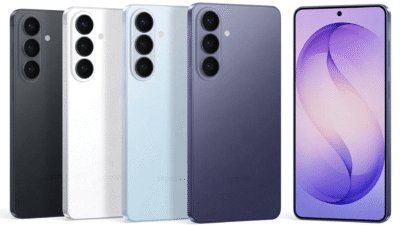
The technology uses the acceleration sensors already available in every Android smartphone, which are usually used for automatic screen rotation or fitness apps. However, these sensors can also register seismic activities, for example when the device stands still and sudden vibrations occur.
View on YouTube
How the earthquake recognition works
The system works according to a decentralized principle: If a stationary smartphone recognizes the first P waves of a quake – the faster but less destructive seismic waves – it automatically sends a signal with a rough location information to Google Central detection server. These first waves typically arrive seconds before the more dangerous S waves that cause the actual damage.
Google’s algorithms analyze the incoming data from many smartphones at the same time in order to avoid false alarms and to determine the actual strength and position of a quake. A warning is triggered only when several devices report similar vibrations in one area.
Two warning levels for different scenarios
The system distinguishes between two types of warnings: “Beaware” reports appear as normal notification for slight vibrations and provide information about a weak tremor nearby. “Takeaction” warnings, on the other hand, take over the entire screen in stronger quakes, play a loud warning tone and give concrete instructions such as “lying down, looking for protection, holding on”.
The warning time varies depending on the distance to the epicenter and can be between a few seconds to one minute. However, even a few seconds can be enough to go under a table or leave an elevator.
Successful practical tests worldwide
Since the system started, Google has about 18,000 earthquakes recognized – From small quakes of the thickness of 1.9 to severe vibrations of the magnitude 7.8. In significant events, warnings were issued for over 2,000 earthquakes and a total of 790 million notifications of smartphones were sent worldwide. A practical example from Turkey in April 2024 demonstrates efficiency: In the event of a quake of the thickness 6.2, the first warning was issued eight seconds after the beginning of seismic activity. People in the affected areas received a warning period between a few and 20 seconds. A total of over 16 million warnings were sent at this event.
Limits and challenges
Despite the successes, the system also has limits: the warning time is minimal in the case of quake directly under a city, since the vibrations occur almost simultaneously with the detection. In addition, very weak quakes can remain under the detection threshold if there are not enough smartphones nearby. In sparsely populated areas, the system is therefore less effective than in urban metropolitan areas.

Digital marketing enthusiast and industry professional in Digital technologies, Technology News, Mobile phones, software, gadgets with vast experience in the tech industry, I have a keen interest in technology, News breaking.