If Samsung wants its upcoming trifold phone to be a success, it needs to include these 5 features
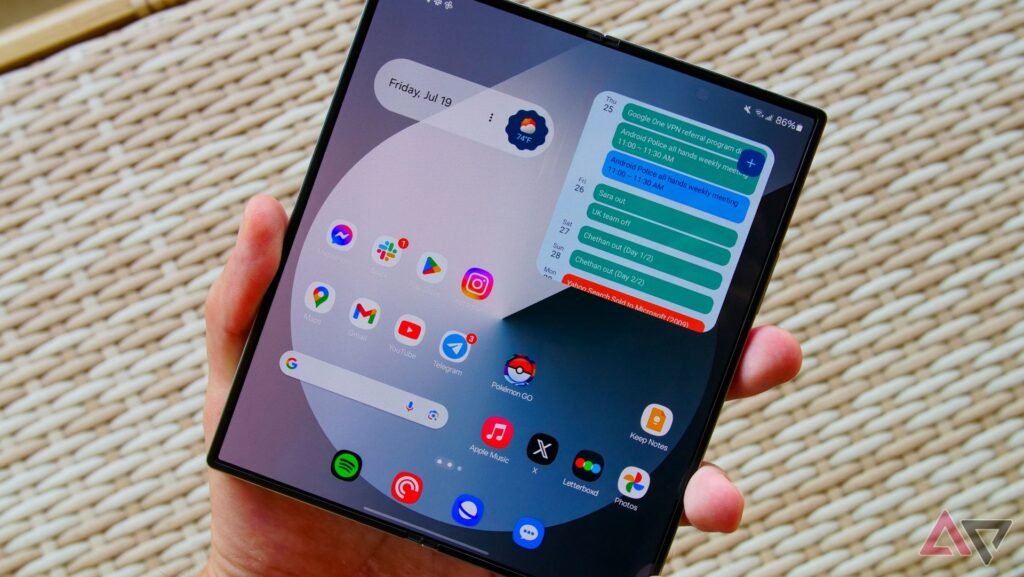
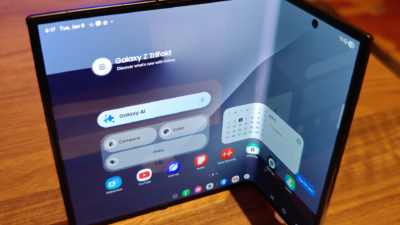
Rumors are starting to heat up about Samsung’s expected trifold device. Late last year, Huawei dazzled us with the Mate XT, a commercially available trifolding phone. Soon after, leaks showed that Samsung also had a similar device in the works. Recent information suggests that the company might wait until 2026 to release the new form factor, but it’s never too early to discuss what it’ll need to be successful. Here are 5 essential features I feel the Samsung trifolding device must have to win its way into your pocket.
1
Infolding design
Durability is a must
Huawei’s Mate XT has a mixed outward and inward folding design, which exposes part of the outer display along the right edge. This keeps the phone thinner but raises concerns about its long-term durability. I’d be more hesitant to carry an expensive device in my pocket if I knew part of the screen was constantly exposed and sliding against my jeans repeatedly throughout the day. Samsung hasn’t prioritized thinness for its foldables, so I expect a different approach from the company.
Leaks suggest Samsung will use a dual, infolding design, meaning no part of the internal display will be exposed when the device is folded. I know this will result in a thicker phone, but it’s the right move for Samsung. The company doesn’t want to repeat its durability issues on the first Galaxy Z Fold, and a new, seemingly fragile form factor will already have customers on edge. If Samsung is to make a good first impression, infolding is the right call.
2
Price
Don’t knock us out
I don’t expect a trifolding phone to be cheap, but there is a limit. Huawei charges close to $3,000 for the Mate XT, and there are rumors that Samsung might go even higher for its trifolding effort. That would be a mistake. Samsung should aim for around or just below what Huawei is charging. There’s always a premium for being an early adopter, but Samsung’s pricing history hasn’t been stellar recently.
When the original Galaxy Z Fold debuted, I was sure the technology would become more affordable with time. It’s been anything but. Samsung has kept its Z Fold line pricing high and even increased it. If the rumored trifold comes out at a monster price, I don’t have confidence that Samsung will try to bring it down to a more palatable price point. This would hinder adoption and keep folding technology on the fringes of the tech space.
3
IP rating
I need something at least
Samsung needs to have an IP rating on its trifolding phone. I would prefer the company to match the IP48 rating of the Galaxy Z Fold and Flip 6, but I’d even settle for an IPX8 rating. Regardless of the direction Samsung takes, it must find a way to provide some dust and water resistance on its trifolding phone. This is vital for durability and gives users spending upwards of $3,000 peace of mind. I’m not buying a phone like that to keep it indoors all day.
Read our review
The Galaxy Z Fold 6 has cost Samsung its head start in the foldable race
A real tortoise-and-hare situation
I hear from so many people who pass on folding phones because they’re afraid to take them to the beach or a job site. Depending on their schedule, they don’t want to think about whether they can take their phone with them that day. I understand the frustration, and a trifolding phone is meant for productivity, so you will use it throughout your day, regardless of where that takes you. An IP rating is essential for Samsung, and I hope the company comes through.
4
Newer battery technology
It’ll need to be thin
Battery life will be crucial for a trifolding phone. It’ll need to be high-capacity to support such a large internal display while giving us a decent screen on time. I’m waiting for Samsung’s first silicon-carbide battery to show up in a phone, and the company’s trifolding phone might be the first. I was shocked when the company didn’t debut new battery technology on the Galaxy S25 Ultra, especially since the OnePlus 13 has a fantastic 6,000mAh silicon-carbide battery.
Samsung must innovate with its trifolding design, balancing thickness but still fitting the phone with an acceptable battery. Nothing would upset me more than to see an undersized lithium-ion battery in a phone costing $3,000. The applications we’ll use on a trifold will be different from a regular bifold device, taking advantage of the additional real estate. I expect more editing and gaming with programs that use the Snapdragon 8 Elite to its full potential. The Samsung trifold will be a phone meant for productivity; give it a battery to match.
5
Updated One UI 7
We need new tools
Samsung needs to rethink its multitasking on its existing phones. I can only imagine the work that needs to be done on a trifolding device. OnePlus spoiled me with Open Canvas, and going back to a Samsung device always feels like a downgrade because of it. Samsung’s multitasking is not as intuitive as it should be, and switching between more than two apps is cumbersome. Open Canvas allows me to slide between multiple apps, giving each one more space as needed. Swiping between apps is easy, and the process feels like it was designed this decade.
The Samsung trifold’s main attraction will be its expected 9- or 10-inch internal display with a 16:9 or 16:10 wide aspect ratio. It will be ideal for desktop-class applications on the go and a productivity monster for those who need a mobile office. Samsung needs to provide a One UI 7 experience that matches. I don’t want a repeat of what happened with the software on the Galaxy Z Fold, where it spent a significant amount of time feeling like merely an oversized smartphone and not a different user experience.
I’m here for it
I can’t wait to see what Samsung comes up with for a trifolding phone. Despite their hefty price tag, I feel trifolding phones present more utility than the bifolding devices we have on the market now. It goes beyond entertainment, with the massive internal display of a trifold giving us access to more options for desktop-class applications. I might even be excited to see how Samsung integrates Galaxy AI into such a large-screen experience — maybe.

Alexia is the author at Research Snipers covering all technology news including Google, Apple, Android, Xiaomi, Huawei, Samsung News, and More.