Intel Prepares Arrow Lake Refresh with Faster Clocks, Stronger NPU
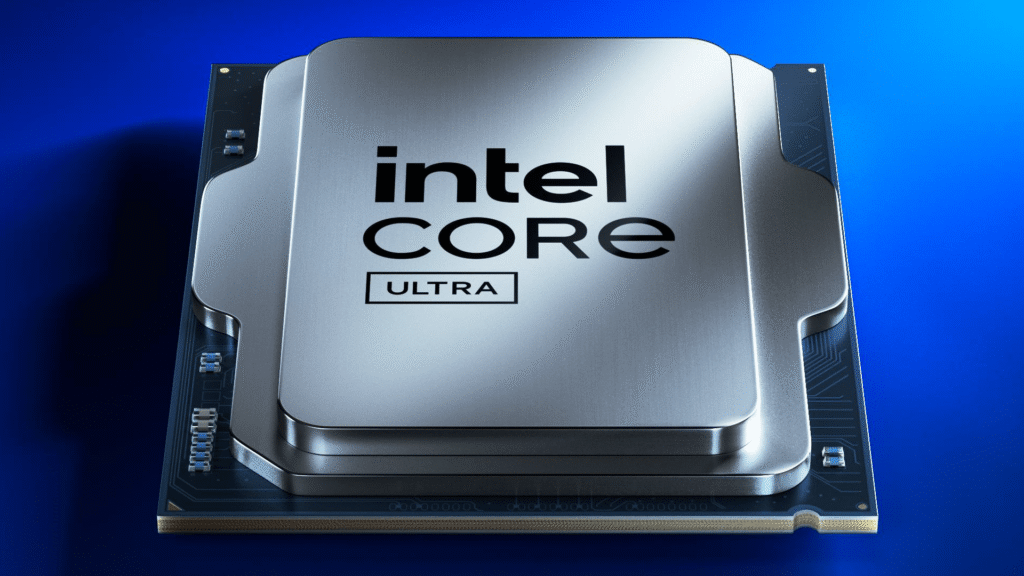
Intel is preparing for a refresh for its arrow-lake cpus. The upgrade of the Core Ultra 200s processors is to score in the second half of the year with higher clock rates and a more powerful NPU – probably as an attempt to bridge the time until Nova Lake.
Intel’s second attempt after a bumpy start
The launch of the original Core Ultra 200s processors in October 2024 was anything but smooth. Many testers reported disappointing gaming performance, some of which were even behind the previous 14th generation models. Intel himself had to admit that the start was problematic and identified several problems at BIOS and operating system level at Arrow Lake.
As a result, they tried to get more out of the chips with the help of patches. As can be seen from current reports, the chip giant is now planning a further increase in performance. Because for the second half of 2025 there is probably an “Arrow Lake Refresh” with slightly higher clock rates and an improved Neural Processing Unit (NPU). The revised processors are said to run on the same LGA 1851 sockets and be compatible with existing 800 series chipsets.
Moderate cycle increases planned
How Zdnet Korea reports, the upcoming Refresh models should eradicate some of the weaknesses. Users can count on moderate cycle increases that will probably be in the range of 100 to 200 MHz. Although this is not a dramatic improvement, it could be enough to noticeably increase performance in benchmarks and games. Arrow Lake’s architecture is based on a chiplet construction, in which various functional blocks are housed on separate tiles.
The compute stile with the CPU cores is manufactured in Intel’s 20A process, while other components such as the I/O hub and the integrated graphic rely on proven manufacturing nodes. This modular design theoretically enables Intel to optimize individual components without having to revise the entire architecture.
NPU 4 as a central upgrade
However, Intel promises significantly greater progress in the area of AI acceleration. While the current Core Ultra 200S processors are equipped with an NPU 3 that only produce 13 tops (Trillion Operations per second), the Refresh models should receive the much more powerful NPU 4. With 48 tops, the new NPU 4, which is already used in the mobile Lunar Lake processors, offers more than triple the computing power of the current NPU 3.
This would make the desktop processors the requirements for Microsoft’s Copilot+certification, which presupposes at least 40 tops. This certification enables extended AI functions to be carried out directly on the device without having to transmit data to cloud servers.
Difficult market position
The Arrow Lake Refresh comes at a critical time for Intel. Current figures show that AMD now controls 62 percent of the DIY desktop market, while Intel has dropped to 38 percent. This development not only reflects the technical problems of Arrow Lake, but also AMD’s continuous improvements in Zen architecture.
With Nova Lake, which is only expected for the second half of 2026, Intel has given his hopes for a fundamental realignment. This new architecture is intended to bring a complete revision of the CPU cores and represent Intel’s response to AMDS Zen 5 and the following generations. Until then, the Arrow Lake Refresh should probably fill the gap and remain competitive, at least in the area of AI acceleration.