Let’s Meet Binance Coin (BNB), With All That It Means And Offers
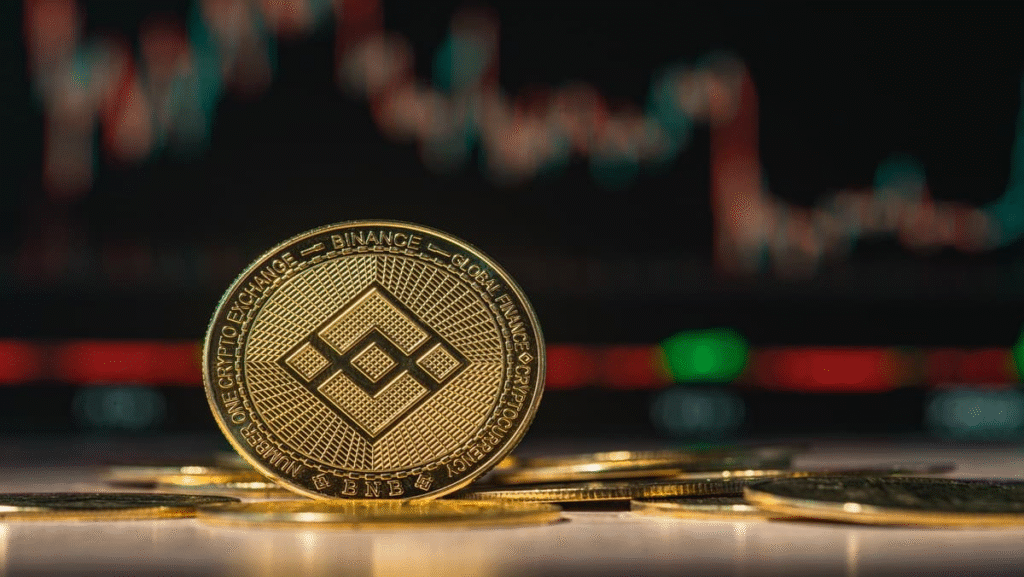
If we were to talk about the cryptocurrencies that have made giant headlines in 2025, with countless individuals proactively putting their wealth aspirations into the potential of this ever-evolving landscape, then, a few names come to our mind, and those would be Bitcoin (BTC), Ethereum (ETH), Binance Coin (BNB), Solana (SOL), and Dogecoin (DOGE), each in the spotlight for very distinctive advantages. Here’s what you need to know for a very first impression:
- Bitcoin, the first cryptocurrency to ever exist, is considered the most stable option for capital preservation.
- Ethereum, a leader over the last ten years, is approached as the best cryptocurrency for complex smart contracts and decentralized applications.
- Binance coin, the asset created and issued by the cryptocurrency exchange Binance – one of the largest platforms in the world -, is used for trading fee discounts, token sales, staking, liquidity pools, and DeFi applications.
- Solana, an open-source project currently run by the Solana Foundation, was designed to handle a significant number of transactions per second with minimal fees.
- Dogecoin, initially created as a joke based on the popular “doge” internet meme, has surpassed its satirical foundation, becoming the most well-known coin in the cryptocurrency market.
Among all the cryptocurrencies listed above, BNB is the one we’d like to discuss, as we’ve observed tremendous potential in its capabilities. Why? Because it is fresh, dynamic, and deeply integrated into one of the world’s most influential crypto ecosystems. It is the lifeblood of the Binance ecosystem, and as for the BNB price, well, it is anything but a disappointment.
More Precisely, What Is Binance Coin (BNB), And How Does It Work?
To discuss the beginning of BNB without at least mentioning the history of the Binance exchange would prove quite challenging, for we’d miss a substantial part, and everything seems uncertain without it. So, let’s go back to 2017, when Binance Coin was launched with an Initial Coin Offering (ICO). During the ICO, a total of 200 million BNB tokens were created. Half of these tokens were sold to the public to raise funds for the development of the Binance platform, bringing the “modest” amount of $15 million. The remaining tokens were split between the Binance founding team and early angel investors.
Today, BNB, although initially starting as just a cryptocurrency exchange, has expanded its offerings, gaining approval in various jurisdictions, including France, Dubai, Kazakhstan, and New Zealand. It offers certain utility and benefits within the Binance exchange ecosystem, backed by routine burn schedules that help bolster scarcity, even as market conditions cause short-term volatility. Moreover, it supports ecosystem growth through various initiatives and mechanisms, including strategic asset purchases by the BNB Chain Foundation, as well as the development of DePIN and RWA projects.
The Price History Of Binance Coin And The Determining Factors
Here’s a straightforward summary:
- 2017, the launch: The ICO price started around $0.10-$0.15, rising tremendously by the end of the year, with investors seeing potential use for trading free discounts. The price settled around $8.
- 2018, the market crash: From its peak of $21 in January, the price settled at $6 at the end of the year, as a result of the 2017 bull run. BNB had no choice but to follow the general trend.
- 2019, the first major rise: As Binance launched Binance Launchpad, and later, also the Binance Chain and Binance DEX, the use cases of BNB have increased, reaching its all-time high of $39 in June.
- 2020, the steady growth: As Binance added staking and farming, BNB grew continuously, surpassing its downfall from June 2019 when it ended at $13. At the end of 2020, it ended near $37.
- 2021, the bull run: Due to factors such as DeFi, NFT activity, and growing use of BNB for gas fees, in May 2021, BNB surged to $690.
- 2022, the market crash: Following global market downturns and shaken trust after the FTX collapse, in 2022, BNB fell to $240.
- 2023, cautious growth: As Binance faced significant regulatory pressure and the market was just slowly recovering, the BNB price stayed between $240 and $350.
- 2024-2025, the strong comeback: Within a constant ecosystem growth, where token burns continue and real-world uses expand, BNB rebounded past $800, letting us hope the best is yet to come.
The Core Advantages Of Binance Coin
The technology behind BNB employs a hybrid consensus mechanism that combines elements of Proof-of-Stake and Proof-of-Authority, ensuring secure and efficient transaction processing. Furthermore, as BNB is deeply integrated into the Binance ecosystem, where its principal purposes are payments for trading fees at a discount, token sales events on Binance Launchpad, and access to various DeFi projects – such as Pancake Swap and Venus Protocol – and NFT platforms – such as Treasure land and Bakery Swap -, we can highlight utility as one of its biggest strengths.
Additionally, BNB supports smart contracts, which power the BNB Smart Chain —a fast, low-cost blockchain that attracts developers and decentralized applications. Overall, Binance Coin (BNB) offers trading fee discounts, DeFi participation, real-world utility, access to Binance Launchpad, and broad market access.
But Do Not Forget, Risks Are Anywhere To Be Found
Well, the first, and probably most important thing to know about the risk associated with BNB is its strong dependence on the Binance ecosystem. Although this comes with significant benefits, it means that any regulatory actions or operational issues affecting Binance could substantially impact BNB’s value and utility as well.
Then, we shall also mention how the BNB Smart Chain, although proactively praised for its low fees and fast transactions, has also been criticized for being relatively centralized compared to other blockchains, which raises serious concerns about security and governance. The last notable risk to be considered regarding BNB is that it could be impacted by market sentiment or changes in Binance’s strategy, despite its periodic burns that reduce the supply.

Alexia is the author at Research Snipers covering all technology news including Google, Apple, Android, Xiaomi, Huawei, Samsung News, and More.