LPDDR6 Officially Announced: Faster, Smarter, and More Efficient
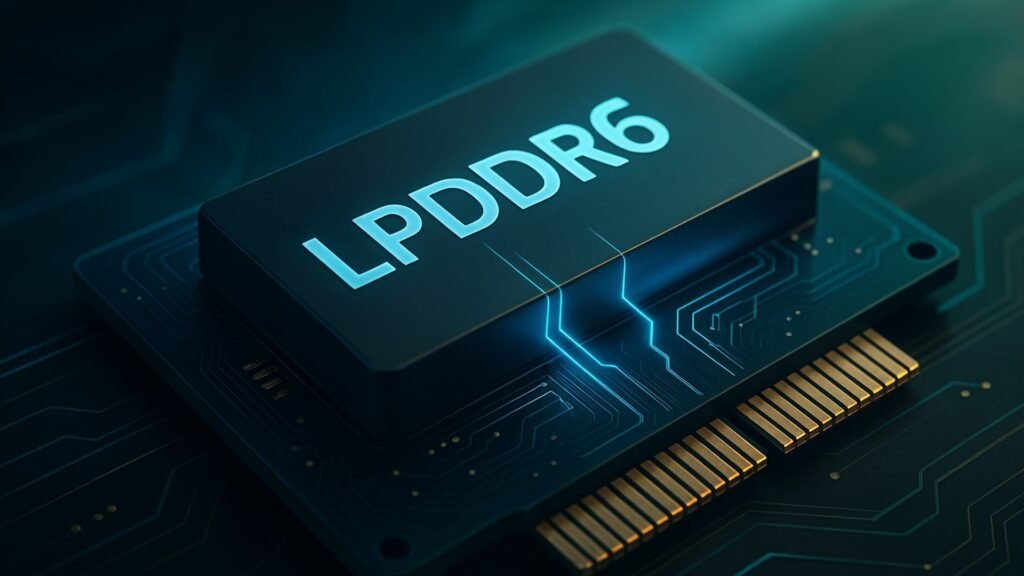
More speed, less consumption, more stable data flows: With LPDDR6, the course sets the course for the next generation of mobile and AI-driven chip systems. Official details on the new specification – from storage architecture to the energy modi.
Power-saving high-speed RAM: LPDDR6 now officially
LPDDR, the energy-saving variant of GDR-RAM for mobile devices, has long been established. LPDDR5 is currently the measure of things: standardized since 2020, efficient enough for high-resolution displays and first AI applications. But with growing model size in the AI, more and more arithmetic logic directly on the device (“on-device Ai”) and distributed EDGE systems, the pressure increases-also on the memory. The new requirements affect not only the speed, but also the flexibility, energy efficiency and security. Now with Jesd209-6, the view of the future was concrete. According to the committee, the committee that is valid worldwide, the center of LPDDR6 is a newly organized memory structure: two subconsors per – i.e. per physical memory chip – each with twelve data lines and four address/control signals. This division enables many small data packages to be edited at the same time – important for AI applications, in which many short access is often carried out. The minimum access unit remains with 32 bytes, which is particularly advantages for AI operations or graphic processing.
The so -called burst length – i.e. the length of a data block that is read or written in one step – can be dynamically adapted between 32 and 64 bytes. As a result, you can react flexibly to different types of application, from streaming large image data to fast individual queries. A “Static Efficiency Mode” also ensures that existing memory banks are used more evenly and full – which reduces bottlenecks for systems with a lot of memory.
Energy consumption optimized
At the same time, energy consumption drops. LPDDR6 uses two VDD2 power supplies with a reduced level of voltage compared to LPDDR5. When idling, a “Dynamic Voltage Frequency Scaling” mechanism that lowering the tension again. A “Dynamic Efficiency Mode” even allows operation with only one subcanal with a low bandwidth. This saves energy for typical standby or background processes – for example if the smartphone only plays music or synchronizes messages.
In addition, there are optimized refresh strategies and dynamic on-die termination (NT-ODT), which adapts flexibly to signal conditions. According to each other, security and reliability functions have also been expanded: on-the-error correction (ECC), parity checks for address lines, automatic error test (MBist) and so-called PRAC meters, which monitor memory lines, increase data integrity. The new “carve-out meta mode” enables certain memory areas to be specifically reserved for safety-critical tasks. More features from LPDDR6
- Alternating clock commands
- Alternatively improve timing and reduce follow -up needs (Ball Count)
- Ca-parity
- Protection mechanism for tax and address lines for error detection in command transmission
- MBist (memory Built-in Self-Test)
- Integrated self -test function for automated checking of memory cells
- Programmable link protection
- Protection of the connection between memory and controller against signal errors
Important for next-gen devices
LPDDDR6 is a future -proof compromise from performance, efficiency and reliability, says Mian Quddus, chairman of the JEIC Board. Companies such as Qualcomm, Micron, Samsung or MediaTek are already actively supporting the standard – sometimes with the first implementations for 2025. According to Qualcomm, LPDDR6 is particularly the decisive component of future system architectures.
While the official Notification of the Jesd209-6 specification No specific information about the data rate contains, several industrial sources give a maximum transmission rate of up to 14,400 megabits per second. This would be clearly above the currently usual values of LPDDR5X, which end at around 10,667 Mbps. Whether LPDDR6 can actually take advantage of this bandwidth in the first end devices remains a question of the specific implementation by the chip manufacturers.

Digital marketing enthusiast and industry professional in Digital technologies, Technology News, Mobile phones, software, gadgets with vast experience in the tech industry, I have a keen interest in technology, News breaking.