Nio record in China: impressive maximum value for battery replacement
While there are often long waiting times at classic charging stations, Nio was able to demonstrate its strengths during a wave of travel in China. The manufacturer reports a new record with almost 166,000 battery changes in one day and proves the scalability.
Nio stations under full load
Chinese automaker Nio recorded a new high in usage of its battery swapping stations on February 19, 2026. During the massive Chinese New Year travel wave, customers nationwide carried out 165,898 battery swaps within 24 hours. This significantly exceeds all previous daily values and marks a new milestone for the company. The “Chunyun” celebrations traditionally result in the largest annual migration of peoples in the world. Millions of people are leaving the metropolises to visit their families in the provinces.
This represents an enormous test for the electromobility infrastructure. While there are often long waiting times at conventional charging stations, battery replacement offers a time-saving alternative for long-distance journeys. Like the magazine CNEVPost reported (via Electrek), marking the third time in five days that the service has set a new record. The stations along the motorways were particularly busy. There are now over 850 stations located directly on Chinese highways, making travel over long distances much easier. The network now covers seven vertical and nine horizontal main traffic axes.
Quick change is an advantage
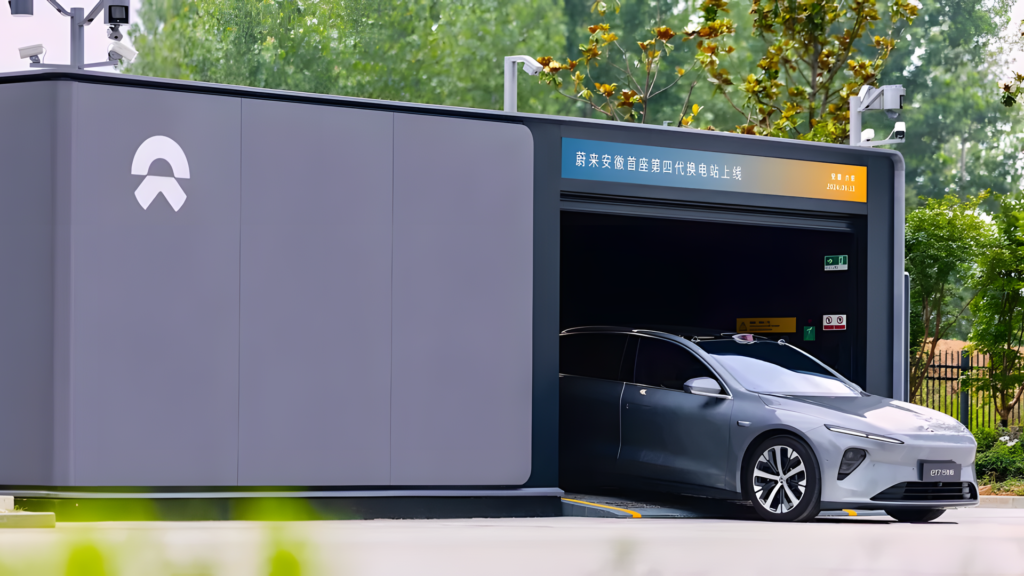
The concept of “battery swapping” allows drivers to fully automatically swap an empty battery for a full one within a few minutes. A process with the latest fourth-generation stations hardly takes longer than a refueling process with combustion engines. Nio has invested heavily in expanding this network in recent years and now operates over 2,600 such stations across the country.
An interesting aspect is network stabilization. The stations not only serve for switching, but also act as decentralized energy storage devices. They charge the batteries primarily at times when the network load is low and feed back electricity when necessary.
This relieves the load on the power grid, especially in times of high demand, such as those that occur during the New Year celebrations. In addition, many early customers benefit from free exchanges, which further explains the high usage rate. For a long time, Nio fought alone for the exchange standard. However, major partners such as Changan and Geely have now joined the network. These alliances are necessary to spread the high costs of the infrastructure across multiple shoulders and to make the system profitable in the long term.
The standardization of battery packs plays a central role here. The current figures confirm the acceptance of the technology among customers. While critics often complain about the technical complexity, users appreciate the time savings, especially on busy days. The record shows that the system is scalable, even if queues are not completely eliminated on peak days. The company therefore plans to continue expanding in rural regions.