Our wrist just got smarter: smartwatches hit professional-grade GPS accuracy

Smartwatches could soon be able to locate more precisely than many professional devices. A new study shows: With the right algorithms, even commercially available watches can be accurately determined to within a few centimeters – without any special hardware.
Smartwatches beat professional GPS: positioning with centimeter precision
Until now, positioning with centimeter precision was reserved for specialists – engineers, surveyors, robotics researchers, and the military. They used highly sensitive GPS antennas, reference stations and complex evaluation software. Fitness watches, on the other hand, had an accuracy of one to two meters at best, which was enough for jogging routes or altitude profiles. But now researchers are showing that even a standard smartwatch can exceed the limits of precision measurement – if you read it correctly.
The team led by Sanghyun Yoon from Seoul National University investigated how far the GNSS chips installed in modern smartwatches can actually be exploited. The focus is on a process called Real-Time Kinematic, or RTK for short. It uses not only the arrival time of the satellite signals, but also their phase position – tiny differences in oscillation that allow conclusions to be drawn about the distance in the centimeter range. In order for this to work, the device is compared to a known reference position: the error can be precisely calculated from the difference between the two measurements.
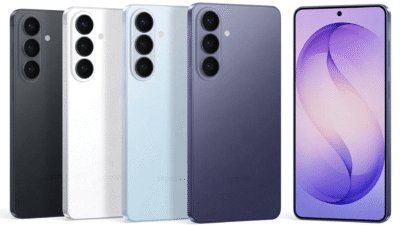
In practice, this technology has so far been expensive and sensitive. It required special antennas, stable radio connections and multi-frequency receivers. According to the researchers, however, study on commercially available hardware: a Pixel Watch 1, a Galaxy Watch 6 and a Pixel 5 smartphone. All devices only worked with the usual L1 signals from GPS, Galileo, BeiDou and QZSS – exactly what is found in consumer devices today. The raw data was recorded down to the second and fed into the RTK process using modified evaluation software.
We were able to show for the first time that one of the tested smartwatch models achieved RTK positioning in the centimeter range using its internal antenna Yoon and colleagues in Nature
The result surprises even experts: In laboratory scenarios with a clear view and external antenna, the devices achieved fix rates of almost 100 percent – i.e. stable centimeter accuracy in almost every measurement. Even with the internal antenna of the Galaxy Watch 6 this was 99.3 percent successful, while the Pixel Watch 1 was around 82 percent. Just a few years ago, this was considered impossible: antennas that were too weak, signals that were too noisy, and not enough computing power. Technically speaking, the difference is huge.
Normal GPS measurements only provide the so-called pseudorange, i.e. rough transit time data. RTK, on the other hand, works differently thanks to “double differencing”: It compares the phase information of several satellites between two receivers, eliminates systematic errors and tests possible combinations until they match all signals at the same time. The computing effort is considerable, but modern chipsets have long been able to do this in real time.
New location chapter
This opens a new chapter for tracking in everyday life. If smartwatches actually become precise enough, the movements of runners or cyclists could be recorded with millimeter precision, drones could be flown in precise formation, or augmented reality applications could be anchored with pinpoint precision.
The study by Yoon and colleagues, published in GPS Solutions (2025), is intended as a proof of concept. It shows what is possible if existing chips are read correctly – and hints at what could soon become standard. Because the boundary between professional technology and everyday devices is rapidly shifting. What once belonged on surveying tripods may soon be worn on your wrist.

Digital marketing enthusiast and industry professional in Digital technologies, Technology News, Mobile phones, software, gadgets with vast experience in the tech industry, I have a keen interest in technology, News breaking.