Scientists Discover New Coronavirus in Brazilian Bats with Pandemic Potential
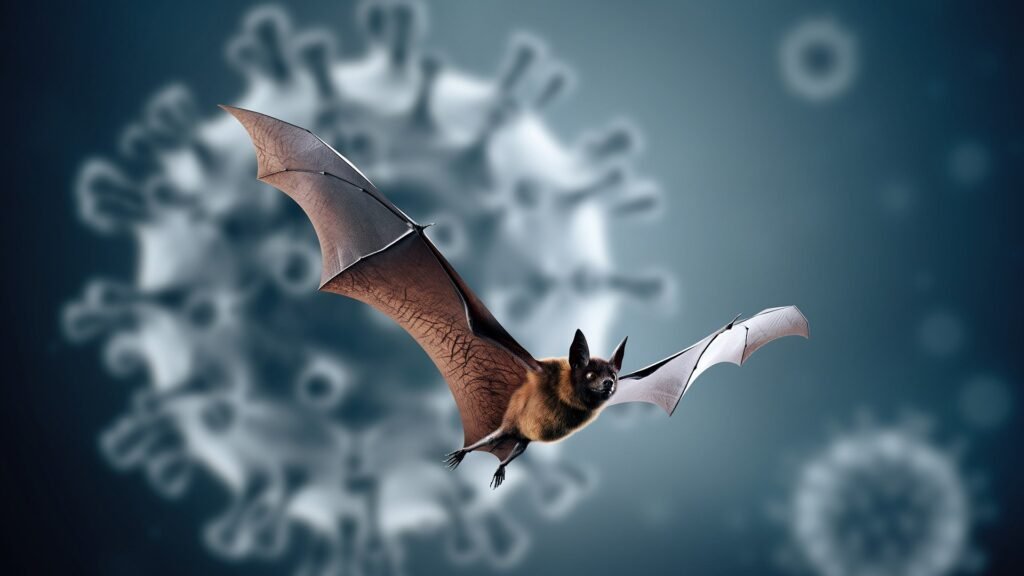
The aftermath of the corona pandemic is far from over, and theoretical successors are already emerging among biologists. Scientists have discovered new coronaviruses in bats in Brazil that could jump to humans.
Closing gaps in Brazil
An international team from Japan and Brazil has now presented the preliminary results of their work. The newly discovered viruses are genetically very different from known coronaviruses, but have a property that also characterizes SARS-CoV-2 and could make infections in humans easier. The researchers emphasize that the diversity of bat coronaviruses occurring in nature poses the risk of new epidemics. “The high viral diversity in bats makes them a central group for zoonotic disease surveillance,” says the study, which is published as Preprint on bioRxiv was published.
Even before the COVID-19 outbreak, scientists were worried that coronaviruses could cause the next major pandemic. SARS-CoV-2, its predecessor SARS-CoV and MERS-CoV are examples of coronaviruses that have successfully jumped to humans over the past two decades. All three belong to the genus of betacoronaviruses.
To date, almost all data on this group of viruses has come from Asia, Africa and the Middle East, while virus diversity in the Americas has been rarely studied. To fill this gap, the research team analyzed intestinal tissue from 70 bats captured between May and August 2019 at three locations in Brazil. They came across a suspicious virus in a Parnell’s bat (Pteronotus parnellii) and completely sequenced the genome.
Focus on the spike protein
The virus, which the scientists called BRZ batCoV, is so genetically distinct that it represents a previously unknown subtype of betacoronaviruses. What is striking, however, is that, similar to SARS-CoV-2, it has a functional furin cleavage site (FCS) at the S1/S2 junction of its spike protein. This is an important feature that can facilitate infections in humans. Although the similarity of the FCS is concerning, the researchers emphasize that the actual infectivity of BRZ batCoV has not yet been studied.
In addition, there is little virus surveillance in Brazil and other regions of the Americas, so these viruses may have been circulating undetected for a long time. The scientists see their discovery as an early warning signal. Many human diseases begin as zoonotic infections that jump from animals to humans. Bats therefore remain a key source of possible future pandemics, and monitoring of their viruses is urgently needed to detect risks early.

Digital marketing enthusiast and industry professional in Digital technologies, Technology News, Mobile phones, software, gadgets with vast experience in the tech industry, I have a keen interest in technology, News breaking.