The Game Changer: How Virtual Reality Is Reshaping Sports Training
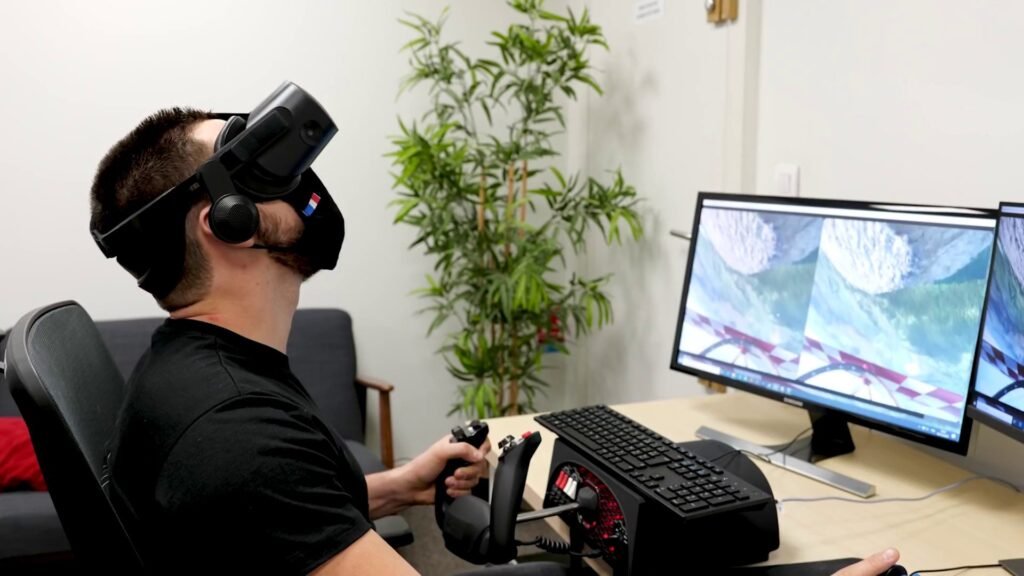
Imagine stepping onto the field, hearing the roar of the crowd, and seeing your opponent charge toward you—all while standing in your living room. This is no longer science fiction; it is the reality of modern sports training. Virtual Reality (VR) has moved beyond the world of video games and is now a critical tool for professional athletes and coaches. By simulating real-world scenarios, VR offers a smarter, safer, and more efficient way to prepare for competition.
For decades, practice meant physical repetition: running drills until muscles ached and the sun went down. While physical conditioning remains essential, technology has opened a new frontier focused on the mind. Today, teams across the NFL, NBA, and Premier League are using immersive technology to gain a competitive edge. This article explores how VR is transforming athletic development, from sharpening mental acuity to revolutionizing injury recovery.
Mastering the Mental Game: Cognitive Training
Physical prowess is only half the battle in elite sports; the other half is played in the mind. VR allows athletes to train their brains just as rigorously as their bodies. In a virtual environment, players can face unlimited repetitions of specific game situations without the physical wear and tear of traditional practice. This “mental rep” process helps athletes recognize patterns, anticipate opponent moves, and make split-second decisions.
Sharpening Reaction Times
One of the most significant benefits of VR is the improvement of reaction times. In sports like baseball or tennis, the ball moves too fast for conscious thought. Players rely on instinct and muscle memory. VR simulations can replicate the exact speed and trajectory of a pitch or serve, allowing athletes to practice their timing endlessly.
By stripping away distractions and focusing purely on visual cues, athletes can train their eyes to track movement more effectively. This heightened visual processing translates directly to the field, where a fraction of a second can mean the difference between a win and a loss.
The Convergence of Simulation and Digital Entertainment
As technology advances, the line between training tools and digital entertainment continues to blur. The same graphics engines that power high-end video games are now used to create hyper-realistic training environments. This cross-pollination of technology benefits everyone, as user interfaces become more intuitive and immersive experiences become more accessible.
The influence of gaming tech on sports is undeniable, but it works both ways. The broader digital entertainment industry often adopts these high-fidelity simulations to engage users in different ways. For example, modern online platforms now offer immersive experiences that rival video games in their visual quality and interactivity.
This trend is evident in various sectors where user engagement is paramount. Some digital platforms have mastered the art of creating exciting, virtual atmospheres that capture a user’s attention instantly. A prime example is the online gaming sector, where hubs like kasyno ICE utilize advanced graphics and seamless interfaces to replicate the thrill of a physical casino, demonstrating how virtual environments can effectively simulate real-world excitement and engagement. Just as an athlete feels the pressure of a virtual stadium, users on these platforms experience the intensity of a live venue through their screens.
Revolutionizing Injury Rehabilitation
Injuries are an unfortunate part of sports, often leading to long periods of inactivity. Traditionally, an injured player would lose valuable practice time, leading to a decline in tactical sharpness. VR has changed this dynamic completely.
Now, an athlete recovering from a leg injury can still “practice” with their team in a virtual space. They can stand on the virtual field, watch plays unfold, and make mental reads without ever putting weight on their injured limb. This keeps their mind sharp and engaged, significantly smoothing the transition back to actual play once they are physically cleared.
Furthermore, VR is used in physical therapy to make rehabilitation exercises less monotonous. Gamifying physical therapy encourages athletes to push through the boredom of repetitive movements, leading to better compliance and faster recovery rates.
Comparison of Traditional vs. VR-Enhanced Training
| Feature | Traditional Training | VR-Enhanced Training |
| Physical Impact | High physical load and fatigue | Low physical impact, high mental engagement |
| Environment | Dependent on weather and field availability | Controlled, available anywhere, anytime |
| Repetition | Limited by physical stamina | Unlimited repetitions possible |
| Feedback | Delayed (coach analysis after practice) | Instantaneous, data-driven feedback |
| Safety | Risk of collision and injury | Zero risk of physical contact |
This table highlights how VR complements traditional methods by addressing limitations related to safety, logistics, and fatigue.
The Future of Athletic Performance
The adoption of VR in sports is still in its early stages, and the potential for growth is immense. As hardware becomes lighter and more comfortable, and software becomes more realistic, we can expect to see VR integrated into every level of sports, from youth leagues to the Olympics.
Future developments will likely focus on haptic feedback—technology that simulates the sense of touch. Imagine a quarterback not only seeing the pass rush but feeling the vibration of footsteps, or a golfer feeling the resistance of the wind. This multi-sensory approach will make simulations indistinguishable from reality, further enhancing the transfer of skills from the virtual world to the real one.
Key Benefits of VR Adoption:
- Accessibility: Allows practice without needing a full team or stadium.
- Data Analytics: Tracks eye movement and decision speed for precise coaching.
- Mental Health: Reduces performance anxiety by normalizing high-pressure situations.
Elevate Your Game with Technology
Virtual reality is not here to replace sweat and hard work; it is here to make that hard work count for more. By embracing VR, coaches can offer personalized training that respects the physical limits of their athletes while pushing their cognitive boundaries. Whether it is for injury prevention, mental conditioning, or tactical rehearsal, VR provides a versatile solution for modern sports challenges. For coaches and athletes looking to stay ahead of the curve, the message is clear: the future of training is virtual. Don’t wait for the technology to become standard—start exploring how digital simulation can enhance your practice regimen today. Investigate VR platforms, consult with tech-savvy trainers, and step into the future of sports performance.

Alexia is the author at Research Snipers covering all technology news including Google, Apple, Android, Xiaomi, Huawei, Samsung News, and More.