XRPL vs GCUL: Google breaks into the blockchain space
Blockchain is one of the most revolutionary technologies of the 21st century – it enables transparent, secure, and decentralized transfers and data exchanges. It has managed to create a financial ecosystem where omnipresent participants in the traditional ecosystem are no longer needed, including banks, brokerages, and governments. It’s no surprise that the biggest search engine providers would explore and leverage this technological opportunity, too. Google, at least, does so.
Google has just announced the launch of GCUL, short for Google Cloud Universal Ledger. And it shares many attributes with fellow blockchain, Ripple, the company facilitating instant, global transfers via its native cryptocurrency, XRP. This asset is having a monster year, having gained over 400% since September of last year, according to Nasdaq. If you want to invest in pairs like XRP USD, now might be the time to start learning about it and the broader crypto concept. In this regard, having additional knowledge of the latest developments in the blockchain area will help you see the bigger picture, for crypto is evidently complex. So, let’s not waste time.
What’s Google’s freshest blockchain project all about?

A platform for payment providers and financial institutions
Google has recently announced the release of a platform for payment providers and financial institutions, registered as GCUL. It’s a new layer-1 network that operates on Python-fueled smart contracts, empowering traditional finance developers to design apps without needing to upskill themselves in new coding languages.
This platform works like a permissioned and private network, so only institutions with access to it can use it. This model makes it easier for financial institutions and banks to comply with the regulatory requirements imposed in each country, helping the app enter the mainstream more easily.
At a glance, it seems like Google’s ambitions intersect with Ripple’s – a goal the company is very confident in accomplishing.
Comparing XRPL and GCUL
While very similar in appearance, there’s a good share of differences setting XRPL and GCUL apart. First, XRPL serves as a decentralized platform everyone can use, with validators verifying transactions and blocks from all parts of the world. It’s not caged within one, single company. This means that validators have more freedom with Ripple than with GCUL, though this excessive accessibility makes it more susceptible to witnessing illicit transactions.
At the same time, GCUL serves as a private and centralized platform that only institutions that have been inspected and accepted by the provider can use. Unlike XRPL, Solana, and Ethereum, which welcome everyone, Google’s blockchain project is designed to prioritize institutions’ control, alongside stability and regulatory compliance, with the search engine provider being at the helm of its infrastructure services and governance. As expected, it features strong security and privacy integrations built on Google Cloud’s infrastructure.
GCUL offers the possibility of working with smart contracts – the driving force behind many blockchain-driven applications. XRPL, on the other hand, only integrates lightweight “hooks”, also known as small code pieces that can be integrated with XRPL accounts. This only allows for the development of less sophisticated programs. However, there’s an ongoing discussion about implementing “sidechains” as a solution to enable smart contracts in the Ethereum style on the XRPL. It’s only a matter of time to see whether the project takes off.
Not to be confused
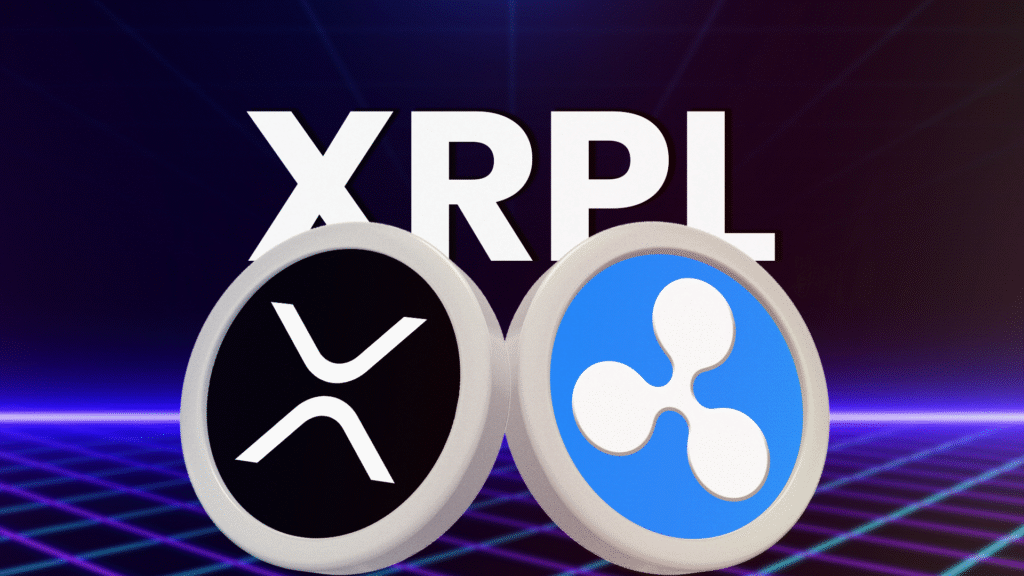
When talking about differences between GCUL and XRPL, it’s essential to draw attention to a common misperception: Ripple USD and XRP. XRPL’s native token is Ripple USD, but many mistakenly confuse it with XRP. In reality, XRP is a different cryptocurrency: it facilitates transactions on the XRPL network and also serves as a bridge asset for liquidity and international payments within Ripple’s wider ecosystem.
Ripple USD is a stablecoin and is tied to the U.S. dollar. So instead of needing to exchange value for a third-party currency such as the USD, wasting time and money uselessly, one can benefit from the presence of these tokens.
GCUL doesn’t offer its own, innate cryptocurrency. Instead, and unlike many other blockchains, it charges fixed fees each month in order to avoid involvement with crypto.
The race in the blockchain zone is fierce
All sorts of enormous fintech and tech companies now compete to create their own, top-tier blockchain networks, and Google has just joined their ranks. Fintech company Stripe, for instance, is working on Tempo, a blockchain that supports Ethereum and is exclusively fashioned to support merchant transactions, looking to ease and speed up cryptocurrency transactions among businesses. Circle, at the same time, is developing a platform revolving around the USDC stablecoin and designed for seamless and safe digital payments.
Google joining the fray via GCUL indicates that the corporate blockchain battlefield is transforming into a high-stakes battle, with each competitor leveraging its own, unique strong suits, be it stablecoin ecosystems, accessibility for developers, or international infrastructures. The stakes are high: all companies want to ride the wave of institutional adoption and refashion how enterprises manage digital payments.
Is Google breathing down XRPL’s neck?
Google’s GCUL might attract asset managers, clearinghouses, and huge banks that prioritize regulated infrastructures and fixed fees that won’t catch them off guard. Enterprises whose activities are already integrated with Google’s services might also find Google’s blockchain service a natural good fit. Nevertheless, XRPL’s independence from watchdogs, decreased fees, and decentralized model might make it a better choice for retail users and small-scale financial institutions who’d rather ditch the rigid corporate oversight for more flexibility in payments.
Plus, Google won’t officially make GCUL public until next year. By that time, the Ripple USD and XRP might already have become good alternatives for the USD. Some events might also trigger XRPL’s near-term growth. ETF issuers have received the green light to develop and launch XRP spot ETFs recently, which is a good sign for XRP investors and the broader altcoin ecosystem.
Bottom line
Google’s breaking into the blockchain space with the upcoming GCUL, scheduled for 2026. It’s a regulated, enterprise-focused blockchain that offers predictable fees and a design oriented toward compliance. Yet, XRPL’s decentralized model, lower costs, and growing XRP and Ripple USD adoption keep it unbeatably relevant.

Alexia is the author at Research Snipers covering all technology news including Google, Apple, Android, Xiaomi, Huawei, Samsung News, and More.