5 Key Space Technology Trends You Must Watch in 2025
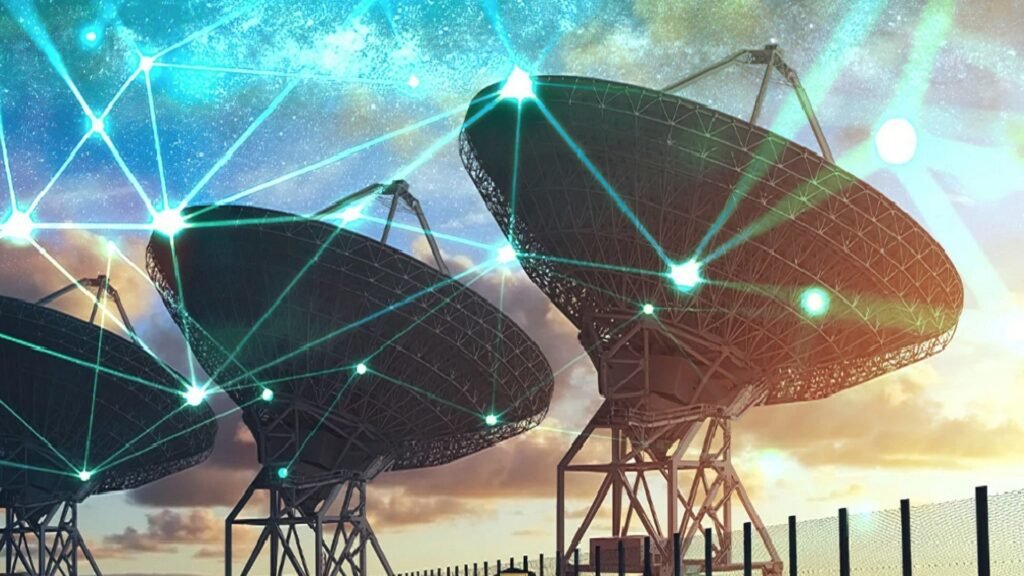
A New Era of Space Innovation
Space technology is evolving to one of its most transformational periods in the first half of 2025. A shift is being witnessed by the world from purely government-led missions to the creation of a vibrant, private-driven ecosystem where innovation, investment, and competition are changing the way humanity approaches space.
Not to be confined to fantastical conjectures, the call for space is being answered in such a way that the entire economy is getting built around the stars. The technologies that were doubted to be viable trials now become the mainstay of the global industries that have a far-reaching impact on communication networks, climate monitoring, and so on.
To a large extent, the space saga of 2025 is beyond the boundary of just new explorations; integration is the keyword here. The advancements in space tech are leading to very close ties with Earth’s digital and economic fabric and opening up new possibilities in sectors such as AI, telecommunications, and sustainability.
The Acceleration of Commercial Launch Systems
The most noticeable change to have happened over the last few years might be the proliferation of commercial launch capabilities. In a way, it used to be the exclusive territory of national space agencies, but now it is a competitive, rapidly evolving market.
SpaceX, Rocket Lab, Relativity Space, and a whole new generation of aerospace startups are the main players decreasing the production costs of their goods and services through reusability. The number of flights per unit of time has been raised enormously to the point that it is now possible to reach orbit with satellites, space telescopes, and research payloads much faster than before.
The worldwide launch sector is going to be able to put in orbit low-earth satellites in large numbers by 2025. These satellites will be the basis for such things as the gigabit internet and precision agriculture. At the same time, reusability and automation are two factors that contribute to the lowering of production costs. Besides, new propulsion systems, electric, hybrid, and even methane-based are changing the economics of space access.
Such changes are not only technological milestones; they could be seen as the pillars of a scalable space economy that will keep the exploration going for the next several decades.
The Rise of Space Data and AI Integration
Orbit-generated data at the rate of what feels like a pandemic is creating both a challenge and an opportunity for mankind. To mention a few, satellites snap through weather systems, crop health, urban development, and maritime activity, capturing terabytes of information daily. No less than advanced analytics and artificial intelligence are needed to make sense of that data.
AI-powered systems are turning into parts of on-orbit operations and ground analytics platforms at a rapid pace. The systems are enhancing image classification, foreseeing environmental changes, and on top of that, they are even automating mission planning. The AI-space synergy, which is one of the ways the two technologies complement each other, is making satellite data more actionable, thus giving back to the raw pixels the form of insights that drive smarter decisions on Earth.
Across the board, in sectors such as agriculture, energy, and defense, AI models are being fed 24/7 streams of orbital data, thus creating feedback loops between the digital and physical realms. The data-intelligence merger is the very thing that is paving the way for what most experts refer to as “cognitive space infrastructure” systems capable of observing, learning, and responding autonomously.
This shift has also brought new business opportunities for organizations operating in the space technology market, where the demand for analytics, data platforms, and quantum-enhanced processing capabilities continues to grow rapidly. These companies are not just building tools; they’re building the next-generation intelligence networks that will define our interaction with space itself.
Lunar Missions and the Return to Deep Space
2025 is shaping up to be a landmark year when humanity returns to the Moon. The NASA Artemis program, as well as private companies, are moving ahead with plans to set up a sustainable lunar presence that would essentially be a continuation of the symbolic landing,s but with the goal of building the infrastructure necessary for further exploration.
Various private enterprises are working on the development of lunar landers, mining technologies, and communication systems that will be suitable for the extreme lunar environments. On the other hand, governments are pouring money into the establishment of cooperative frameworks that will make it possible to have shared use of resources like lunar regolith and ice deposits, which could then be turned into fuel or water.
Such a comeback to the Moon is not solely about exploration anymore; rather, it is to see if mankind is ready for deeper missions to Mars, asteroids, and other destinations in space. In fact, the technology that is being prepared for the lunar surface is already having an impact on different industries here on Earth, including robotics, materials science, energy storage, and remote operations.
In fact, by the time the decade is over, the Moon may turn out to be the very first “off-Earth economy” that would be able to sustain science, manufacturing, and perhaps even tourism.
The Economic Landscape of Space in 2025
With the convergence of these technological trends, the space sector is increasing its economic footprint in a very notable manner. The global space economy is expected by analysts to exceed $600 billion within the next few years, largely the effect of private investment, government partnerships, and downstream applications.
The fact that space technology is one of the main factors that are leading to innovation in other industries is what makes the situation quite fascinating. Besides telecommunications, insurance, logistics, and energy, agriculture is also being fundamentally changed by the insights derived from satellite data and advanced analytics.
On top of that, venture capital is still very much available for startups that are able to offer scalable, data-driven solutions. The ecosystem is moving away from being just a series of isolated projects to becoming an interconnected marketplace in which the ability to collaborate and be interoperable is as important as the raw innovation itself.
From this point of view, space technology is not really a frontier anymore. In fact, it is becoming infrastructure, closely integrated with the way global business and society function on a daily basis.
Looking Ahead: The Next Phase of Human Ambition
The narrative of space 2025 goes beyond mere discovery it is a story of change. Humans are adjusting their perspective of space from a far-off world to a logical continuation of our technological environment – a laboratory, a marketplace, and a reflection of our creativity.
These are the trends that dictate the year: reusable rockets and AI-driven satellites to sustainable orbital practices, and the next decade will be influenced by them. What is going to be above the Earth will increasingly decide what is possible below it.
As we are daring more and more, the companies and organizations that will harness this energy are the ones to lead the coming phase of the digital revolution. The fusion of innovation and exploration will be the main reason to keep moving ahead, whether it is done by smarter data, better infrastructure, or new forms of collaboration.
2025 is not just another year in the progression of space technology, it is the very moment when the future starts to take its shape, and the global community realizes that the sky is never the limit.

Alexia is the author at Research Snipers covering all technology news including Google, Apple, Android, Xiaomi, Huawei, Samsung News, and More.