G.Skill has to pay $2.4 million
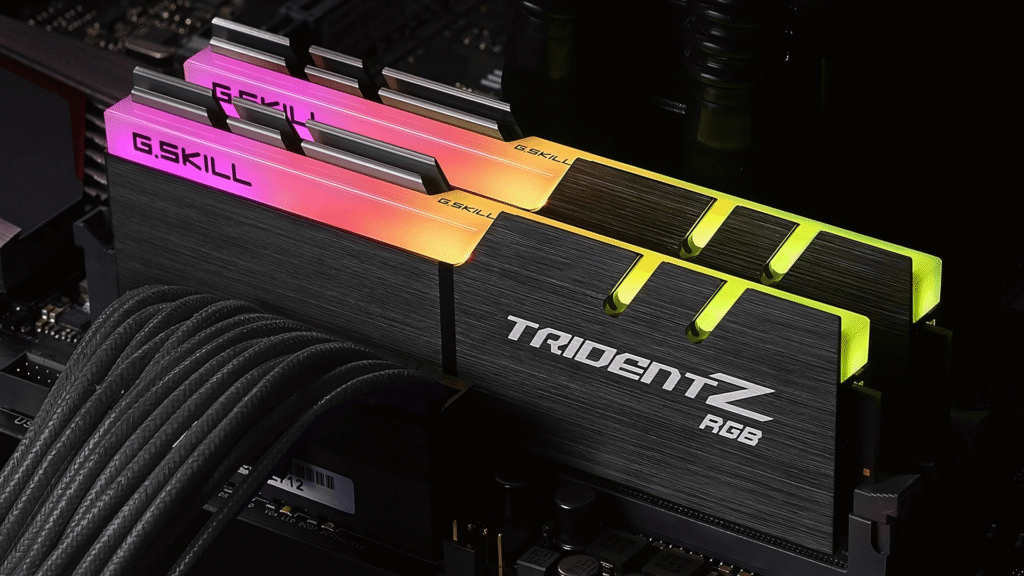
Memory manufacturer G.Skill has to make payments and adjust its RAM packaging as a result of a legal dispute. In the future there will be explicit indications that the specified clock speeds can only be achieved through manual BIOS settings.
Misleading information
RAM is becoming more and more expensive. In recent weeks, RAM prices have increased so much that some retailers are now only displaying ‘zombie PCs’ in their stores to keep thieves away. And manufacturers like Corsair are also giving their kits new packaging to limit memory fraud. The G.Skill brand will soon be introducing new packaging for its RAM bars, but for a completely different reason. The Taiwanese company has agreed to an agreement in an ongoing legal dispute in the USA, which will have far-reaching consequences for product marketing.
At the center of the dispute is the accusation that G.Skill deceived end customers by specifying maximum clock speeds on the product packaging. Many buyers mistakenly assumed that memory bars with names like DDR5-6000 would achieve the corresponding speed immediately after installation and without any further action. In fact, when the system is first started, the modules usually work with conservative default values until the user intervenes manually and takes overclocking measures.
Information becomes mandatory
In order to resolve the dispute, G.Skill will pay a sum of 2.4 million US dollars (approximately 2.03 million euros) into a compensation fund and undertake to change the information on packaging and websites. In the future, the advertised clock speeds will have the addition “up to”. In addition, there must be a clearly visible indication that achieving these speeds depends on the system used and requires appropriate settings in the BIOS.
As can be read in official documents, the Classaction.org provided, the plaintiffs felt misled by the lack of these explicit warnings. The argument was based on the fact that the average consumer has no way of knowing that the advertised values technically constitute overclocking. Although G.Skill continues to deny any wrongdoing and emphasizes that its products are technically capable of performing, the manufacturer agreed to the settlement to avoid lengthy and costly litigation.
Technical hurdles for buyers
The technical background of this legal dispute affects almost all modern high-performance memory kits. If modules are sold with speeds above the official specifications, this is actually overclocking. To ensure that the PC runs stably the first time it is started, manufacturers initially store secure JEDEC profiles with lower clock rates and voltages on the so-called SPD chip (Serial Presence Detect).
In order to actually use the performance values advertised on the packaging, users have to activate specific profiles in the BIOS or UEFI. On Intel systems this is known as XMP (Extreme Memory Profile), while AMD platforms use EXPO (Extended Profiles for Overclocking). Without this manual step, the expensive high-performance storage often remains at the slower basic level for years without users knowing about it.
More transparency for buyers
G.Skill’s case is not an isolated case. The aforementioned competitor Corsair was also confronted with similar allegations and agreed to pay 5.5 million US dollars (around 4.64 million euros). In both cases, the plaintiff’s attorneys’ goal is more transparent communication to laypeople who are unaware of the technical necessity of BIOS settings.
For knowledgeable buyers, adapting the packaging does not bring any new technical knowledge, as knowledge of XMP and EXPO is assumed. Nevertheless, the step towards more transparency is to be welcomed. The explicit instructions give less experienced users a better chance of developing the full potential of their hardware instead of unknowingly wasting performance.