DeepL attacks Google and Microsoft with live language translation
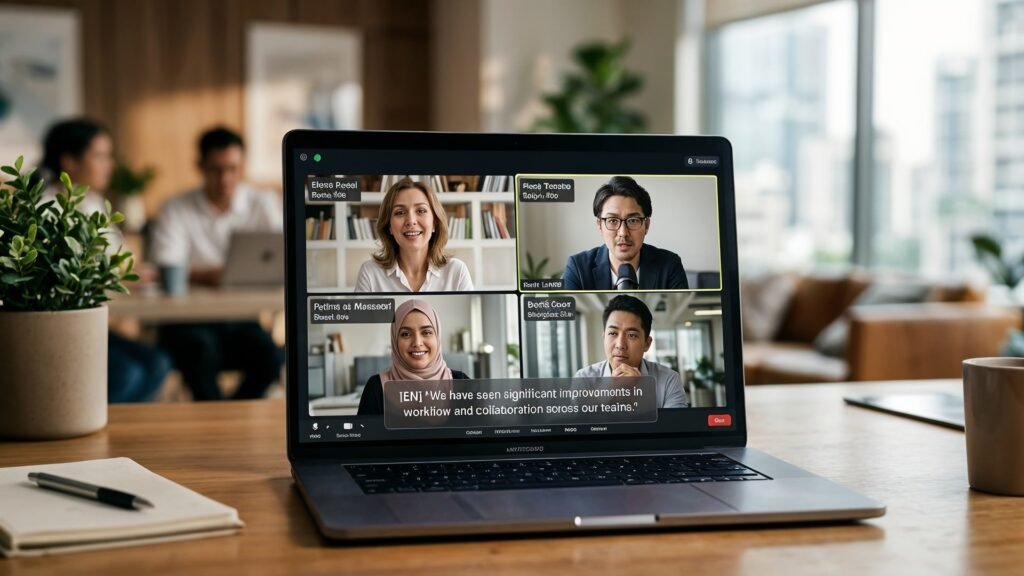
The Cologne company DeepL is attacking the market for real-time language translations with DeepL Voice. The new software translates conversations in video calls live into over 40 languages. Extensions for Teams and Zoom are available for this.
DeepL starts with language translation
DeepL has introduced a new range of products for real-time language translation. With the DeepL Voice product, the German provider aims to reduce oral communication hurdles in international companies. The system translates spoken language live during virtual meetings or in-person conversations. The new suite includes various tools for everyday business and is intended to fit seamlessly into existing workflows. Core features include:
- Extensions for the video conferencing services Zoom and Microsoft Teams.
- Solutions for mobile devices and web-based entertainment.
- A programming interface for developers.
The programming interface allows companies to integrate the technology into their own applications. Like the company in one DeepL press release writes, the system supports over 40 languages at launch (all 24 EU languages as well as Vietnamese, Thai, Arabic, Norwegian, Hebrew, Bengali and Tagalog). A key challenge during development was the balance between low latency and high accuracy. The system currently converts the speech into text. In the future, the provider is planning a direct end-to-end model without intermediate steps.
Tough battle for the B2B market
The market for professional translation software is highly competitive. While Microsoft and Google are already incorporating their own live translations into their services, more and more start-ups are also entering the sector. One advantage of DeepL’s new solution is that it can be adapted to specific technical terms used by companies. Customers can upload their own glossaries so that the system correctly recognizes technical terms.
However, companies must consider whether they should rely on a third-party provider or use existing on-board resources in their conference software. To make it easier to get started, the company responds flexibly to different customer sizes. The provider offers a self-service model for small teams. Those interested can test the functions directly. Larger companies with more complex requirements, on the other hand, are initially put on a waiting list until the capacity for large rollouts is available.

Amit Gohar is Technical writer at ResearchSnipers.com, he is well versed Technology News writer, he has completed is MS computer Science in 2020. He can be reached at amit.g@researchsnipers.com