How to Choose a Quiet Robot Vacuum for a Canadian Home
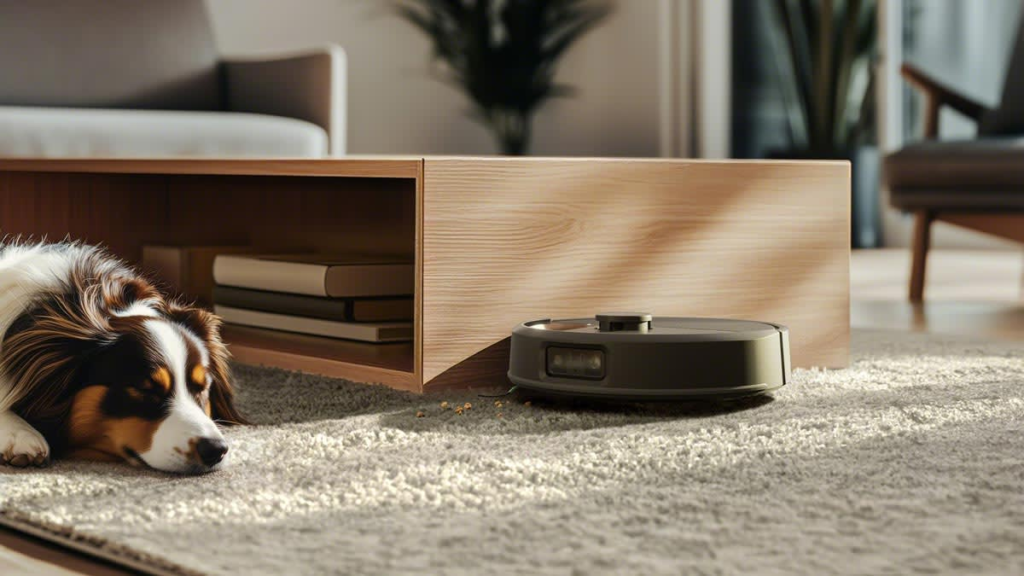
Noise level is one of those vacuum specifications that sounds like a marketing detail until you actually live with a loud one. A robot vacuum that runs during the day in an open-concept home, or at night while you sleep, needs to operate at a volume that does not interrupt conversation, wake a sleeping infant, or disturb a pet that startles easily.
Here is what noise levels in robot vacuums actually mean and how to find a model that genuinely runs quietly.
How Loud Is a Robot Vacuum, Exactly?
Most robot vacuum models operate between 55 and 75 decibels during regular cleaning. For context, normal conversation sits around 60 dB, and a standard electric kettle boiling is about 70 dB. The quieter end of this range is barely noticeable in a room you are working in; the louder end is distracting.
Noise comes from two primary sources: the suction motor and the brush roll. Suction motors have gotten quieter as efficiency has improved — modern brushless motors generate less vibration than older designs. Brush roll noise depends on the design and the surface being cleaned; rubber rollers on hard floors tend to be quieter than traditional bristle brushes.
When Quiet Operation Actually Matters
The biggest scheduling advantage of a quietest robot vacuum is flexibility. A quiet model can run during a work-from-home day without being distracting, during nap time for young children, or in the early morning before the household wakes up.
In Canadian homes specifically, where many households have finished basements or open-plan layouts, sound travels farther than it does in compartmentalized floor plans. A vacuum running on the main floor can be clearly audible in a bedroom or home office downstairs. Quiet operation is not a minor comfort preference in these layouts — it determines whether you can actually run the vacuum when you want to.
Suction Mode and Noise Trade-Offs
Most robot vacuums offer multiple suction modes — quiet, standard, boost, and maximum. The relationship between suction level and noise is roughly proportional. Running a vacuum at maximum suction on hard floors every day is both louder than necessary and uses more battery power than the job requires.
For daily maintenance on hard floors, standard suction mode is almost always sufficient. Reserve boost or max modes for carpet or post-renovation cleanup where you genuinely need the extra airflow. Scheduling daily runs at standard mode keeps noise to a minimum and extends battery runtime per session.
Dock Noise: Something Buyers Often Miss
The self-emptying function on modern docks creates a brief, loud suction burst when the robot returns and transfers its debris into the dock bag. This typically lasts 10-15 seconds and is noticeably louder than the vacuum itself. If the dock is located in a main living area, this brief burst can be startling.
Some models allow you to schedule the self-empty cycle for a specific time, separate from the cleaning run. This is a useful feature for households where the emptying noise is disruptive — schedule it at a time when the house is empty or when the noise would not be a problem.
Canadian Home Layouts and Robot Vacuum Practicalities
Many Canadian homes have distinct layout considerations that affect robot vacuum performance. Heated tile entryways that transition to hardwood or carpet are common, and the temperature transition does not affect the robot — but the raised thresholds between zones sometimes do. Models with strong obstacle-crossing capability handle these transitions more reliably than lower-end options.
Finished basements create a multi-floor cleaning question. Most households set up the robot to run on each level separately, either by physically moving it between floors or by having a charging dock on each level. Some models handle multi-floor mapping within the app, storing separate maps for each level.
Conclusion
Noise level in a robot vacuum comes down to motor design, brush type, and suction mode management. The quietest current models run at levels comparable to a quiet conversation, making them genuinely practical for use during daytime hours in occupied homes. For Canadian households with open layouts or home offices, this is worth weighting more heavily than most comparison guides suggest.

Alexia is the author at Research Snipers covering all technology news including Google, Apple, Android, Xiaomi, Huawei, Samsung News, and More.