RTX 3050 Ti: Leak about a never-released GPU shows what could have been
A completely surprising prototype of the never released GeForce RTX 3050 Ti for desktop PCs has appeared. The leak reveals detailed information about the specifications and performance of the Nvidia graphics card, which never made it onto the market.
Never released model
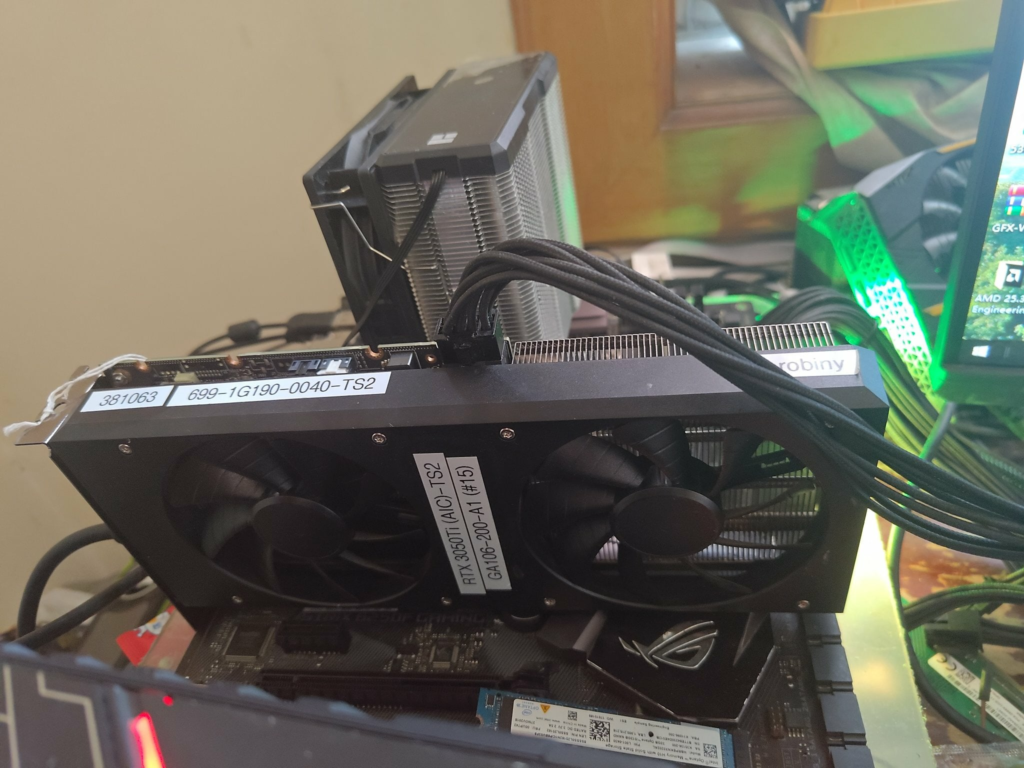
The first alleged specifications of the upcoming RTX 6090 were only recently leaked. At the same time as working on the new GPU generation, Nvidia is, somewhat surprisingly, also working on releasing the RTX 50 Super series. And even the Ampere generation is apparently still not dead with the rumor about a new edition of the RTX 3060. Completely surprisingly, a prototype of the Nvidia GeForce RTX 3050 Ti for desktop computers has now appeared online. Although the company behind CEO Jensen Huang launched a mobile version of the GPU for laptops, the desktop version of the card never made it to regular retail. The model that has emerged now shows in detail which hardware configuration was originally planned for the gap between the RTX 3050 and the RTX 3060.
A look at the circumstances of the time provides explanations for the decision not to be published. During the peak of the corona pandemic and the crypto mining boom, manufacturers suffered from massive chip shortages. Nvidia therefore apparently decided against using the scarce resources for another mid-range model. Instead, the group concentrated on producing the established variants.
Performance and specifications
Like the leaker Gok to X reported, the engineering sample of the 3050 Ti that has now emerged is based on a trimmed GA106 graphics chip. According to the screenshots shared, the card has 3328 CUDA cores. That’s over seven percent less than the RTX 3060 (3584 CUDA cores), but significantly more than the regular RTX 3050 (2304 CUDA cores). In the 3DMark Time Spy benchmark, the pattern achieved a value of 7787 points and clearly outperformed the RTX 3050 with 6418 points, but lagged behind the RTX 3060 (8721 points). This positions the graphics card exactly between the two known models. A clear advantage of the design is the storage connection. The card uses a 192-bit interface that enables a memory bandwidth of 336 gigabytes per second. However, the storage capacity proves to be a disadvantage. With just six gigabytes of GDDR6 video memory, the model even offers less VRAM than the original RTX 3050, which was equipped with eight gigabytes.
Leftover utilization strategy
The development of such intermediate models follows a well-known industry logic. Manufacturers use partially defective or not entirely perfect chips from the upper class and deactivate individual computing units. The procedure increases the yield in chip production. The RTX 3050 Ti has 26 of the 30 available streaming multiprocessors active. In terms of price, the desktop card would probably have been around 300 euros, right between the recommended retail prices of the sister models. A real RTX 3050 Ti for the desktop would certainly have enriched the market back then, but now it remains just a piece of hardware history.