How AI Hardware Is Driving the Next Generation of Advanced PCB Design

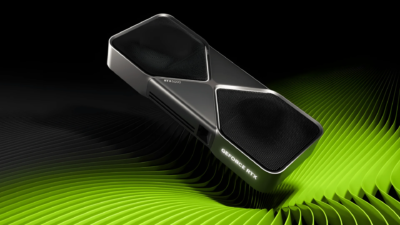
The global tech landscape is undergoing a monumental shift, propelled by the relentless expansion of Artificial Intelligence (AI). From large language models (LLMs) running in massive data centers to real-time computer vision processing at the network edge, the demand for computational power has reached unprecedented heights. At the heart of this revolution are next-generation AI accelerators—highly complex GPUs, TPUs, and NPU silicon designed to process billions of parameters per second.
However, an often-overlooked reality of the AI boom is that even the most advanced silicon is functionally useless without an equally sophisticated physical platform to support it. As a result, the humble printed circuit board (PCB) is no longer viewed merely as a passive substrate for connecting components. Today, AI hardware requirements are fundamentally redefining the boundaries of advanced PCB design, turning it into a critical determinant of system performance, reliability, and scalability.
1. The Extreme Electrical Demands of AI Silicon
AI processing architectures rely on massive parallel computing, which requires specialized semiconductor packages with thousands of pins. Breaking out these high-density Ball Grid Arrays (BGAs) onto a board forces designers to abandon traditional routing methodologies in favor of cutting-edge solutions.
- High-Density Interconnect (HDI) Technology: To accommodate micro-BGA pitches and the sheer volume of connections, modern AI boards rely heavily on Any-Layer High-Density Interconnect (HDI) technology. By utilizing stacked microvias, copper-filled pits, and ultra-fine trace widths/spacings, designers can route thousands of high-speed lines through highly localized areas without expanding the board’s overall physical footprint.
- Signal Integrity (SI) and Power Integrity (PI) Optimization: Data routing speeds for AI training clusters have scaled rapidly to PCIe 6.0, PCIe 7.0, and advanced Compute Express Link (CXL) architectures. At these extreme frequencies, copper traces act as transmission lines where signal attenuation, skin effect losses, and electromagnetic crosstalk become severe. To prevent catastrophic data corruption, engineering teams must specify ultra-low-loss (ULL) copper-clad laminates and maintain meticulous control over trace geometry.
- Power Delivery Challenges: Simultaneously, Power Integrity has emerged as a major design hurdle. AI core architectures demand hundreds of amperes of current at ultra-low voltages. Any minor power delivery network (PDN) impedance fluctuation can induce voltage drops that crash the processor. Advanced designs require dedicated internal power planes, continuous return paths, and decoupling capacitor arrays placed directly underneath the processor package.
2. Thermal Management: The #1 Bottleneck in AI PCB Design
The extraordinary computing capacity of modern AI servers comes at a severe thermodynamic cost. High-performance AI computing modules routinely exhibit thermal design power (TDP) ratings exceeding hundreds of watts per processor chip, turning deep-learning server enclosures into dense thermal environments.
Standard FR-4 material possesses notoriously poor thermal conductivity, making advanced thermal management architectures mandatory at the board level:
- Heavy Copper PCBs: Integrating thick copper layers into the internal stackup allows the board to efficiently distribute high-current loads while acting as an integrated lateral heat spreader.
- Embedded Copper Coins and Thermal Vias: For extreme hot spots directly beneath AI processors, designers press or embed solid copper coins into the board structure, establishing a direct, highly conductive metal path to the external heatsink interface.
- Liquid Cooling Structural Adaptations: As the industry transitions toward direct-to-chip liquid cooling and total immersion cooling frameworks, modern layouts must be geometrically optimized to accommodate fluid manifolds, sealing brackets, and specialized chemical-resistant solder masks.
3. Manufacturing Precision: Bridging the Gap from Design to Reality
Designing a highly sophisticated digital architecture is only half the battle; translating that digital schematic into physical hardware requires an exceptional level of manufacturing discipline. When dealing with twenty or more layer-count stackups, microscopic trace tolerances, and complex blind/buried microvia structures, standard production lines quickly reach their technical limitations.
Succeeding in this space requires a partner capable of executing flawless fabrication. Companies looking to transition their conceptual AI architectures into physical deployments must rely on specialized advanced PCB fabrication services that feature dedicated automated optical inspection (AOI), rigorous time-domain reflectometry (TDR) for impedance testing, and tightly controlled lamination processes.
Every single step—from drilling microscopic holes via advanced UV lasers to ensuring perfectly uniform plating within high-aspect-ratio holes—influences final production yields. Utilizing an end-to-end provider capable of handling advanced fabrication alongside turnkey PCB assembly ensures that component placement tolerances and complex reflow thermal profiles are completely aligned with the underlying raw board characteristics.
4. AI for AI: How Artificial Intelligence is Optimizing PCB Design
As AI hardware drives boards to unprecedented levels of complexity, human layout capabilities are nearing their practical limits. Manually routing tens of thousands of high-speed traces while balancing strict timing constraints, thermal boundaries, and signal return paths can easily translate to months of engineering work.
In a fascinating technological feedback loop, engineers are now leveraging AI-driven Electronic Design Automation (EDA) software to design the next generation of AI hardware. Machine learning algorithms can analyze millions of placement scenarios in seconds, automatically optimizing trace routing, minimizing via counts, and dynamically predicting electromagnetic or thermal hot spots before physical prototypes are built. This symbiosis drastically compresses product development lifecycles, enabling rapid commercialization of next-gen hardware architectures.
Conclusion
The rise of artificial intelligence represents far more than a software revolution; it is an infrastructure revolution forcing a profound transformation across the electronics manufacturing sector. The strict electrical, thermal, and density demands of advanced AI silicon have turned PCB layout into an elite cross-disciplinary engineering challenge encompassing material science, structural thermodynamics, and high-frequency wave mechanics.
Navigating this new era of hardware development requires close integration between design teams and production facilities. Aligning early in the development cycle with an agile, high-precision manufacturer equipped with the necessary technical infrastructure is the absolute key to unlocking the true potential of tomorrow’s AI innovations.

Alexia is the author at Research Snipers covering all technology news including Google, Apple, Android, Xiaomi, Huawei, Samsung News, and More.