How to Choose the Best Commercial Street Lights for Safety?
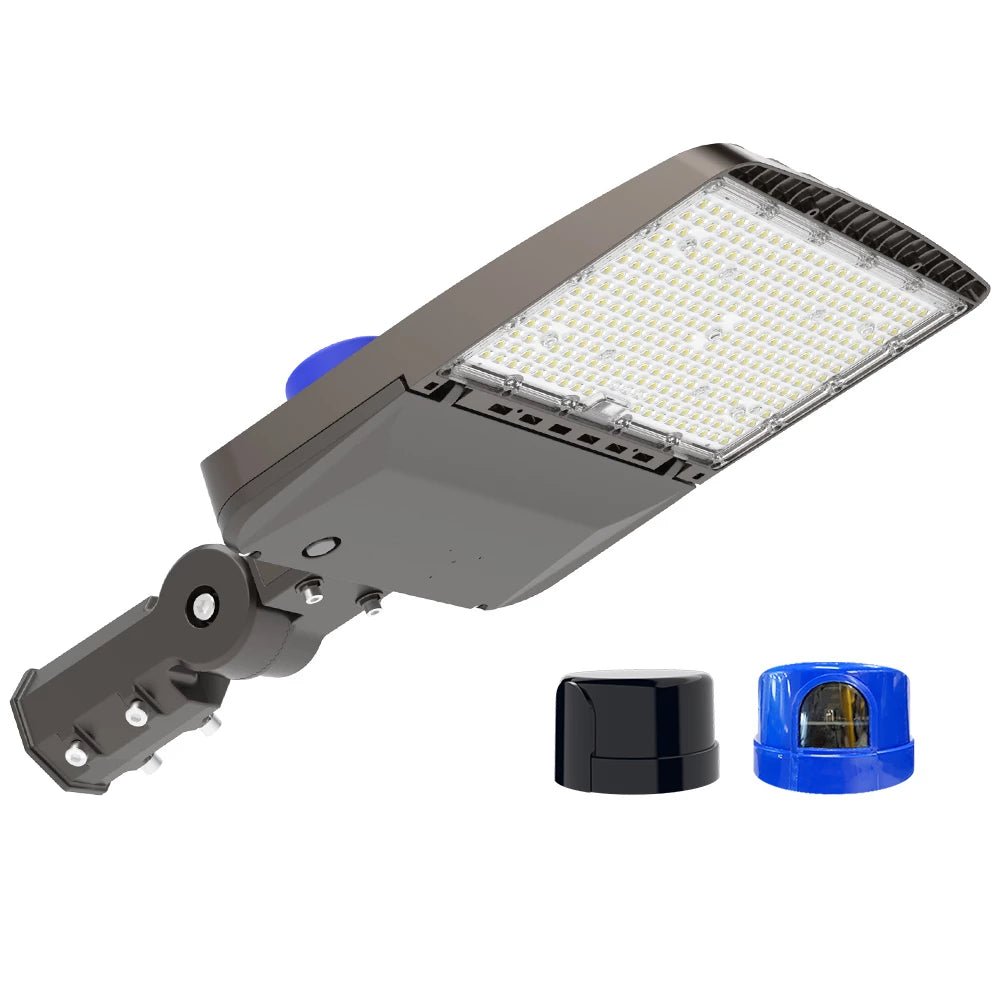
Every year, thousands of slip-and-fall accidents, vehicle collisions, and criminal incidents occur in poorly lit commercial areas—many of which could have been prevented with proper outdoor lighting. For property managers overseeing parking lots, walkways, and public spaces, commercial street lights represent far more than an aesthetic choice; they are a frontline defense against liability claims, security threats, and preventable injuries. The responsibility to maintain safe outdoor environments falls squarely on those who manage these properties, making lighting selection one of the most consequential decisions in facility planning. This guide walks you through the essential criteria for choosing commercial street lights that genuinely enhance safety, from LED fixture technology and selectable CCT options to versatile mounting configurations. Whether you’re upgrading aging infrastructure or planning a new installation, understanding the full range of available solutions will help you make informed decisions that protect people, reduce risk, and deliver lasting value for your property.
Why Safety Should Drive Your Commercial Street Light Selection
The relationship between outdoor lighting and safety is not speculative—it is well-documented and measurable. Properties with adequate illumination experience fewer slip-and-fall incidents, reduced vehicle-pedestrian conflicts, and lower rates of vandalism and theft. For property managers, this connection carries both legal and ethical weight. Premises liability law holds property owners responsible for maintaining reasonably safe conditions, and inadequate lighting is one of the most commonly cited factors in negligence claims. Beyond legal exposure, there is a fundamental duty of care owed to employees, tenants, customers, and visitors who use these spaces after dark. Well-designed commercial street lights also contribute to broader community well-being by fostering environments where people feel comfortable walking, shopping, and gathering. Properties known for safe, well-lit exteriors attract higher-quality tenants, command better lease rates, and maintain stronger long-term asset values. When safety drives your lighting decisions rather than cost alone, the result is a comprehensive approach that protects people and investments simultaneously.
The Impact on Crime Prevention and Security
Research consistently demonstrates that improved street lighting reduces crime in public spaces. A landmark study published by the Campbell Collaboration found that enhanced lighting led to a 21% reduction in crime in treated areas compared to control sites. Criminals rely on darkness for concealment—consistent, well-distributed illumination removes that advantage and increases the perceived risk of detection. For commercial properties, this means parking structures, loading docks, alleyways, and perimeter zones all require reliable lighting without dark pockets or shadows where threats can hide. The key is uniform coverage rather than isolated bright spots, which can actually create deeper contrast shadows nearby. Motion-activated supplemental lighting can further enhance security in low-traffic areas without excessive energy consumption.
Enhancing Visibility for Pedestrians and Vehicles
Adequate lighting transforms how people navigate outdoor commercial spaces. Pedestrians need to clearly identify changes in elevation, uneven surfaces, curbs, and obstacles in their path—hazards that become invisible under dim or inconsistent lighting. Drivers in parking lots and access roads depend on proper illumination to spot pedestrians, read signage, and judge distances accurately. When visibility fails, the consequences range from minor stumbles to serious collisions, and property managers bear the liability. Courts routinely examine whether lighting met recognized standards such as those published by the Illuminating Engineering Society (IES) when determining negligence. Investing in commercial street lights that deliver appropriate foot-candle levels across all trafficked areas is not merely good practice—it is a property manager’s most practical tool for reducing incident frequency and defending against claims.
Key Features to Look for in Safe Commercial Street Lights
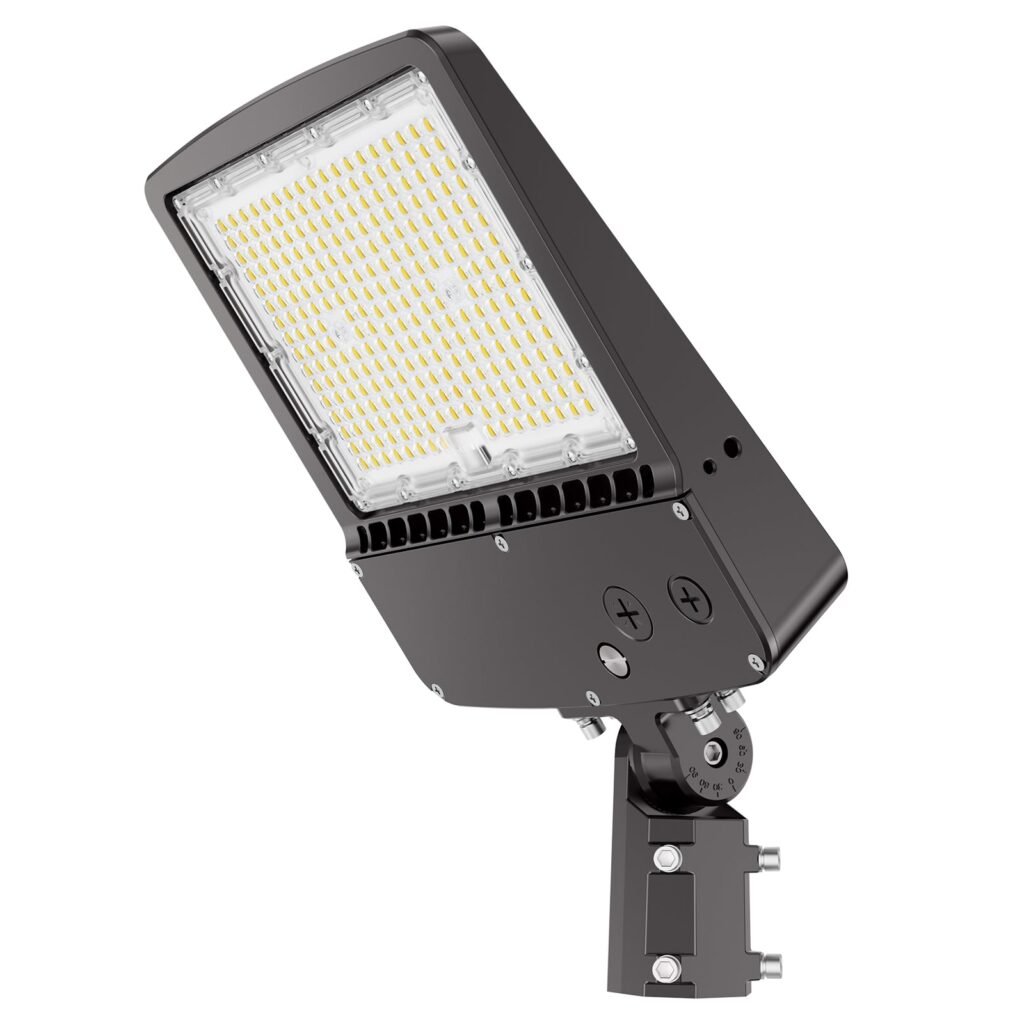
Selecting commercial street lights that genuinely improve safety requires looking beyond basic brightness specifications. The most effective fixtures combine energy efficiency, adaptable light quality, and installation flexibility—three pillars that determine whether a lighting system will perform reliably across diverse commercial environments. Property managers should evaluate potential fixtures against a practical checklist: Does the technology minimize maintenance disruptions? Can the color temperature be adjusted to match the specific use case? Will the mounting system accommodate existing infrastructure without costly modifications? Fixtures that satisfy all three criteria deliver consistent performance while reducing the total cost of ownership over their operational lifespan.
LED Fixtures: Benefits for Longevity and Performance
LED technology has fundamentally changed what property managers can expect from commercial street lighting. Compared to legacy high-pressure sodium or metal halide fixtures, LED street lights consume 40–60% less energy while producing superior light quality with higher color rendering. This translates directly to better hazard visibility—pedestrians can distinguish surface textures, identify obstacles, and read wayfinding signage more easily under LED illumination. The operational lifespan of quality LED fixtures typically exceeds 100,000 hours, meaning fewer lamp replacements, less scaffolding or lift equipment rental, and reduced labor costs over a decade of service. LEDs also reach full brightness instantly without warm-up periods, which matters for motion-activated security applications. Unlike discharge lamps that degrade gradually and produce increasingly dim, orange-shifted light before failure, LEDs maintain consistent output throughout most of their rated life, ensuring that illumination levels remain within design specifications year after year.
Selectable CCT: Customizing Light for Safety Needs
Correlated Color Temperature determines whether light appears warm and amber or cool and bluish-white, and this characteristic has measurable effects on visibility and perception. Selectable CCT fixtures allow property managers to choose the optimal color temperature—typically ranging from 3000K to 5000K—without purchasing different luminaire models. A parking garage entrance might benefit from 5000K light that maximizes contrast and alertness, while a pedestrian plaza adjacent to residential buildings might call for 3000K to reduce glare complaints while still providing adequate visibility. This adaptability proves especially valuable for mixed-use developments where a single fixture type must serve multiple zones with different character requirements. Rather than committing to one color temperature at the time of purchase and discovering it creates complaints or fails to meet IES recommendations for the application, selectable CCT gives property managers the ability to fine-tune after installation based on real-world feedback.
Mounting Options: Ensuring Easy Installation and Adaptability
The physical mounting configuration of a street light determines its coverage pattern, maintenance accessibility, and compatibility with existing site infrastructure. Versatile mounting options—including slip-fitter pole mounts, adjustable arm mounts, direct wall mounts, and trunnion brackets—allow a single fixture model to serve applications ranging from 20-foot pole-top installations along roadways to low-profile wall-mounted positions on building facades. For property managers upgrading existing lighting, matching the mount type to current pole or wall configurations eliminates the need for expensive structural modifications. Adjustable tilt angles further enhance flexibility by allowing installers to direct light precisely where it is needed, reducing spill into neighboring properties and concentrating illumination on high-priority safety zones. When evaluating mounting systems, prioritize tool-free adjustment mechanisms and corrosion-resistant hardware that will maintain secure positioning through years of wind loading, thermal cycling, and vibration exposure without requiring periodic retightening.
Evaluating Hyperlite Lighting Solutions for Commercial Use
When assessing commercial street lighting options through the lens of safety performance, Hyperlite offers a compelling case study in how modern fixture design addresses the real-world challenges property managers face. Their commercial street light lineup integrates the three critical features discussed earlier—high-efficiency LED technology, selectable CCT functionality, and versatile mounting configurations—into unified fixtures engineered specifically for demanding outdoor environments. What distinguishes purpose-built commercial solutions from generic alternatives is the degree to which safety-relevant features work together as a system rather than existing as isolated specifications on a data sheet.
What Makes Hyperlite Stand Out in Safety Lighting?
Hyperlite’s commercial street light fixtures are designed with property managers’ safety obligations as the primary consideration. Their LED area lights feature selectable CCT ranging from 3000K to 5000K, allowing a single SKU to serve multiple zones across a property without inventory complexity. The fixtures carry DLC and ETL certifications, confirming they meet rigorous performance and safety standards recognized by utility rebate programs and building inspectors alike. Durable die-cast aluminum housings with IP65 or higher ingress protection ratings ensure reliable operation through rain, snow, dust, and temperature extremes without degradation that could compromise illumination levels. Several models also support photocell and motion sensor integration, enabling smart adaptive lighting that increases output when activity is detected—a proven approach for both energy management and security enhancement. The combination of robust construction, certified performance, and intelligent control compatibility positions these fixtures as infrastructure investments rather than disposable commodities.
Comparing Hyperlite with Alternative LED Fixtures
Property managers evaluating Hyperlite against competing LED street light manufacturers should focus on total value rather than purchase price alone. Many budget fixtures lack selectable CCT, locking managers into a single color temperature that may prove unsuitable once installed. Others offer limited mounting options, requiring adapters or custom brackets that add cost and potential failure points. Hyperlite fixtures typically include multiple mounting accessories—slip fitter, arm mount, and trunnion bracket—in the standard package, eliminating surprise expenses during installation. From a maintenance perspective, their tool-free access designs and long L70 rated lifespans reduce ongoing service calls compared to competitors whose drivers or optics degrade more rapidly. When factoring in energy savings from high efficacy ratings, rebate eligibility through DLC listing, and reduced labor costs from fewer replacements, the cost-per-year-of-service often undercuts alternatives that appear cheaper at the point of purchase. For property managers who must justify expenditures to ownership groups or boards, this lifecycle cost analysis provides the clearest basis for comparison.
Practical Steps for Installation and Maintenance
Even the highest-performing commercial street light fails to deliver safety benefits if it is installed incorrectly or allowed to deteriorate through neglect. Property managers who approach installation and maintenance systematically protect their investment and ensure that illumination levels remain within design parameters throughout the fixture’s service life. The following guidelines address both phases of the process, providing actionable steps that reduce costly errors and keep lighting infrastructure performing at its best.
Easy Installation Guidelines for Property Managers
Before any fixture goes up, conduct a thorough site assessment that documents existing electrical infrastructure, pole conditions, mounting heights, and desired coverage areas. Verify that circuit capacity can handle the new load, and confirm that all permits and inspections required by local code are scheduled. Select the appropriate mounting option—slip fitter for round pole tops, trunnion bracket for angled surfaces, or direct arm mount for wall applications—based on what your site already supports. This single decision eliminates the most common source of installation delays and added expense. During installation, ensure all connections are made within weatherproof junction boxes, tighten hardware to manufacturer torque specifications, and aim fixtures using adjustable tilt settings to direct light onto walkways and driving lanes rather than into neighboring windows or the night sky. Always power on and test each fixture before the crew demobilizes, verifying both output and any photocell or sensor functionality.
Maintenance Tips to Sustain Safety and Performance
Establish a quarterly visual inspection schedule where staff checks for physical damage, accumulated debris on lens surfaces, and any fixtures that appear dim or have shifted alignment. Clean lenses annually with mild detergent to remove dirt and oxidation that can reduce output by 15–20% over time. Monitor driver compartment temperatures during summer months if accessible, since excessive heat accelerates component aging. Replace any fixture showing visible flicker or inconsistent output promptly—a single dark zone in a parking lot creates exactly the liability exposure you invested to eliminate. Tracking maintenance activities in a simple log also provides documentation that demonstrates due diligence should a safety claim ever arise, showing that your property consistently met its duty of care through proactive upkeep rather than reactive repair.
Making the Final Decision: A Guide for Property Managers
With a clear understanding of LED technology advantages, selectable CCT functionality, and mounting versatility, property managers can now synthesize these factors into a structured decision-making framework. The goal is not to find the most expensive or most feature-rich fixture available—it is to match the right solution to your property’s specific risk profile, physical layout, and operational budget. Start by ranking your priorities: Is crime deterrence the primary concern, or are slip-and-fall hazards the bigger liability? Does your site require uniform pole-mounted coverage, or would a combination of wall-mounted and pole-top fixtures better address irregular geometries? Once priorities are clear, evaluate candidate fixtures against them systematically rather than relying on brand familiarity or lowest bid pricing.
Assessing Your Property’s Unique Safety Requirements
Begin with a nighttime walkthrough of your property, documenting every area where visibility feels insufficient—dark corners in parking structures, poorly lit transitions between sidewalks and roadways, shadowed zones near dumpster enclosures or mechanical equipment. Measure existing light levels with an inexpensive lux meter and compare readings against IES recommended minimums for each zone type. Note the mounting infrastructure already in place: pole heights, arm lengths, wall surfaces, and electrical access points. This audit reveals whether you need fixtures with wide distribution optics for open lots or narrow beams for linear pathways. It also clarifies whether selectable CCT matters for your application—properties bordering residential areas benefit greatly from the ability to dial back to warmer tones, while isolated industrial sites can maximize visibility with cooler temperatures without complaint. Matching features to documented needs prevents both overspending and underperformance.
Budget Considerations and Long-Term Value
Frame your lighting investment as a lifecycle cost discussion rather than a capital expense debate. Calculate the total cost of ownership over ten years by combining purchase price, installation labor, energy consumption, maintenance visits, and lamp replacements. LED fixtures with high efficacy ratings and extended L70 lifespans consistently outperform cheaper alternatives when measured this way, even if their upfront cost is 20–30% higher. Present stakeholders with a simple comparison showing annual energy savings, avoided maintenance costs, and potential utility rebates available through DLC-listed products. Include the risk reduction value—even one prevented liability claim can offset the entire lighting upgrade budget. For phased implementations, prioritize the highest-risk zones first and expand coverage as budget allows, ensuring each phase delivers measurable safety improvement that justifies the next.
Invest in Safety-Driven Lighting to Protect People and Property
Choosing commercial street lights with safety as the primary driver is one of the most impactful decisions property managers can make to protect people, reduce liability, and preserve long-term asset value. The path to effective outdoor lighting comes down to three foundational priorities: selecting LED fixtures that deliver superior visibility with minimal maintenance burden, leveraging selectable CCT to match light quality to each zone’s specific requirements, and choosing versatile mounting options that simplify installation while maximizing coverage flexibility. Together, these features create lighting systems that perform reliably across seasons, reduce operational costs, and maintain the illumination levels that keep accidents and criminal activity at bay. Manufacturers like Hyperlite demonstrate how these elements can work together in purpose-built fixtures engineered for the demands of commercial environments—offering certified performance, durable construction, and smart control compatibility in a single platform. Now is the time to audit your property’s outdoor lighting, identify gaps that create risk, and invest in solutions that deliver measurable safety improvements. The cost of upgrading is always less than the cost of an incident that proper lighting could have prevented.

Alexia is the author at Research Snipers covering all technology news including Google, Apple, Android, Xiaomi, Huawei, Samsung News, and More.