Intel Nova Lake: Top desktop CPU should draw over 470 watts at its peak
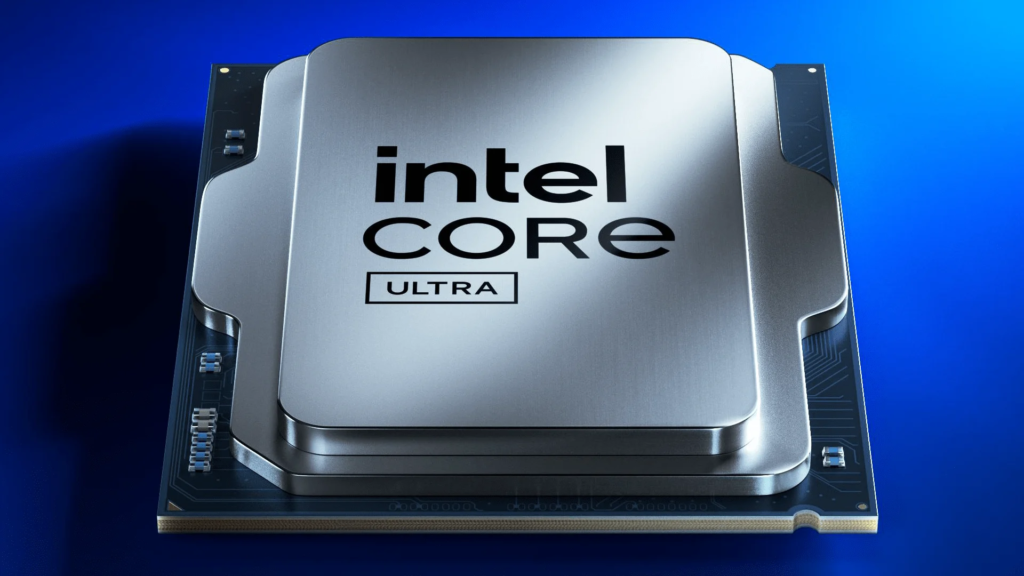
Intel’s desktop flagship of the upcoming Nova Lake series supposedly has an enormous power consumption with its 52 cores. With suitable motherboards, three 8-pin EPS connectors could be used to power the CPU.
CPU with watt crowbar
Intel is attacking AMD with Nova Lake. However, the next generation of desktop chips is expected to push systems to their limits in early 2027. The flagship is a model with 52 cores, which probably comes with a TDP of 175 watts, but at its absolute peak it supposedly has a significantly higher power consumption. In short-term boost windows, the so-called Power Level 2, the processor should access up to 474 watts. Such high energy requirements were previously reserved for workstation systems. To achieve this, Intel is probably relying on a dual-tile design. Two computing components are combined on a single carrier instead of producing a monolithic chip. For users, this means high demands on the remaining hardware. In addition to a powerful power supply, strong cooling is mandatory, as the compact design of the computing cores offers little scope for heat dissipation.
In the past, the performance limits for conventional desktop processors were usually around 250 to 300 watts. With the new approach, Intel engineers would go one step further. Like the leaker Jaykihn (via Videocardz) reports, the company is even adjusting the specifications for upcoming Z990 mainboards.
Three connectors for Z990 boards
Three 8-pin EPS connectors could be used for the power supply. However, a third connection does not enable higher performance levels. It only serves as a reserve for manual overclocking beyond 474 watts. The mainboard manufacturers could therefore decide for themselves whether to install two or three ports. An upgrade to Nova Lake also requires a fresh motherboard, as Intel is supposedly introducing the new LGA-1954 socket. It should offer more contact points than its predecessors. This higher number of pins may be necessary to stably transmit the large amount of current to the chip. At the same time, the physical size is growing. Nevertheless, according to manufacturer Noctua, users should be able to continue using existing cooling solutions.
Attack on AMD in the gaming sector
In addition to the pure number of cores, Intel is also planning technical innovations in order to compete against AMD’s Ryzen X3D processors in the gaming segment. The top models will be equipped with a large L4 cache, which is internally referred to as Big Last Level Cache. To better distinguish them, the company reportedly plans to mark these gaming CPUs with the letters D or DX at the end of the model name. In addition, the platform should natively support fast DDR5-8000 RAM. Although the Core Ultra 400 series promises high performance thanks to all of these details, this is offset by the likely high acquisition costs for the new platform as well as the subsequent costs for operation due to the sometimes high power consumption. A peak power consumption of almost 500 watts for a desktop CPU is a clear statement.