How Eye-Tracking Technology Helps Lasers Keep Up With a Moving Eye
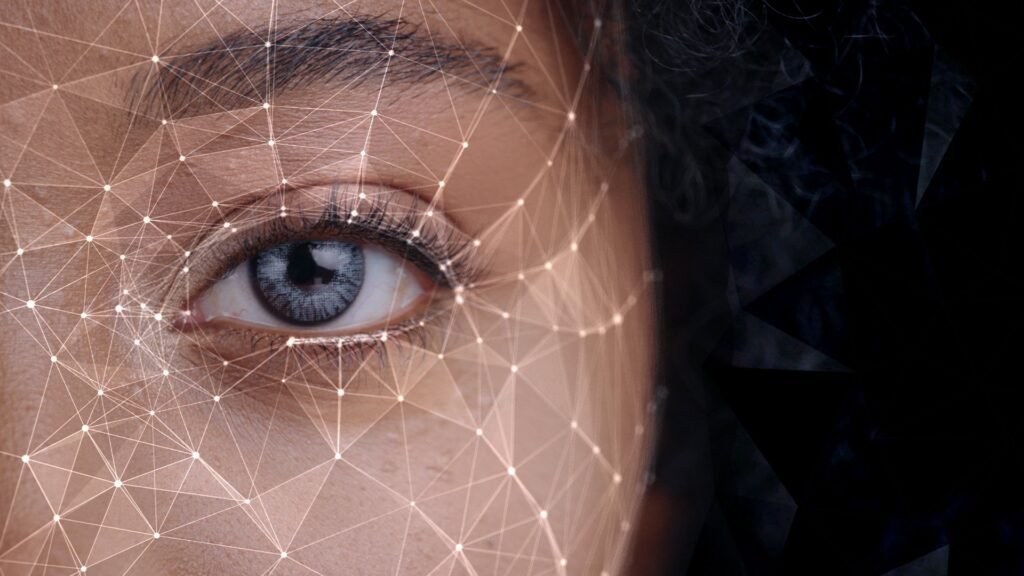
Staring at a single point sounds easy — until someone tells you not to move your eyes. The human eye is rarely completely still. Even when a person fixes their gaze on one target, the eyes make small movements. A person can also shift slightly between the measurements taken before a procedure and the position they assume when lying down for treatment.
For laser vision correction, that creates an interesting engineering challenge. The treatment is planned for a particular location on the cornea, so the technology needs ways to account for the position of the eye while that treatment is being delivered. Modern laser platforms address that challenge with technologies such as high-speed eye tracking and iris registration. They are examples of something happening throughout medical technology: machines are becoming increasingly capable of responding to the patient in real time rather than assuming the patient will remain perfectly still.
The Eye Doesn’t Simply Stay Put
Eye movement is normal. Some movements are intentional, such as glancing from one object to another. Others are extremely small involuntary movements that occur even when someone believes they’re staring steadily at one point. That doesn’t mean a LASIK patient needs to somehow train themselves to keep their eyes perfectly motionless.
Instead, laser systems can incorporate tracking technology designed to monitor the position of the eye during treatment. Depending on the platform, the system can make adjustments based on those movements or interrupt laser delivery when appropriate. It’s an important distinction: precision doesn’t depend entirely on a patient’s ability to behave like a statue. Part of the engineering challenge is designing technology around the reality that humans move.
Tracking Movement in Real Time
Eye-tracking systems use imaging technology to continually monitor features of the eye and determine its position. This happens rapidly. While a patient focuses on a fixation target, the tracking system monitors the eye so that the laser system has current information about where the treatment area is located. That information can then be used to help maintain alignment between the planned treatment and the eye.
The underlying concept appears in plenty of technologies outside medicine. Cameras use autofocus and stabilization to compensate for movement. Virtual-reality headsets continuously track the position of a user’s head and eyes. Advanced driver-assistance systems monitor changing surroundings and respond as conditions shift. In each case, the machine isn’t simply carrying out a fixed instruction. Sensors create a feedback loop that lets the system account for movement. Laser vision correction applies a similar engineering principle on a much smaller scale.
There’s Another Type of Movement to Consider
Tracking an eye from side to side isn’t the entire problem. The eye can also rotate. Measurements used to plan refractive surgery are generally collected while a patient is sitting upright, while laser treatment is performed with the patient lying down. The eye may rotate slightly when body position changes, a phenomenon known as cyclotorsion or cyclorotation. That change can matter when a treatment needs to remain aligned with a particular axis, including when correcting astigmatism.
This is where iris-registration technology becomes useful. The iris contains a detailed pattern unique to an individual eye. Imaging systems can record identifying features within that pattern during the diagnostic stage, and compatible treatment systems can then use those features to help recognize the eye and account for rotational differences when aligning treatment. Instead of assuming the eye will appear in precisely the same orientation it did during the earlier examination, the system has another reference point.
The Iris Becomes a Biological Landmark
Iris registration is an interesting example of technology using the body’s own anatomy as a navigation system. The visible structures within the iris provide recognizable landmarks that software can use when comparing the eye’s position at different stages of the process.
This doesn’t mean iris registration determines whether someone should have LASIK or decides how the eye should be treated. Those remain clinical decisions based on the patient’s examination and treatment plan. Rather, registration technology helps connect information gathered before the procedure with the position of the eye when treatment is actually delivered. The concept is similar to image-guided technologies used elsewhere in medicine: collect detailed information first, identify reliable anatomical landmarks, and then use those landmarks to help maintain alignment during a procedure.
Faster Lasers Create Their Own Engineering Advantages
Tracking is only one piece of the technology involved. Excimer lasers used for vision correction deliver pulses that remove microscopic amounts of corneal tissue according to a programmed treatment pattern. Modern systems can deliver those pulses very rapidly, reducing the amount of time required for the laser portion of a procedure.
Speed isn’t simply about making the appointment shorter. From an engineering perspective, performing the intended treatment efficiently also reduces the window during which the system has to account for movement and changing conditions. Modern platforms therefore combine several technologies rather than relying on a single feature. Treatment planning, laser delivery, tracking, and alignment all contribute different pieces to the process.
Technology Is Designed Around the Patient
This combination of technologies changes an assumption people sometimes make about laser eye surgery: a patient doesn’t have to personally control every variable. At Travers LASIK, for example, the laser and diagnostic technology used for vision correction includes systems with eye-tracking and iris-registration capabilities. Those features are part of a larger technology platform used alongside the surgeon’s treatment planning and clinical judgment.
The U.S. Food and Drug Administration also notes that patients look at a target light during LASIK while the laser is used to reshape the cornea. The exact technologies and features involved vary among laser platforms and procedures. That’s why the more useful question isn’t whether a patient can keep an eye absolutely motionless. It’s how the particular system being used is designed to manage the movements that naturally occur.
From Fixed Machines to Responsive Systems
The development of eye tracking reflects a much larger change in medical devices. Early automated systems were often designed primarily to execute predetermined instructions. Increasingly sophisticated systems can also collect information while they’re operating and respond to what sensors detect.
That doesn’t make the machine autonomous. A LASIK surgeon still evaluates the patient, determines whether treatment is appropriate, and oversees the procedure. What the technology can do is handle certain technical variables with a speed and consistency that would be difficult to reproduce manually. In laser vision correction, that includes continuously monitoring something as small — and as mobile — as the human eye.
Precision Doesn’t Require Perfect Stillness
The most impressive part of eye-tracking technology may be the problem it eliminates from the patient’s perspective. People move. Eyes move. The orientation of an eye can even change slightly when a person goes from sitting upright to lying down. Rather than expecting those realities to disappear during a medical procedure, engineers have developed systems designed to account for them.
Eye tracking and iris registration aren’t as immediately recognizable as the laser itself, but they illustrate how sophisticated modern vision-correction technology has become. The laser may reshape the cornea, but an entire layer of technology works around it to help keep the treatment aligned with the eye while it does so.

Alexia is the author at Research Snipers covering all technology news including Google, Apple, Android, Xiaomi, Huawei, Samsung News, and More.