Google Maps: Court bans 3D aerial photos of private property
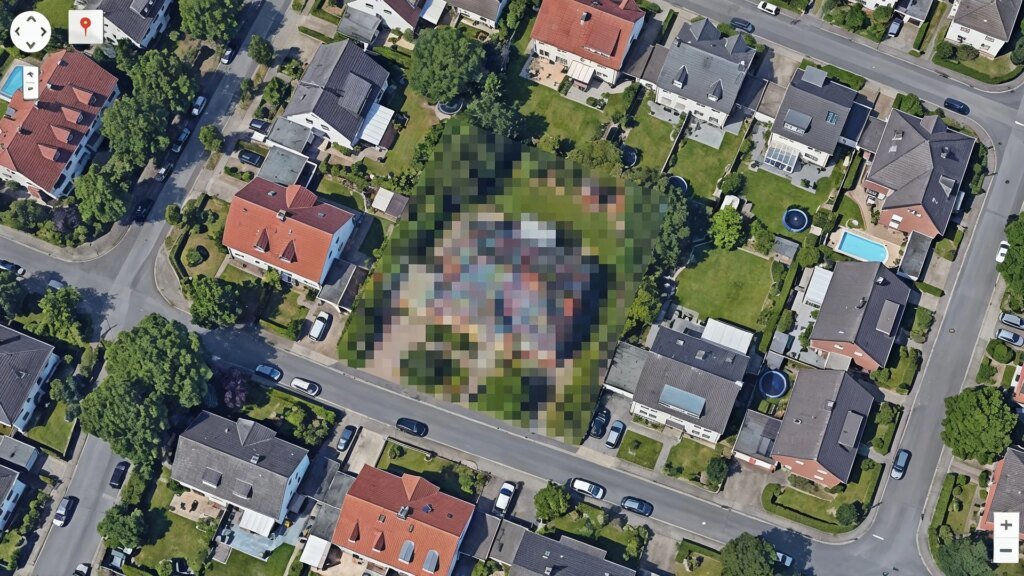
A ruling that is not yet legally binding prohibits Google from showing 3D aerial images of private property in Maps and Earth. A homeowner successfully defended himself against unannounced aerial footage showing glimpses of his garden.
3D aerial images in court
The Frankfurt am Main regional court has banned Google from publishing detailed three-dimensional aerial images of inhabited private property in its Maps and Earth services. As the ruling shows, the internet company must remove the recordings if the owner objects – at least if areas can be seen that are hidden from public view. The lawsuit was filed by a father who had previously had his home obscured on Street View and Apple Look Around.
The plaintiff successfully defended himself against his property being able to be viewed from any angle via the satellite and aerial views. The judges criticized the fact that the high-resolution images also show rear garden areas that cannot be seen from the street. Since the images are created from aircraft without prior notice, those affected would have no opportunity to cover their retreat areas before an overflight. The court interpreted the procedure as secret spying.
Benefit does not justify intervention
Google defended the recordings with freedom of information. The district court chamber recognized that Google wanted to serve people’s adventurous spirit and contribute to a transparent information society and saw this purpose as legitimate, but let it take a back seat to the protection of privacy. Curiosity does not justify intrusion into the protected area of life. In addition, according to the court, the material could even be used to prepare for burglaries – an argument that was once controversial with Street View pixelation. As Caschy As noted, the Frankfurt court’s judgment goes against an earlier court decision. In 2020, the Itzehoe Regional Court dismissed a homeowner’s lawsuit for pixelation in Earth in a similar case and gave priority to freedom of information.
The current Frankfurt judgment is not legally binding, so Google can appeal to the Frankfurt Higher Regional Court. While facades in street views such as Street View can be made unrecognizable relatively easily using an online form, there is currently no such standardized complaint process for 3D aerial images. However, the decision currently means that providers must also make affected properties unrecognizable in the 3D view at the request of those entitled, as is already standard for street images.

Digital marketing enthusiast and industry professional in Digital technologies, Technology News, Mobile phones, software, gadgets with vast experience in the tech industry, I have a keen interest in technology, News breaking. Can be reached at yasir.zeb@researchsnipers.com