The Rise of 8 High-Tech Hotels in North America: Where Innovation Meets Luxury
The hospitality industry has always been driven by experience, but in recent years, that experience has become increasingly digital. Across North America, a new generation of high-tech hotels is redefining what it means to check in, unwind, and interact with a space. From AI-powered personalization to fully automated rooms, these properties blur the line between science fiction and everyday travel.
So what exactly makes a hotel “high-tech”? At its core, it’s the integration of smart system, often powered by the Internet of Things (IoT), that allow devices like lighting, climate, entertainment, and even room service to communicate seamlessly. Internet of Things technology enables guests to control their entire environment from a single interface, whether that’s a smartphone, tablet, or voice assistant.
But beyond convenience, the most innovative hotels in North America are using the latest hospitality technology products to enhance sustainability, wellness, and personalization. Let’s explore some of the standout properties leading this transformation.
1. The Sinclair (Fort Worth, Texas): A Fully Digital Hotel
Often described as one of the most technologically advanced hotels in the United States, The Sinclair operates almost entirely on a digital infrastructure. Unlike traditional hotels that rely on conventional electrical systems, this property uses Power over Ethernet (PoE) to run everything, from lighting and climate control to in-room devices.
This approach allows for precise control over energy usage while delivering a seamless guest experience. Imagine walking into your room and having the lighting, temperature, and even minibar settings tailored instantly to your preferences. It’s not just futuristic, it’s efficient and sustainable.
2. Hotel Marcel (New Haven, Connecticut): Smart Sustainability
If The Sinclair represents digital innovation, Hotel Marcel showcases how technology can drive sustainability. As the first net-zero hotel in the United States, it runs entirely on renewable energy, supported by a solar-powered microgrid and battery storage system.
Guests can interact with intuitive digital controls to adjust lighting, shades, and temperature, all while knowing their stay has minimal environmental impact. This blend of smart tech and eco-conscious design signals a major shift in how luxury and sustainability coexist.
3. Equinox Hotel New York: Tech-Driven Wellness
In New York City’s Hudson Yards, the Equinox Hotel takes a different approach, using technology to optimize human performance. This is not just a place to sleep; it’s a data-driven wellness environment.
Rooms are equipped with circadian lighting, advanced air purification, and digital sleep systems designed in collaboration with sleep scientists. Guests can even follow guided sleep and recovery programs through in-room tablets.
The result is a hotel experience that feels more like a personalized health retreat than a traditional stay. Technology here isn’t flashy, it’s purposeful, helping guests recover, recharge, and perform better.
4. ARIA Resort & Casino (Las Vegas): Smart Rooms at Scale
Las Vegas has long been a playground for innovation, and ARIA Resort & Casino is one of its most iconic high-tech properties. Each room features a centralized control system that allows guests to adjust lighting, curtains, temperature, and entertainment from a single interface.
What sets ARIA apart is automation. Rooms can detect when guests enter and automatically adjust settings, opening curtains, playing music, or setting the perfect temperature.
It’s a level of convenience that feels almost intuitive, removing friction from the guest experience and setting a benchmark for smart hotel design.
5. The Cosmopolitan of Las Vegas: AI Meets Hospitality
Just across the Strip, The Cosmopolitan pushes the boundaries of AI-driven service. Its chatbot concierge, powered by artificial intelligence, can assist guests with reservations, recommendations, and requests in real time.
In-room tablets provide control over nearly every aspect of the stay, from dining to climate settings. Combined with robust connectivity and digital infrastructure, the hotel creates a highly responsive environment that feels both luxurious and futuristic.
6. YOTEL New York: Robotics and Automation
YOTEL has built its brand around compact, efficient, and highly automated spaces. Its New York location stands out thanks to “YOBOT,” a robotic arm that stores luggage in a fully automated system.
Beyond the spectacle, YOTEL’s rooms are packed with smart features: adjustable beds, mood lighting, and self-service kiosks that streamline check-in and check-out.
This is a hotel designed for the modern traveler, fast, efficient, and deeply integrated with technology.
7. Wynn Las Vegas and AI-Powered Rooms
Another standout in Las Vegas, Wynn has embraced voice-controlled technology, allowing guests to manage room settings through virtual assistants.
From adjusting lighting to requesting services, voice commands eliminate the need for manual controls, creating a frictionless experience. It’s a glimpse into a future where hotels respond to guests as naturally as a smart home.
8. The Otonomus Hotel (Las Vegas): The AI Frontier
Perhaps the most ambitious example of hotel technology is the newly launched Otonomus Hotel. Marketed as the world’s first fully AI-powered hotel, it uses machine learning to personalize every aspect of a guest’s stay.
From room preferences to service recommendations, the hotel continuously learns and adapts. This level of personalization represents the next frontier in hospitality, where no two stays are ever the same.
The Bigger Picture: What Defines a High-Tech Hotel?
Across all these properties, a few key trends emerge:
- Automation and Control: Guests can manage nearly every aspect of their environment digitally.
- Artificial Intelligence: AI enhances personalization, from chatbots to predictive services.
- Sustainability: Smart systems reduce energy consumption and environmental impact.
- Wellness Integration: Technology is increasingly used to improve sleep, fitness, and overall health.
- Contactless Experiences: From mobile check-in to digital keys, frictionless service is becoming standard.
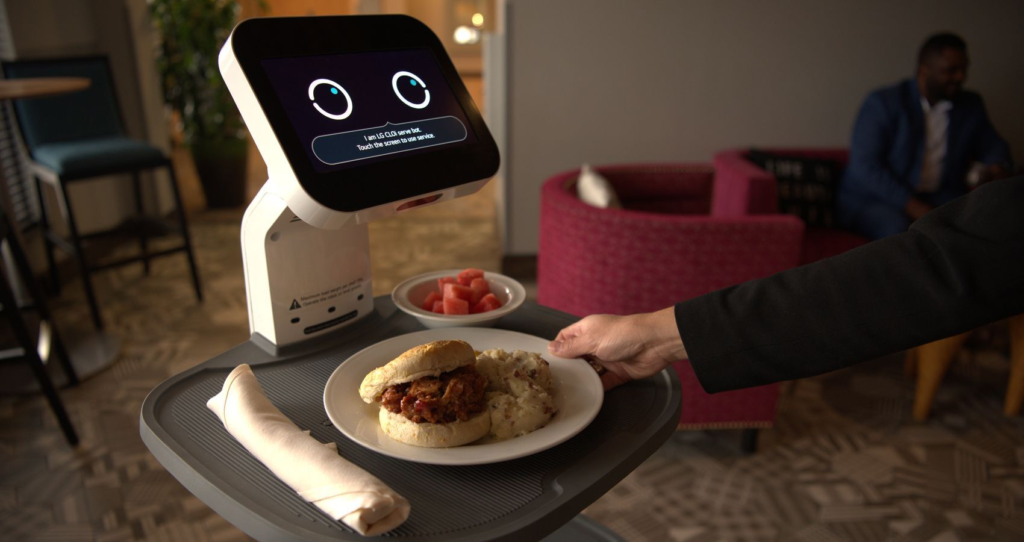
Many hotels are also experimenting with robotics, biometric access, and immersive technologies like virtual reality, further expanding the possibilities of what a hotel stay can be.
High-tech hotels in North America are no longer niche experiments, they are setting the standard for the future of travel. Whether it’s a fully digital infrastructure, AI-powered personalization, or wellness-focused innovation, these properties demonstrate how technology can elevate every aspect of the guest experience.
As travelers become more accustomed to smart homes and connected devices, expectations for hotels will continue to evolve. The question is no longer whether hotels will adopt advanced technology, but how far they will go.
If current trends are any indication, the hotel room of the future won’t just be a place to sleep, it will be a fully responsive environment, designed around you.

Alexia is the author at Research Snipers covering all technology news including Google, Apple, Android, Xiaomi, Huawei, Samsung News, and More.