Why Night Driving Is Riskier for Truck Drivers
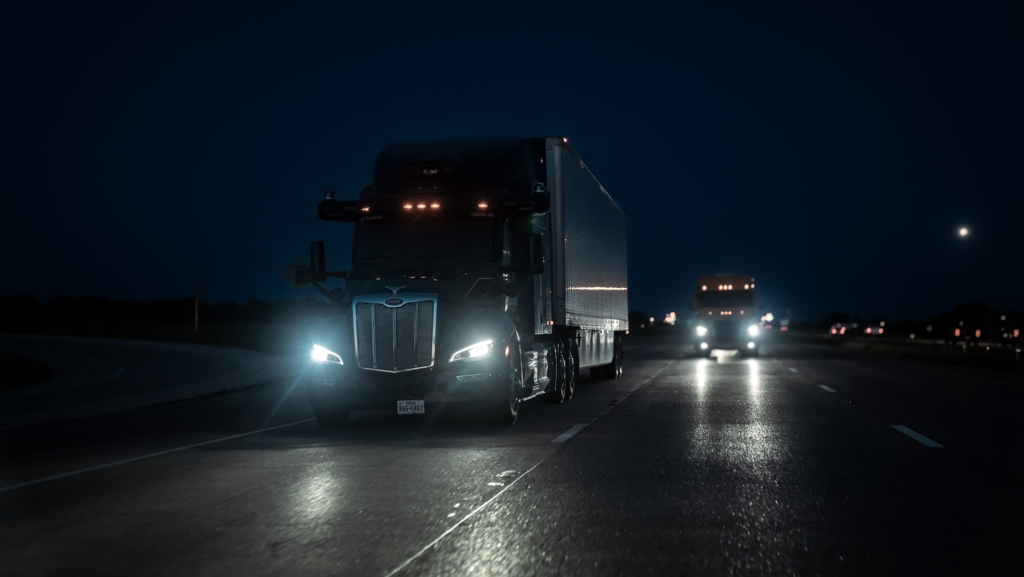
The highways and roads carry 75% of daytime traffic at night, but they have four times as many collisions! In fact, half of the fatalities that occur due to crashes happen at night. Even routes that truck drivers are familiar with are not safe because crashes occur on them as often as on unfamiliar routes. In addition, it doesn’t matter whether the trip they were taking was long or short; they are equally likely to be involved in a collision either way.
Why Is Night Driving Riskier for Truck Drivers?
The most dangerous time to drive is at night. It seems counterintuitive because the roads are so sparsely populated at night, but the driver can’t see as well in the dark and may be less alert. Humans have a circadian rhythm, and it naturally expects us to sleep at night. That is why truckers who drive at night will not respond as quickly to dangers. They also have difficulties concentrating. In other words, truckers are drowsy at night, and that is a big reason why more than half of the collisions that occur in the United States happen at night.
This is most prevalent between midnight and the early morning hours. It is when truck drivers are the most fatigued and tend to have slower reaction times, and they are not as alert and aware. Also, our eyes have greater difficulty distinguishing between colors and other details at night. The headlights from oncoming vehicles cause drivers’ vision to blur and even result in temporary blindness. Therefore, drivers must concentrate twice as hard at night as they do during the day.
Conditions on the Roads
Even with headlights and road lights, the location is not as illuminated as it is during the day. The driver can see directly in front of him, but the darkness blends with the surrounding darkness. This only leaves truck drivers with signs and road markings to find where they need to go, rather than also having the benefit of landmarks. There aren’t any streetlights that brighten a location as much as the sunlight brightens everything during the day, so truck drivers are at a clear disadvantage at night.
Lights also create shadows where potential dangers may be hiding, or they can create the illusion that there’s a potential danger in the driver’s path. A dirty windshield makes this situation worse by distorting the driver’s perception of the scene.
Length of Time
Truck drivers also drive for long periods of time, and this is difficult on the body. Truckers are required to limit the number of hours they drive, but even if they drive for just 11 hours, it is physically draining on the body. After 11 hours, exhaustion sets in, and if he or she is at the end of his or her work week, the results can be even more tragic. When this is the case, a person’s experience cannot make up for what is happening to the body. For example, drivers do not react to dangers as quickly as they can when they are adequately rested. Their vision is also blurry, and they experience memory lapses at this time. All of these factors increase the likelihood of a collision between a truck and a passenger vehicle, and the passenger vehicle will be the one that suffers the greatest consequences.
Why Do Trucking Accidents Occur at Night?
The cause of trucking accidents is never just one mistake that the driver made. It is usually a combination of the causes listed above and many others. For example, a collision may occur because of the driver’s speed, whether or not the driver is fatigued, the lack of visibility of the area and the driver’s impaired judgment. The possibility of collisions increases exponentially when there are several problematic issues arising at once.
One common cause of truck collisions is that truck drivers drive too fast for the conditions. The driver may even be driving underneath the speed limit, but the driver may not have sufficient time to react to hazards in the road or a slowdown in traffic.
Common Causes of Truck Accidents at Night
• The pressure to meet deadlines and to remain on schedule
• The inability to see due to glare and weather conditions
• The failure to see disabled vehicles or other hazards blocking the roads
• Failing to apply the brakes in time in heavy traffic
• The inability to control the vehicle on curves
• Drowsiness or fatigue
• Misjudging the distance needed to stop
• Maintaining too close a distance from the vehicle in front
• Driving too fast in unsafe conditions
Overdriving the Headlights
Overdriving the headlights is one of the most common causes of truck accidents at night. It means that the driver is driving too fast to stop within the distance illuminated by the headlights. This is dangerous because a hazard can present itself inside the illuminated area where the truck driver is unable to avoid crashing into it. When this occurs while someone is driving a large truck, it has catastrophic consequences.
Trucks are extremely large, and it takes them an especially long time to slow down to a stop. Truck drivers must be constantly aware of whether the light from their headlights is sufficient to give them enough time to react. If the truck is traveling too fast for the amount of space that it has, the driver will not be able to prevent a collision.
Speeding is not the only reason that liability exists for the truck driver and the trucking company. The truck driver can be determined to have been driving too fast for the lighting in the area, the rain, the traffic or a poor road design. A team of knowledgeable injury attorneys investigates accidents to determine exactly how the collision occurred so that the blame can be assigned to the appropriate person. Contact a truck accident lawyer today.

Alexia is the author at Research Snipers covering all technology news including Google, Apple, Android, Xiaomi, Huawei, Samsung News, and More.