No More Bot Voice: How Modern AI Telephony is Changing Customer Service

Customers used to be able to instantly recognize when they were conversing with a chatbot versus a real customer service representative. The standardized responses were a giveaway, as were the templated phrases and structured outputs. The patterns and overly friendly tones were also a clue that a customer was chatting with a chatbot.
However, AI is rapidly changing and becoming smarter and more sophisticated every day. As a result, people are having trouble telling if they’re messaging a customer service AI agent or if they are indeed chatting with a live representative. Modern AI models are highly fluent, understanding an individual’s tone of voice and empathy within mere seconds of conversation. This shift from rigid, automated, robotic menus to more natural AI conversations is due to advanced machine learning alongside cloud communication.
As a result, brands are providing top-of-the-line customer service 24/7, leading to more positive outcomes for potential and current customers. Here are a few ways that modern AI telephony is changing customer service for the better.
Faster Responses
AI agents, like their chatbot predecessors, are quicker than human representatives. In today’s “need-it-now” world, customers expect companies to provide them with support no matter the time of day. Before chatbots, companies were tasked with having live agents available at any time of the day. This often meant outsourcing to different parts of the world, where labor costs were lower and time-zone differences allowed for global expansion.
The demand for round-the-clock availability has paralleled the rise in AI agents. Modern AI agents have the ability to provide real-time responses at a rapid speed. Within seconds, customers can get the answers they’re looking for, ensuring their need for immediate intent is not met with any frustration. Faster replies can lead to more engaged customers and, therefore, higher conversions.
Domain-Specific Expertise for Highly Specialized Industries
This level of consistency and reliability is of the utmost importance for niche or specialized industries. Financial institutions, healthcare systems, and automotive industries require both to gain trust with their consumer base. Fortunately, AI agents possess specialized knowledge of these niche industries and can answer the most detailed questions with accuracy.
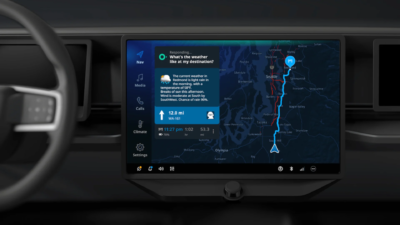
For example, care dealerships are leveraging AI in automotive software and conversational AI to create more personalized experiences for each potential lead. AI agents can suggest car models based on a customer’s queries, set up appointment viewings, and even assist in scheduling maintenance appointments without the need for human interaction.
When a question is out of the realm for the AI agent — as is somewhat common for these niche industries — the AI agent can pass off the exchange to a human sales representative to facilitate the rest of the sales funnel. Live agents receive full conversations and transcripts for a seamless pass-off.
Having this domain-level expertise will expand as AI algorithms continue to become highly sophisticated models, adopting the terminology of these industries. This level of superior accuracy will become increasingly valuable as more companies lean into AI models for their customer service needs.
Consistent, Reliable Experiences at Scale
Speed is certainly one part of the puzzle, but it’s not the entire solution. Consistency and reliability are just as important, if not more important, than speed. Today’s advanced AI models are grounded in retrieval-augmented generation, or RAG, within your company. This improves LLM (large language model) responses by gathering facts from an external, authoritative knowledge base before spitting out an answer.
Think of this as an open-book exam for the AI agent. When a query is entered, it automatically scans the internal database for answers, leaning on historical models and machine learning before generating a response. Each query is recorded, only adding to the AI agent’s learning for future queries. This is balanced with real-time semantic searches to provide highly accurate, up-to-date, and contextually relevant answers.
Text-to-Speech Capabilities
Another way in which AI telephony is changing customer service is via text-to-speech (TTS) AI agents. TTS AI agents work by first analyzing the query before dissecting it using linguistic processing and speech recognition models. This leads to acoustic modeling, in which the tool converts linguistic features into acoustic signals before synthesizing the response with natural-sounding speech.
TTS AI agents are a more inclusive, accessible way for customers to receive help. Those with disabilities or language barriers can receive the same customer service support as those who can type and read an AI agent’s replies. The responses are just as accurate as traditional text AI agents and can be seen as more personalized, encouraging honest and detailed customer responses.
This advanced capability can lead to happier customers, knowing that the company is providing for their unique needs with the same 24/7, hyper-personalized abilities as traditional AI agent models. The bridge between voice and text will continue to grow as customers become more accustomed to speaking directly to AI agents.
Conclusion: AI agents Are Just Getting Started
Long gone are the days when you had to call a customer service representative to receive help. Customers today are accustomed to reaching out via an on-site or social media AI agent to ask for assistance. The queries can range drastically, from help with sizing options for a clothing brand to comparing car models before test driving them.
As AI continues to become more streamlined, so too will businesses’ customer service channels. Today’s instant, real-time responses are just the tip of the iceberg in terms of how this new technology will assist companies in improving customer experiences, increasing efficiency, and delivering more personalized support.

Alexia is the author at Research Snipers covering all technology news including Google, Apple, Android, Xiaomi, Huawei, Samsung News, and More.