Bad news for gamers: Mod doubles GeForce Tensor performance
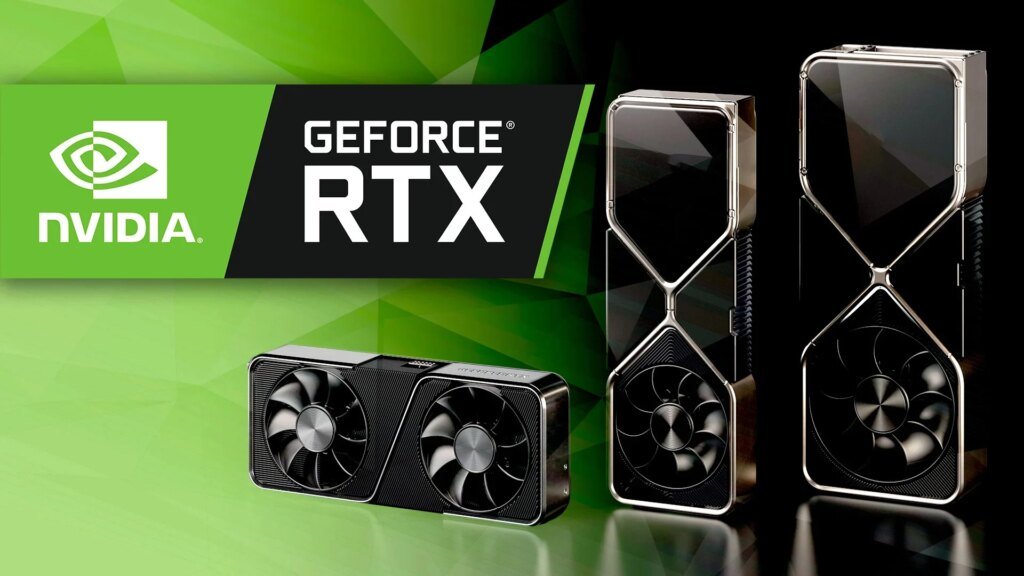
Modders have found ways to remove artificial performance limitations for AI calculations on several generations of GeForce cards. The tensor throughput on RTX 20, RTX 30 and RTX 40 models is almost doubled – not good news for gamers.
Artificial limits bypassed
Modders have found ways to remove Nvidia’s factory-imposed artificial limitations on the computing power of the Tensor cores in several generations of GeForce graphics cards. What started with the RTX 3090 has now expanded to the RTX 40 series models and even older RTX 20 cards. For end users, this means higher computing speed for local AI tasks.
This does not improve pure gaming performance. The new mods build on previous attempts to unlock limited computing capabilities on Nvidia’s CMP mining GPUs. The developer Zagitta initially adapted the techniques via the open source project GPU-Unlock for Ampere architecture cards to. There are now versions too for the Ada Lovelace and the Turing architecture. The modifications do not require any changes to the hardware or the installation of a new VBIOS. Instead, the tools modify certain low-level configuration registers of the GPUs.
Workstation-level performance
As TechPowerUp reported, the tools set the registers before the operating system loads the regular driver. However, the changes are temporary and will be reset as soon as the GPU is unplugged. However, the intervention can almost double the throughput for specific tensor operations. This means that the consumer models offer some of the same performance as Nvidia’s professional workstation cards. According to tests, the power consumption of the boards remains unchanged. Models with Ampere and Ada Lovelace architecture (RTX 30 and RTX 40) show measurable increases in computing power during FP16 and BF16 operations with FP32 accumulation. With the GeForce RTX 4090, performance doubles from 165.6 to 331.6 TFLOPS during FP16 operations. The GeForce RTX 3090 Ti records an increase from 87.5 to 157.4 TFLOPS in BF16 calculations, while the value for the GeForce RTX 2080 Ti increases from 59.9 to 111 TFLOPS.
Currently, the mods are aimed at Linux systems, whereas Windows implementations only have experimental status. Users use the tools at their own risk, as incompatible configurations may block system startup and void the graphics card’s warranty. There is currently no working solution for RTX 50 series cards with Blackwell chips.
Consequences for everyday life
The actual benefits in everyday life depend heavily on usage. When generating local text with large language models, memory bandwidth is often the limiting factor. With an RTX 3090, the unlocked card processes user input around 14 to 36 percent faster thanks to the mod, but this hardly speeds up the subsequent issuance of the individual tokens. Models like the RTX 3090 and RTX 4090 are already popular with AI users thanks to their 24 gigabytes of video memory. Since the computing power is now approaching the level of workstation cards like the RTX 6000 Ada Generation thanks to software modifications, the used market for older GeForce models could be bought empty by companies that repurpose the cards for use in AI data centers. This is likely to drive up prices even for cards that are several generations old and further limit the already limited selection for gamers.

Research Snipers is currently covering all technology news including Google, Apple, Android, Xiaomi, Huawei, Samsung News, and More. Research Snipers has decade of experience in breaking technology news, covering latest trends in tech news, and recent developments. Can be reached at author1@researchsnipers.com